Sunday, 17 May 2015

Moruisg: a suitable epitaph

Moruisg, the way up is not that inspiring
Nearly there
The ex Munro - Sgurr nan Ceannaichean
Moruisg - end of an era - note the colour coordination
Moruisg summit
Glen Cannoch and the Torridons
Friday, 15 May 2015
Ascent:      795 metres
Distance:   7 kilometres
Time:         2 hours 46 minutes

m   Moruisg      928m   1hr  34mins

The final day of the excursion to Torridon was limited by Mark having to meet a friend in Fort William in the late afternoon, the incoming weather system and my sore hip following the descent of the Horns of Alligin. We had intended to climb Slioch but the skies were grey and I was unsure whether it would be wise to subject my hip to more jarring on the descent, and besides Slioch deserves a good day.

My fallback was Moruisg in Glen Carron, just half an hour away and capable of being climbed before noon when the rains were due. I knew that Mark would fall for it because my threatened alternative was Fionn Bheinn which is the mountain equivalent of a tub of lard. Nevertheless, I was amused at what would possibly be Mark's last Munro being such a mundane hill and with rain imminent, a suitable epitaph for days like this on the Scottish hills. They are far more typical than the wonderful mountains and clement weather of the last two days.

We parked on the A890 crossed the river and railway and began the slog through the bogs. There was a faint footpath and the slope began to steepen at an altitude of 400 metres. We were ratcheting our way up when we came across a walker who had had to give up; he had succumbed to the steep slopes and feared that he would damage himself if he continued. He was diabetic and he asked if we could watch him descend to the safety of the flatter ground. We were at about 500 metres and it gave some respite from the climb. Then just the drudgery of climbing a hill that lacks any noticeable feature, unlike its near neighbour Sgurr nan Ceannaichean, which has real mountain qualities but has recently been deleted from the Munro list following a resurvey of its height. This negates the need to tramp across the undulating ridge between the two hills, which to be fair is a splendid walk.

We arrived at the summit, Mark wishing and hoping that this would not be his last Munro before emigrating. We had captured the full extremes of Scottish mountains in the past few days: the magnificence of Liathach and Beinn Alligin and the insignificance of Moruisg. I returned down the grass and heather slopes to avoid further strain on my hip. It was steep but the ground was soft and there was no pain. I made good time and I would be down before the rains started.

I met an enthusiastic couple from Edinburgh who were beginning the climb as I neared the end of the descent. They too had had a great day yesterday on Luirg Mhor and Bidein a' Choire Sheasgaich and we took some solace from the delights of yesterday and the knowledge that hills like Moruisg just have to be persevered on days like this. If anything they act as reminders of how good are mountains such as those in the Torridons.

Mark had decided to follow the high-level ridge across to Sgurr nan Ceannaichean, the Munro that is no longer. It took him an extra hour and ensured that he arrived back in the rain, a suitable nemesis for the two glorious days in Torridon. We returned to Fort William to meet Mark's long-time climbing friend who had driven up for the weekend. They had two days in the rain and wind to look forward to whilst I had a leisurely drive home spinning it out so I could listen to the news quiz. After a soak in the bath, there was a meal fit for someone who had completed three consecutive days in the hills.

Beinn Alligin

The Horns, Beinn Dearg and Beinn Eighe from Sgurr Mhor

Cuillin ridge on Skye in distance from Tom na Gruagaich

Eagle passes over Tom na Gruagaich

Tom na Gruagaich

The Horns and Slioch in the centre behind

Liathach from Tom na Gruagaich (Beinn Alligin)

Baosbheinn from Sgurr Mhor (Beinn Alligin)

Descending to the Horns of Alligin

Beinn Dearg from the Horns of Alligin


Looking back to Sgurr Mhor on the walkout

Head of Loch Torridon looking to the Corrie Lair Munros

Thursday, 14 May 2015
Ascent:       1140 metres
Distance:    11 kilometres
Time:          5 hours 38 minutes

m       Tom na Gruagaich    922m    1hr  46mins
m       Sgurr Mhor               986m    2hrs  50mins

Beinn Alligin is the third of the great triptych of Torridon hills along with Liathach and Beinn Eighe. It sits overlooking Loch Torridon with views to Skye and the Applecross hills as well as providing a superb balcony to observe Liathach and Beinn Eighe. Mark had selected Beinn Alligin as the second mountain after Liathach yesterday that he wished to climb on this short farewell tour to the Torridons before he moved south to the Lakes. We were blessed with near-perfect weather: clear blue skies, a gentle cooling breeze and excellent visibility. We parked by the bridge near Torridon House and decided to climb the hill in a clockwise direction: Tom na Gruagaich first, then Sgurr Mhor and thereafter the Horns of Alligin.

On all my previous visits I had climbed the mountain in the other direction and always after a walk earlier in the day on Slioch, Maol Chean-Dearg, Beinn Eighe and Fhion Bheinn respectively. We had also pondered about climbing Beinn Dearg, the magnificent adjacent Corbett, but decided early on the ascent that this was a day to savour a relaxing saunter around Beinn Alligin.  The thought of climbing the murderous slopes of Beinn Dearg in the heat of the afternoon would ruin the day.

Although a fairly steep ascent, it was no problem to tackle the much-improved path to Tom na Gruagaich to start the day. We began less vigorously than on Liathach the day before and found an easy rhythm passing a couple with three well-trained collies and then coming across two pathmakers from the National Trust. They were repositioning giant slabs that had slipped down the slope in the winter rains. On a day like today, it seems like a perfect job but they had to slog up the hill for an hour with spades and crowbars before starting work. We chatted to them about their work, they covered all the National Trust mountains in Glencoe, Glen Shiel and the Torridons with a team of four. They worked with easy grace, the woman extracting the displaced rocks and the man levering the sandstone blocks into place.

We continued the climb alongside a rushing, gurgling burn and passed the last patch of winter snow just below the flatter summit plateau. We walked out to Meall an Laoigh, an 893m cairn that gives a wonderful viewpoint over to the Applecross hills, Skye and the Sound of Raasay. It was an easy walk over the loose scree and grass to the impressive cairn of Tom na Gruagaich. Days like this do not occur very often on the Scottish hills so we soaked in the views and chatted to other couples as they arrived at the summit.

The walk around to Sgurr Mhor involves a steepish descent over loose scree and rocks and then an ascent over an intermediate top before arriving at the airy summit just after the cleft in the rock that gives such a distinctive profile to Sgurr Mhor. It was time for lunch and then some photographing the surrounding hills. The Corbett of Baosbheinn across Loch a' Bhealaich was especially impressive, as were the views of the Horns of Alligin and Beinn Dearg to the east.

There is a steep descent of 200 metres from the summit to the start of the Horns of Alligin. We met a couple of older walkers from Stratford on Avon who were sweating their way up. We had plenty of time but we decided to undercut the Horns, we had both traversed them on several previous excursions. We continued to the end of this path before starting the very steep descent down the southeast face of the horns. The constant jarring from jumping down rocks was hard on my hip, which I had injured running earlier in the week, and on the walkout along the well-made path my limp became noticeably worse, it was no good complaining, Mark normally waits for no one on the hills. But he did as we crossed the raging burn that cascades down Coire Mhic Nobail and then strolled through the beautiful but short copse of native forest to return to the car park. It was still only 4 p.m. and we still had the sheer pleasure of driving past Loch Torridon and then up the Glen to Kinlochewe. By 5 p.m. I had a pint of Orkney beer in hand at the Kinlochewe Hotel bar and my sore hip had slipped my memory.


Saturday, 16 May 2015

Liathach

Liathach was my last Munro on my first round and it remains my favourite mountain. Even in the magnificent Torridonian mountainscapes, it stands out as the leader of the pack. Shaped like an upturned boat with a sharp prow, its profile is given even more prominence by the encircling bands of old red sandstone giving it an armoured appearance with its quartzite summit acting as a lighthouse. One of my regular walking companions of the last twelve years was about to migrate from Scotland after 25 years. He had climbed 3031 Munros in this time and wished to enjoy his final few days on the best of Scottish hills.  He knows the Scottish mountains intimately so his choice was not surprising: the Torridons.

Liathach from Beinn Alligin
Spidean a' Choire Leith and the Pinnacles from the north
Heading down from Spidean to the Pinnacles
The Pinnacles
On the Pinnacles
Loch Torridon and Mullach an Rathain from the Pinnacles
Looking back to Spidean from Mullach an Rathain
Ben Alligin and Beinn Dearg on the descent from Mullach an Rathain
Mullach an Rathain from the north
The Pinnacles from the north
Wednesday, 13 May 2015
Ascent:        1350 metres
Distance:     16 kilometres
Time:           6 hours 53 minutes

t        Stob a' Choire Liath Mhor      960m      2hrs   5mins
m      Spidean a' Choire Leith         1055m     2hrs 33mins
m      Mullach an Rathain                1023m    3hrs  47mins

It was grey and cold as I left home at 7am, picking up Mark in Callander and then taking the scenic route via Killin, Kinloch Rannoch and Trinafour to reach the A9 north of Blair Atholl. We made no allowance for stops, the objective was clear and after taking the A832 to Kinlochewe we arrived at the Glen Torridon car park south of the steep path up Liathach at 11:35am. It was still grey and cold and I set out with a hat and gloves to climb Liathach (the grey one) in matching conditions. The path is merciless, nowhere else do you gain such a big height in such a short distance. A lone woman walker was descending, she had returned to Scotland from Canada after the death of her parents and was revisiting Liathach in their memory. She told me that she had first been taken up Liathach by her parents and felt she was saying farewell to them as she had walked along the ridge.

Liathach has this effect on people, it has a magnetic allure and spiritual quality. I feel the same, at the end of my first round, we had climbed Beinn Eighe in the morning and a golden eagle had flown past as if saluting us on completing the Munro round just before we started the scramble up the Coire Dubh Beag gulley on dangerously loose scree. I was passed a bottle of Greenmantle ale by my hill-running partner on the final summit of Mullach an Rathain. But the tops were immersed in the cloud and we had miscalculated our position. As we began what we thought was the descent the slopes continued upwards again and we reached the true summit. Sadly we had no more beer with us.

Today I toiled towards the top of the climb to the bealach at 833 metres, it had taken half an hour longer than my last visit in 2007, although I had had a long chat with the woman descending. The eastern top of Stuc a' Choire Dubh Bhig had been climbed on three previous occasions so I felt no compulsion to go out in that direction again. Instead, we just followed the beautiful curving grass ridge towards Stob a' Choire Liath Mhor where we met a couple from Glencoe and their dog, Molly. Later in the day, we met them again in the Whistle Stop Cafe and I asked them how was Hamish MacInnes faring. It turned out that he was their neighbour and although now 86 he is still designing mountain rescue equipment, he is a true legend in world mountaineering.

We continued to the unmistakable summit of Spidean a' Choire Leith, the pile of quartzite blocks scored by crampon marks that provide a scramble to the summit were gleaming in the rays of early afternoon sun. We had time on our side and it was getting warmer so we enjoyed the high point of Scotland's finest mountain before finding our way down the blocks of quartzite, it always seems harder to descend the blocks than to climb them. We were at the start of the Pinnacles and decided to take the path that skirts below them. Mark had had a bad fall here many years ago, it is narrow and exposed in places, possibly more so than traversing the pinnacles. Then there was just the steady climb to the second Munro, Mullach nan Raithan. I spotted the false summit where I had drunk beer twenty years ago.  Again we had time to relax on the summit whilst we scanned the horizon for familiar mountains and retold stories from the hundreds of days we had spent exploring them.

We took another break and then Mark decided that he would like to descend and walk under the northern corries. It would have been a lot quicker to descend directly to the Glen Torridon road from Mullach but the skies had been clearing and the spectacular northern skyline of Liathach would be a suitable reward. We took a dogleg to the north and then east as we negotiated the slopes down to Loch Grobaig. It is a long haul over heather, bog and the occasional section of scree and it seemed longer than when we had taken this same route during our last visit on our way to climb Beinn Eighe. This time with only half a day for the walk we had a 9-kilometre trek back to the road to recover the car.

We were down for 7pm and in time to find the excellent Whistle Stop Cafe@Kinlochewe still open. The homemade venison pie was the perfect accompaniment to the adventure on Liathach but you had to take your own beer or wine to the cafe. I was not prepared for this and the local shop had closed so Dandelion and Burdock seemed a good alternative. It brought back memories of childhood although the cost was more than fifty times what it was in the 1950's when it was sold at 11d with a sustainable 3d for recycling the bottle. That was my main source of pocket money as a young boy and I reflected that it had probably helped inculcate a lifetime habit of recycling!

Tuesday, 12 May 2015

After the votes came in

And so it came to pass that the polls were wrong, not about the Tory vote or the Lib Dem or UKIP vote. Quite simply the Labour voters did not come out on the day according to Ben Page of Ipsos Mori. This may have been because they were uninspired or lazy; unlike the Tories who were reticent about their voting preference and because the prospect of being dependent on SNP MPs did not play well in England. The fall out for the Lib Dems and Labour has been catastrophic and it will take many months before they can operate as effective opposition parties. By that time the new government may have run away with the spoon.

Already Murdoch is demanding a lesser role for the BBC and John Whittingdale has been asked to oversee the license review. I have no problem with a BBC license fee of £145 per annum, after all it is only a third of what I would have to pay to watch Sky at £432 per annum. What's more I get a goto website and a handful of excellent radio stations, all free of adverts. The BBC would be good value at £5 a week and far better value than Sky at £500 per annum.

The £12bn of benefit cuts have been entrusted to Duncan Smith, a man who was found to have broken the Code of Practice for Official Statistics for twisting figures to support government policies, and whose own cv was a discovered to be a work of fiction. The great Europe debate will dominate the airwaves over the next two years during which time we will lose even more influence in Europe and on the world stage, although PM's usually begin to find their international feet during a second term. Meanwhile schools and other public services will continue to be handed over to the private companies that contribute to Conservative funds.  And that goes for the NHS too where Jeremy Hunt has been allowed to continue his baleful influence. Justice is entrusted to Michael Gove, which should ensure some rough outcomes.

No doubt we will get a third runway at Heathrow making it an even more miserable experience and HS2 will gobble up capital spending. Birmingham to London will be 45% quicker, ideal for London commuters, but if HS? ever extends to Glasgow it will be just 12% quicker, which seems to defeat the purpose of the project. Most of the investment will be in the south east and then there is Crossrail 2 demanding funding and with Boris in the cabinet you would not bet against this taking most of the remainder of rail capital investment. All pretence of creating social housing will be transferred to the private sector with incentives to buy. Meanwhile pensioners will be protected and allowed to avoid inheritance tax below £1m.

The Scottish Government will be given a further tranche of fiscal autonomy but probably at the cost of dispensing with the Barnett formula. Along with the loss of oil revenues and with plummeting whisky sales this will call for some creative alternative revenue raising schemes from the Scottish Government and they will not be able to blame Westminster when things go wrong.

Any chance of a written constitution or reform of the House of Lords is unlikely, although parliamentary seats will be redistributed and reduced to 600 constituencies giving a sizeable advantage to the Conservatives. The probability of introducing proper press regulation along the lines of Leveson will be ditched. There will a further sell off of British companies and the Chinese will probably end up building and financing new nuclear power stations. Wind turbines and other green energy sources will be slowed down and left to market forces, despite the urgency of addressing climate change.

And finally local services will be even further downsized along with the minister, Eric Pickles. Localism will be no more evident than the Big Society was after the last election. Perhaps we should remember that this was achieved by the conservatives picking up votes from just 24% of the electorate. The so called progressive parties, including the Lib Dems, now that Nick Clegg has resigned, may have gathered more than half of the votes but that does not matter in the first past the post lottery that has delivered another Cameron led government. The sooner the UK adopts a fairer voting system the better for ensuring a more fair and egalitarian society that is tuned into the rest of the world.

Monday, 11 May 2015

Colonsay

Scarasaig on arrival
Paps of Jura from Oronsay
Priory at Oronsay

Peacocks strutting with peahen at Oronsay
Colonsay hotel
Balnahard beach
Kiloran Beach
Jura from Carnan Eoin, the highest point on Colonsay

Kiloran Bay from Carnan Eoin
Colonsay House
Blue stripes and infinity pool

 This is our "secret beach" said the man in the pub
Secret beach

A beach to ourselves
Over the strand with Jura in background

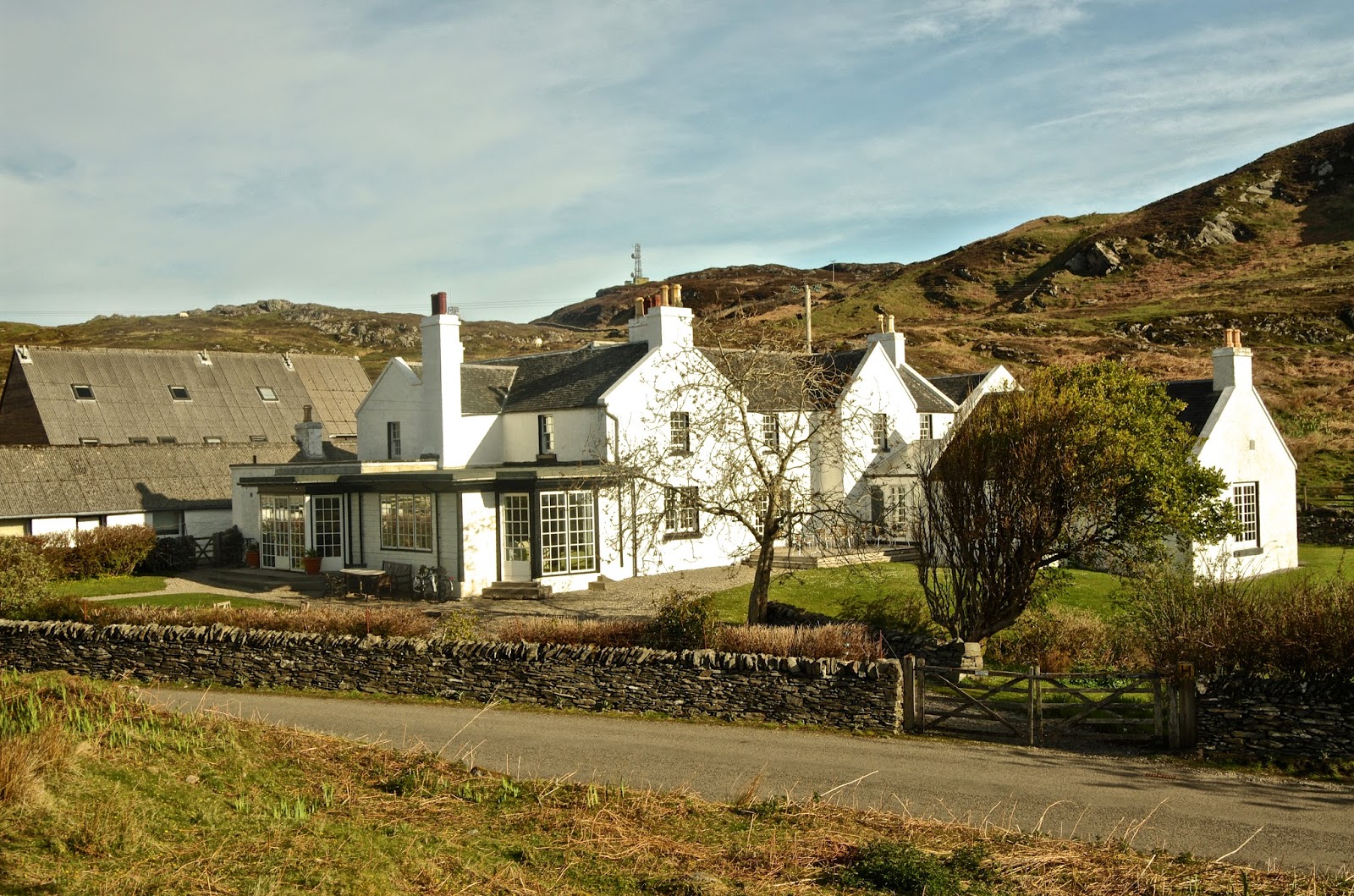
Colonsay is one of those islands that evoke positive memories: the soft sea air, cuckoos competing with corncrakes for air time and the only consumer goods on sale are home-knitted. Many years ago we had a family holiday on Colonsay and were blessed with several days of fine weather. We spent most days on the beach at Kiloran and enjoyed exhilarating cycle rides to all other parts of the island on the less sunny days. We returned at the end of last week for 3 nights and 4 days made possible by the early morning and late evening ferry crossings by Calmac. The portents were not good with high winds and rain predicted before we left. We arrived in Oban on a dull grey general election morning and ran into four old friends at the ferry terminal. The journey across passed in no time as we caught up on the past thirty years, ate bacon rolls, talked politics, and lamented the negative vibes of the general election campaign. There was no great optimism about the outcome under a first past the post electoral system that heavily favoured the Conservative Party.

We had booked a room at the hotel with a voucher that was a Christmas present. We dumped our luggage and we were ready for action before noon. We hired some bikes from a local called Archie, mine was at least twenty five years old, and set off for Oronsay, the island that is attached to Colonsay at low tide. It took half an hour to cycle down the road to the Strand, the tidal flats that separate the two islands. We dumped the bikes on the shore and began the walk over the shallow film of sea as the tide was receding. It took half hour to cross to Oronsay and, although we had wet feet, it felt a suitable sacrifice for the joy of reaching Oronsay on foot. Last time with three under tens to protect we had hitched a lift across the Strand on a tractor and trailer.

It is 3-kilometre walk from the Strand to the priory on Oronsay, the track curves around the rock outcrops and provides excellent views across to the Paps of Jura. The fields were full of spring lambs and the skies echoed to the sound of lapwings. We lunched in the priory grounds and watched three peacocks strutting their stuff around a peahen. We had to leave sooner than we would have liked so we could beat the incoming tide. There is about a four-hour window to cross and return across the Strand but we had started an hour later than would have been possible. We cycled back to Scalasaig feeling pleased to have reached Oronsay, freewheeling at speed to the pier where we celebrated with a cake in the Pantry, a cafe that was run by a women's co-operative on our last visit but now seems to be privately owned and has lost its ambience. The day had turned from a wet cold grey day on the mainland when leaving home at 6am to a bright spring day on Colonsay. Holidays are meant to be like this.

In the evening we met our friends for drinks and entered the pub quiz before watching the exit poll predictions. They generated heated debate with previously passionate socialists no longer certain of their political allegiance and having a general disdain for the three main parties. For the first time since 1983, I was not involved in the running of the general election so I retired to bed before midnight.

The next day promised more dry weather but the cloud cover remained for much of the morning as we cycled to Port Mor and then along to Kiloran Bay. We stopped at the excellent unmanned Heritage Centre with an open door that locked you in if it blew shut. We walked the length of the beach at Kiloran Bay and I climbed Carnan Eoin, the highest point of the island to capture some photos. We visited Colonsay House for afternoon tea and to recollect our previous stay with the children in a flat in the house. On the cycle back we ran into various folk whom we had met in the bar last night. We had a raucous meal with our friends, eating and drinking more than normal as we were carried along by the extravagance of the group. An 'A' list actress arrived for a meal in the hotel much to the delight of one of our friends.

Much to our surprise, the next day dawned bright and improved as the day progressed. We cycled down to the Strand and walked from Garvard over to the next bay and then to the raised beaches of Ardskenish. We had some lunch on the highest point and on the return found an exquisite beach, all white shell sand with the azure seas lapping the rock bands as the tide retreated and the seals lolled into the water as we passed. The locals later told us that this is their secret beach but we had it to ourselves. We sat and listened to the oyster catchers and I had a snooze on the sand dunes before heading back. The tide was out so we were able to take a short cut over the tidal sands. They were rippled by the outgoing waves and pockmarked by worm casts. The cycle back gave us the chance to work up a thirst that was quenched as we sat in the hotel garden enjoying the warm late afternoon sunshine. Our day was made complete when mussels and then fresh halibut were on offer for the evening meal. This had been a 'given day' as they say in Shetland.

True to the forecast, Sunday arrived with a strong breeze and rain. We decided to ditch the bikes and walked across the island. We rescued a sheep that had its fleece entangled in brambles, walked round the airstrip and visited three beaches. They looked less enticing than the day before, grey rather than golden sand and green rather than blue seas. The tide was still in and the rain began to fall as we headed back spending two hours walking in the soft island rain. We finished with an afternoon of animated conversations in the hotel lounge with fellow guests before catching the boat at 8:10pm. It was well after midnight before we arrived home after negotiating flooded roads around Loch Awe.

Colonsay remains a totally relaxing retreat with the hotel welcoming and providing good food and the focal point for the island, which has only 140 residents. This population swells in summer with the estate letting out cottages and there have been a fair number of new houses built since our last visit. It lacks the vitality and string of magnificent beaches of Coll, but we did find a perfect beach, enjoyed the company of old friends and tired ourselves out each day in the mellifluous sea air.


Wednesday, 6 May 2015

Reasons to be cheerful, or maybe not

The last rites

For the last forty years it has become an assumption by politicians that Rupert Murdoch through his control of much of the media has been the king maker when it comes to elections. (It was the Sun wot won it!) To such an extent that Blair and Brown courted Murdoch to gain his endorsement during their years in office. But Murdoch's papers do not win elections they normally support whichever party the polls say is ahead and then claim to have shaped the result. This is why the Sun has put an each way bet on this election backing the Tories in the English edition and the SNP in the Scotland. There is another reason: Murdoch's papers, together with the Telegraph and Mail all fear that a Parliament which has a clear majority of pro- Leveson parties would introduce an effective press regulation, and finally eliminate their influence over Britain’s democracy.

On these ground alone there is sufficient justification for wishing and hoping that Cameron and the Tories fail to finish the job they have started but the electoral arithmetic is fickle and even with two thirds of the voters against them they could emerge as the largest party. Moreover older voters tend to be registered and turn out to vote unlike many of the young, the dispossessed and the more progressive voters.

There are many other reasons why a Tory government would damage the quality of life for many hard working families in the UK although these have seldom been discussed in the tedious election campaign. They include the further erosion of public services, the creeping privatisation of education and health, the selling off of Britain's assets and companies and the protection of privilege and wealth. The much vaunted increase in employment must be considered in the context of a decline in GDP, no real wage increases, the explosion of part time and zero hours work and the huge reduction in company pension schemes. It has been a period of not just prolonged austerity but also a lack of vision about the future of the UK both at home and on the international stage.

It is notjust the satisfaction of putting Murdoch in his box that suggests that Cameron should not be elected to finish the job by a voting system that is no longer for our time. There are a ream of other reasons.
  • The loss of influence on the international stage, whether in Europe, where the PM has lost the respect of his peers; or on the world stage where the PM has been notably absent apart from the ill thought out foray into Libya, did he learn nothing from Iraq?
  • The grossly expensive and damaging re-organisation of the NHS, which has undermined the significant progress made by the previous government that invested heavily in hospitals and new facilities, reduced waiting times and both set and met health improvement targets. We now have an NHS on the brink of collapse and a Health secretary who, in 2007, advocated the demise of the NHS.
  • The legacy of Michael Gove, who abandoned the inherited school building programme, closed many sure start centres and devoted all the effort of his department into creating free schools and academies whilst neglecting existing schools and the standards of teaching. He lost the trust of the teaching profession to such an extent that he had to be removed from office and replaced by a more emollient minister before the election````
  • The abdication of any pretence that local services are important with local government losing a million jobs, over 20% of its budgets and no longer given any status in determining priorities. The only attempt at localism was to delegate the blame for the budgetary cuts made by parliament onto councils. The sooner that local government is entrenched into a new UK constitution the better.
  • The sell off of British companies from Cadbury to Centrica with over half of the Financial Times 100 companies now owned by foreign investors. This is matched by more than half the premier league teams now owned by foreign companies and the Chinese are building the next nuclear power station. This sell off has huge consequences for the UK and even the Mail says "we are all paying the price".
  • The skewed investment in infrastructure which has seen London boom on the back of transport investment with HS2 and the London airport expansion set to further reinforce the London centric obsession of Cameron and Johnson. The Chancellor talking up the northern power house is a shameless gambit unless investment in the high speed train network radiates out from Manchester and Leeds to Newcastle, Sheffield, Liverpool, Edinburgh and Glasgow
  • Cameron was happy to take the kudos for inherited successes most notably the 2012 Olympics, but also the booming arts and cultural activities that had been heavily backed by the previous government.  Meanwhile his government have stripped sport and culture of any new investment.
  • The failure to tackle the shortage of housing in both the private or public sectors and instead pumping money into the banks that has resulted in more mortgage led housing inflation in London and the South East.
  • Imposing a wage freeze on public sector jobs and a benefits freeze at the same time as allowing massive pay increases for the corporate and financial sectors and reducing taxation for the highest paid.
  • Swapping one million jobs in the public sector that were fairly paid and with pensions for new jobs that are part time, zero hours and lacking pensions and then claiming an economic miracle when the GDP is still not back to the pre-recession level.
  • Failing to reform the governance arrangements in Westminster despite the loss of trust in the institution. And then campaigning against House of Lords reform, fairer voting systems, reducing the voting age whilst maintaining the ancient rituals of Parliament such as passing through the lobby to vote.
  • Cameron's speech on the steps of Downing street the day after the referendum calling for "English votes for English Laws". It was a guarantee that the turmoil of the last few years running up to the referendum would erupt again but if this meant the Conservatives obtaining the greatest number of seats in the new parliament then his strategy will have worked and the union would be less likely to survive.
So there are lots of reasons to be cheerful if this duplicitous government is evicted this Thursday. The prospect of Murdoch having called it wrong and to finally have his baleful influence removed by a more progressive government would be the icing on the cake. Unless of course he has called the result right again. (And sadly he did!)

Tuesday, 5 May 2015

Glen Lyon Munros

Carm Mairg and Meall nan Aighean from Carn Gorm

Meall Garbh summit

Looking back to Carn Gorm from Meall a' Bharr

Carn Mairg summit

The Lawers range from Carn Mairg

Carn Mairg from Meall nan Aighean

Schiehallion from Meall nan Aighean
Monday 4 May 2015
Ascent:      1480 metres
Distance:   19 kilometres
Time:         5 hours 21 minutes

m      Carn Gorm             1029m    1hr  39mins
t        An Sgorr                   924m    2hrs 01mins
m      Meall Garbh             968m    2hrs 25mins
t        Meall a' Bharr         1004m   3hrs 03mins
m      Carn Mairg              1042m  3hrs 39mins
m      Meall nan Aighean    981m  4hrs 21mins

A typical bank holiday weekend. It had rained all day on Sunday and the prospects in the hills were not promising for Monday with strong winds and a wind chill factor at play. Gregor had come home for the weekend in the hope of a day on the hills so we decided to climb the Glen Lyon munros - not too far away from home and a relatively short day - even though I had already climbed them on this round. We picked up Mark at 8:30am and drove via Killin and the Ben Lawers single track road to reach Glen Lyon and then drove down the glen to Invervar. There were only two other cars in the small parking place.

We set off at the same time as two Geordies and struck up the new track that had been built to serve the micro hydro scheme on the Invervar burn that was under construction. We began to pick up pace after crossing the rickety footbridge and started the steepish path that curves round to Carn Gorm. There were snow patches from about 750 metres but we had made good time in reaching the summit. We took a short break and then a 200 metre drop before beginning the ascent of An Sgorr, the top that stands proud at the head of a glen. We were moving well and reached the strange cairn of Meall Garbh shortly after noon. The phalanx of old iron fence posts surrounding the loose jumble of rocks gave us some shelter from the cold south westerly wind and we consumed all our food.

The walk to Carn Mairg is a long march with a short descent followed by a steeper climb and then a longer section along the ridge to the top of Meall a' Bharr. Again we had to work our way through several large patches of fresh snow. There is an easy walk towards Carn Mairg until it reaches a rocky ridge crest and turns south east for the last half kilometre. The cloudy weather of the morning had graduated into sunny periods and the views were quite good towards the Ben Lawers group and Schiehallion, although it is not the best profile of it from here.

After a short stop at the summit we found a long patch of snow to descend. It was steep enough to ski down in boots although Gregor chose to sledge down and reached a good speed before the flatter col towards Meall Liath was reached. None of us could be bothered climbing the adjacent top of Meall Liath, so we headed south and across the boggy bealach at 840 metres before starting a slanting climb to Meall nan Aighean. It was plastered with snow but nothing requiring ice axes or crampons. The sun was now in ascendency as we reached the summit.

We finished our water and admired the surrounding views before setting out on the path down the ridge to Invervar. We followed an old track curving round to the south and then east before finding an excellent path that had a perfect gradient for a fast descent to the glen and then through the gates and back to the car. We had easily beaten the 6 hours for the round and we would be home just after 5pm. It had been a comparatively easy day although it was no stroll following Gregor, he is certainly retaliating for all those days when I dragged him round the munros when he was a boy.


Friday, 1 May 2015

In praise of doubt: the election

Would you doubt what they say?

So the election manifestos are all out and what a bookshelf of pulp fiction they are. The claims and counterclaims being made by the parties are a game of smoke and mirrors. The tactics are full of bluffs and double bluffs, even the perfidious Albion card is being played by the Prime Minister. His announcement the day after the Scottish Independence referendum to introduce English votes for English laws reinvigorated the SNP and damaged the union but the Tories have nothing to lose in Scotland. The real damage has been to Labour in Scotland and has greatly increased the likelihood of a Tory or Tory-led coalition government.

The latest Lib Dem accusation that the Tories would reduce child benefit has created counterclaims by the Prime Minister but he cannot insist on £12bn of welfare cuts without raiding the living standards of the most vulnerable. Labour is walking the tightrope between claiming to be financially prudent in deficit reduction whilst minimising the austerity measures. The third parties have launched an avalanche of proposals in their manifestos secure in the knowledge that they have no chance of being implemented. It allows them to wallow in the satisfaction of being the good guys.  The Tories and SNP have a common interest in full fiscal autonomy for Scotland: the SNP would have their hands on the financial levers and the Tories would get rid of the Barnett formula that rewards Scotland to the tune of £1623 per head (19%) more public spending than in England. This could provide more dosh to reduce the need for tax increases in the rest of the UK and deliver a proportion of the public expenditure savings.

Last night's TV debate between the three main party leaders was most notable for how the Leeds audience doubted the leaders, challenging them on their well-practised cliches and calling them for concealing their intentions on what they would really really do. The whole charade rekindled my memory of a book of Bertold Brecht's poems that I was gifted by a politician whom I had worked with for many years. He was scholarly and held principled views on localism and democracy. One of Brecht's poems, In Praise of Doubt, we had used as a key quote in a major policy report we had written. Brecht was writing in 1932 but his reflections seem entirely applicable as the disillusioned electorate takes on the discredited politicians as they strut their stuff.

The most beautiful of all doubts
Is when the downtrodden and despondent raise their heads 
and stop believing in the strength
Of their oppressors

There are the thoughtless who never doubt

..They don't believe in facts, they believe only in themselves
When it comes to the point
The facts must go by the board

The thoughtless who never doubt

Meet the thoughtful who never act.
They doubt not in order to come to a decision but
To avoid a decision

Bertolt Brecht 

What most concerns me about the election diatribes is the lack of debate about modernising our governance structures or the failure to recognise that 5 years of austerity has had a devastating effect on local services and undermined local governance.

There has been a remarkable reluctance of the parties to commit to changing the way government works (or doesn't) despite the dire lack of trust in Westminster politics. House of Lords reform, voting systems, and the age for voting are left to the Greens, whose only MP, Caroline Lucas, has written a deft critique of her 5 years in Parliament. 'Honourable Friends' identifies the absurdities of life in Westminster and is more readable than any of the manifestos. The Lib Dems who were the champions of reform in 2010 were completely shafted by the Tories in their quest to change some of these matters during the last Parliament. They reciprocated by refusing to change parliamentary boundaries thus denying the chance for the Tories to gain an extra 20 or so seats. Another goalless draw in the annals of the coalition.

Surely it is time for a proper Constitution for the UK. All parties, as well as civic society, should be part of a convention to properly consider this. It is more important than either redrawing parliamentary boundaries or House of Lords reform. Local democracy needs to be embedded and thus relieved from the iniquitous interference from central government. When we marvel at the product of Victorian inventiveness, we often forget that it was the untrammelled municipalities that were often at the forefront of the most radical and creative use of scientific advances to improve the quality of life of citizens. Water supply, sanitation, electricity and gas production, policing, universal education, hospitals and infrastructure were all initiated and delivered by local government. Best practice was shared from the bottom up not the top down, unlike today when diktats and austerity leave no room for local innovation or creative adaption of new technology and processes.

The absence of any recognition of the damage that the government has wreaked on Councils is palpable. Far from rectifying it, the last budget suggests further cuts of 23% on Councils and the Tories would also make them responsible for funding the replacement of the right to buy Housing Association houses. The Prime Minister has also committed to giving all public sector workers 3 days of volunteering leave, paid for by Councils and other public agencies, needless to say, that this will require further cuts in services costing Councils 1.4% of their budgets.

I heard David Blunkett yesterday saying that he has started "shouting at the radio" now that he has retired as an MP.  Join the club mate, at least the good folk of Leeds were able to doubt the leaders last night. Cameron gave his impression of a bar of soap in the bath as he evaded questions, Milliband struggled to convince people about financial prudence and pacts with the SNP and Clegg just threw in the towel. Thoughtless or thoughtful, they are difficult to believe, the doubters are right to doubt.