Showing posts with label Towns. Show all posts

Wednesday, 26 February 2025

Lewes and Charleston House

Entrance to Lewes Castle

A February trip to London for the half term was greeted by a murky, cold and slow-moving depression that was not conducive to exploring its attractions. I also felt under the weather with a winter cold and zero energy. On Sunday, we ventured out to West Sussex, a part of the UK that I am unfamiliar with; my only previous visits have been to Brighton and a ferry from Newhaven to Dieppe. As always, leaving London was a struggle through ten miles of continuous urban development passing through Croydon and Purley before hitting the M23. 

It was to be an artsy day. Our first stop was Charleston House, a ramshackle museum and home of Vanessa Bell, sister of Virginia Woolf, that was frequented by the Bloomsbury set. It is a shrine to British Modernism, every surface in the house has been subjected to paint and tiles, and every space has been filled with books or objects that speak of a collector's curiosity. The house is nothing special unless as an example of a country retreat with an adjoining duck pond. The cold interior of houses of this vintage was palpable. The walls were of rough plaster with patterns painted on, the simple tables were painted, the floors were creaking, and the furniture was randomly acquired, auction room chic. 

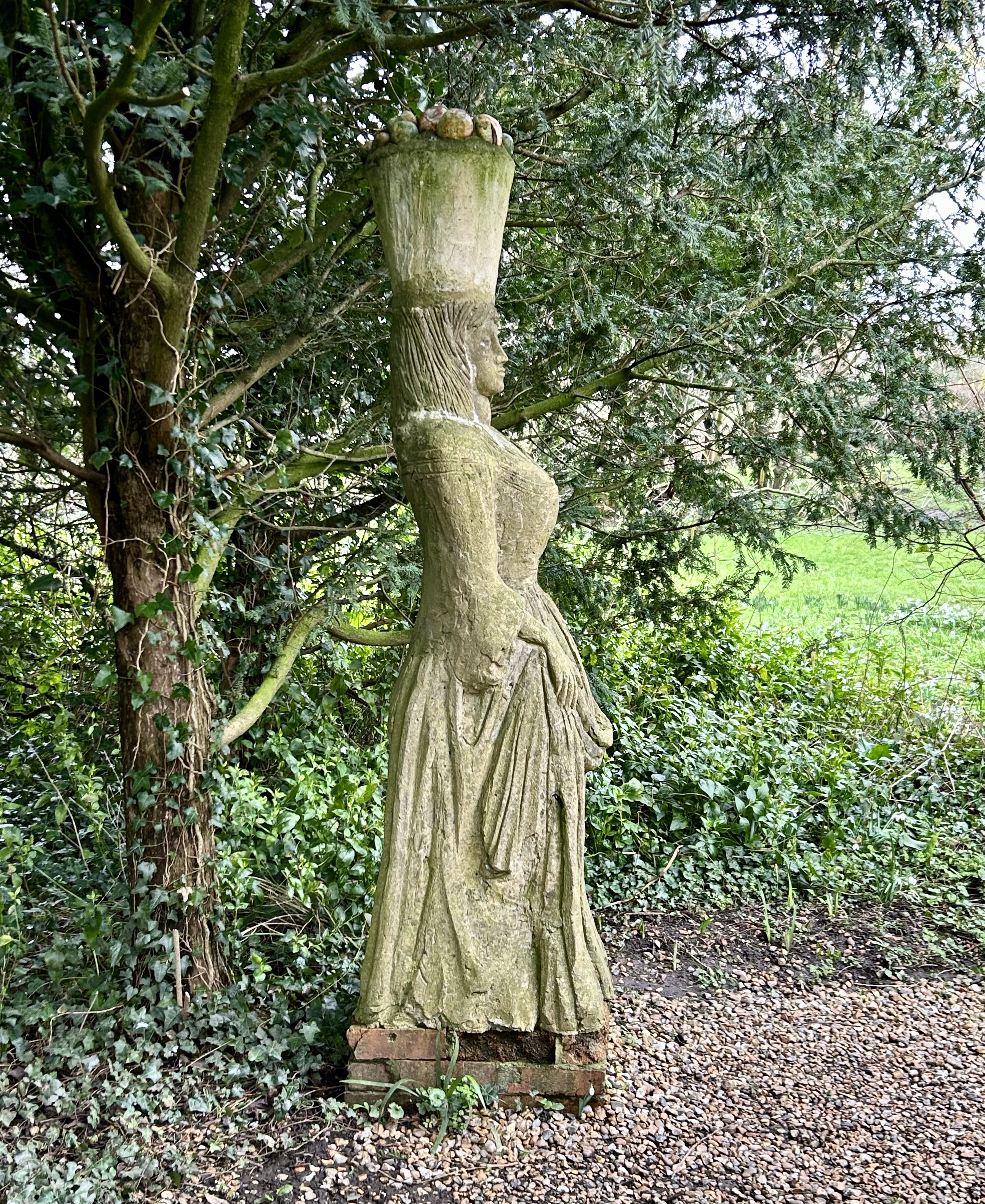
The five bedrooms reflected the love triangles that were part of the Bloomsbury set as they indulged in their open and brutal wokeism. The overeager staff were on hand to forbid any touching of exhibits of paintings, book collections and hints of hedonistic weekends. The chert-walled garden had lapsed into winter decline and was littered with statues and heads. We considered lunch in the cafe, but it was not enticing. The adjoining exhibition required a separate entrance fee on top of the hefty charges for visiting the house. 

We retreated to the nearby town of Lewes, which was heaving with Sunday visitors and discovered the repurposed Needlemakers factory that had become an Italian restaurant and craft shopping centre. We had lunch and explored the shops. Mike Bell Tube Maps was a fascinating way of capturing the history of popular music or political events,     as seen in his Map of Brexit below. Lewes had a fading opulence with many independent shops, a town hall and other edifices of former civic pride. It is famous for its Pagan rituals on Bonfire Night when effigies of the Pope are burnt. There were 27 witches according to the 2021 census, and there were accusations of racism that hit the national press 15 years ago. It barely seemed possible that this tranquil town could host such events and prejudices. 

Lewes' most famous son, Thomas Paine, had emigrated to America, where he penned 'The Rights of Man', and a pub in the town had adopted this treatise as its name. His pamphlet, 'Common Sense', was also a key document in establishing America as the Land of the Free. Paine argued that a government's purpose was to serve the people and was a necessary evil, which existed to give people a structure so they could work together to solve problems and prosper. But it had to be responsive to people’s needs." The British system failed at that because it gave the monarchy and nobles in Parliament too much power to thwart the people’s elected representatives. “The constitution of England is so exceedingly complex that the nation may suffer for years together without being able to discover in which part the fault lies, some will say in one and some in another, and every political physician will advise a different medicine.”

One of Paine's quotes was, "I prefer peace, but if trouble must come, let it come in my time so that my children can live in peace." As we watched a slow procession of elderly folk, dogs, and children trundle along the narrow pavements carrying Ukrainian flags in solidarity and assembling at the war memorial, Lewes seemed to have come to peace with itself. On a cold, miserable Sunday, we drifted around the streets, which have a fine urban feel. The supermarkets have been eased into the centre, and this has helped ensure a busy presence of shoppers and pedestrians. The South Downs were not visible in the murky conditions. It was time to head back to the smoke. 

I caught the train home the next day, enjoying a walk through St Pancras Station. It had been announced that the station would extend its services to accommodate trains to far more locations in Europe, from France to Switzerland and Germany. My LNER train from King's Cross kept to schedule to Scotland and was comparatively quiet compared to recent journeys. It was certainly faster than flying with a lot less hassle than negotiating through airports that just add time, cost and anxiety to travel. Why we need to expand them defeats not only the prospect of reaching net zero but also the cost of living. Government expenditure should be spent on sustainable transport infrastructure, not air travel, and for the whole of the UK, not just London and the Home Counties. 

Bonfire Night with the Lewe's Cliffe set

Bonfire Night in Lewes

Mike Bell's Maps - Benefits Zone is an empty vessel

Thomas Paine's legacy in Lewes

Ukraine Solidarity at the War Memorial

Charleston House explainer

 Portrait in Charleston House

Charleston House Walled Garden

Charleston House Statue

St Pancras Station- railway royalty


Tuesday, 28 November 2023

Preston Redux

Preston Bus Station

Cenotaph, Town Hall, Harris Library and Museum
I was visiting my sister in Preston, the place where I grew up until I left home at 18. Preston has acquired a reputation for being a progressive city over the past ten years through a policy of Community Wealth Building. The Council has focused on bringing services back in-house and supporting local businesses in its procurement of goods and services. The alternative narrative advanced by residents is that it has become 'a bit of a dump' with the collapse of the city centre as a shopping centre and as a nighttime destination. This has stemmed from an exodus of hospitality to the outlying areas and the failure to secure major investments for new retail developments. I had advised the Council of this folly after I met representatives from the financiers of the proposed development when I was negotiating a separate retail development in Scotland. Like many cities, Preston was already over-provided with retail facilities and had been damaged by adjacent councils allowing car-based retail centres on the city boundaries. This resulted in congested traffic that caused mayhem for commuters and those seeking leisure or retail trips. 

I decided to spend the morning checking out these contrary claims. My sister lives 3 miles north of the city centre so I caught the bus that runs every eight minutes, and it arrived on schedule. The Scottish Entitlement (Travel) card is not legal tender in England, so the fare was £2. I knew the route from my Christmas post round for three years and Plungington has hardly changed, a grid pattern of brick-built terrace houses punctuated by shops and small businesses. The roads were narrow, and there was some congestion as we negotiated the ever-spreading campus of Central Lancashire University. It had been a well-regarded Technical College when I lived in Preston, providing training for apprentices in the local industries - cotton, aerospace engineering, printing and commercial activities. 

The bus wriggled its way through the partly pedestrianised city centre to the massive 80-stance Preston Bus Station. I had worked on the construction of this as a student. I had mixed the concrete for the curved concrete ends on the 4-story car park above the bus station; I was pleased to see that they were still pristine after 52 years of wet Lancashire days. My father had campaigned for the bus station's retention when the Council proposed its demolition twenty years ago. Admittedly, half the stances had been closed because there has been a retraction of bus transport over the past fifty years as car ownership has soared.

I was impressed by the way the bus station had retained its grandeur; it was considered a fine example of brutal architecture when erected in 1970 and is now a listed building. It is certainly far more robust than the speculative shopping developments that sprang up at the time. The adjacent St John's Centre is a prime example of this artless era of development. I headed for the splendid covered market that I had visited most Fridays with my mother for the weekly shop. Its wrought iron structure and roof are vintage examples of a functional and robust structure.  A glassed-in enclosure within the market detracts from the simple elegance, and the majority of stalls now sell cheap tat, with fewer stalls selling fresh local produce at affordable prices. 

I was taking a photo when an Indian gentleman approached me and passed some comments on the market. We struck up a conversation and established an easy rapport. We discovered that his younger brother had attended the same school as my sister and was at school with a friend. He used to come with us to the local pub on Friday evenings. The coincidence of this casual meeting was remarkable and ten minutes later I was passed the phone of the Indian gent to talk to his younger brother. I had not seen him for 55 years, but we reminisced about our teenage exploits; he now lives in Somerset. I gave the phone back and bade farewell to his brother and concluded it was one of those days when I was on a roll. I decided to drop in at the Council Offices to see if I could talk to someone about progress on community wealth building.

Arriving at the Council offices, I was met by a Council Officer who suggested I should see the Chief Executive, but he was in a special Council meeting to discuss the Israeli - Gaza conflict. He suggested that I could go and listen to the debate. I accepted because I wanted to see for myself how the Council operated and was guided to the public gallery. The motion from the administration called for a ceasefire, well-meaning, but I guess that the soft power of Preston City Council is no more effective than that of the UK government. I listened to 7 speakers, all articulate, focused and well-informed. One speaker had lived in Gaza and spoke about the conditions his relatives and friends were living in, another was a Doctor at the local hospital and spoke with more humanity and sincerity than any MP I have heard in Parliament. The motion was unanimously carried with the Conservative spokesperson saying he agreed with the sentiments of those who had spoken eloquently with such knowledge. As I left I was given the Chief Executive's email in case I had time to arrange a meeting in the next few days. 

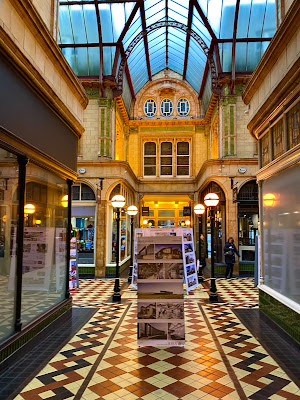
I continued my walk about in the city centre, admiring the fine Victorian and Edwardian buildings - the former post office, the cenotaph, the Town Hall and the Harris Museum and Library that provided some gravitas and solidity. Miller Arcade, which used to be at the centre of all the bus stances, had retained its elegance. The Gaumont and later the Odeon had been a cinema and dance hall which had been the epicentre of all activity; it was a boarded-up shell. It was the analogue version of Tinder when I was growing up and hundreds, if not thousands, of marriages must have begun here. 

I was pleasantly surprised that Fishergate, the main shopping street, was in good health despite the loss of Owen Owens, BHS, Booths, Woolworths and Mears toy shop. M&S was busy and well-stocked and the St George's Shopping Centre had few vacant units and good footfall. Only buses were allowed along Fishergate, and there was a lively stream of pedestrians. 

I veered off Fishergate to visit Winckley Square, the location of solicitors and professional offices and the Catholic Convent for girls. I had pedalled through here regularly as a 9- to 12-year-old during my train spotting days at the nearby station, which was on the London, Midland and Scottish mainline and gave a spectacular display of steam locomotives. As well as the Stanier Pacifics on the London to Glasgow Royal Scot Express, we had fish trains from Fleetwood, holiday specials to Blackpool from Yorkshire and Jubilee and Britannia locomotives pulling the Birmingham and Manchester to Scotland expresses. 

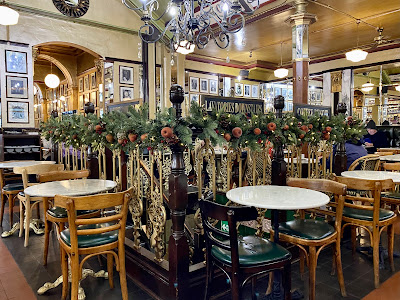
I calmed down by calling in at Bruccianis, a glorious art-deco Italian cafe, where my mother and Grandma used to meet for a coffee and I acquired my fondness for toasted teacakes. As I turned into Corporation Street, I passed the barber shop that I went to as a boy. It was empty, so I popped in to have a look; it had hardly changed apart from the hair products on display. Brylcream was the only option in the 1960s. The Turkish barber who now runs the shop was keen to hear about the history of the shop and his predecessor.

Time was running out so I ran to catch a bus and was back at my sister's house by 1 p.m. The impression from a morning of unashamed nostalgia was that Preston had suffered from the decline of the city centre and that some solid buildings needed refurbishing and possibly repurposing. The civic centre around the Museum and Library, Winckley Square and the adjacent Avenham and Miller parks were real attributes, and the city-owned bus service was excellent. There had been too many retail developments in outlying areas that led to much traffic congestion and a turn-off for residents who would have flocked to the city centre in the past. Central Lancs University had created a vast swathe of Education buildings, but it had regenerated a part of the city that was long past its best. On balance, Preston was better than I had been led to believe but still needed to be revamped and rid of its unlovely buildings. Most of all, I was impressed by the debate in the Council. 

In the evening we visited Haighton Manor, a fine restaurant and pub a couple of miles outside the city, for a good value meal with an excellent selection of local beers. Getting there was no longer a drive in the country but a burst through suburbia. The amount of development surrounding the City has been massive, with mainly large private housing estates that are off bus routes, have no local facilities and require a car to get anywhere. The outcome is inevitable as in so many towns and cities, congestion and anger at the authorities. 

The lack of attention or willingness by the housing developers to provide facilities or sustainable, well-designed houses is one of the great mistakes of the last forty years. They have built too many houses that barely meet minimum standards and fail to achieve anything like the zero carbon standard. This should be essential as we move into the post-climate change era. 

Unlike many of the solid brick-built terraced houses that orbit the city centre, or the early post-war semi-detached houses and council houses that have been upgraded, a fair proportion of the newer mass-produced houses of recent decades are not robust enough for retrofitting. Houses developed since the 1970s with flimsy materials will all too often have to be replaced to create more sustainable communities. Land use strategies that are currently focused on converting city centre buildings and redeveloping brownfield sites need to be extended to include the legacy of shoddy developments that have been allowed to encroach on peripheral greenfield sites. Most of all, we need to design and repurpose our towns and cities to a scale that energises communities by focusing on pedestrians and cyclists rather than worshipping the car that has strangled the fabric of integrated communities.

Covered Market

Council Meeting

Miller Arcade

Gaumont Cinema and Dance Hall

Winckley Square

Bruccianis Coffee Shop


Monday, 19 September 2016

Harrogate

Bettys establishment

Carved memorial to the stage finish of the Tour de France in Montpellier Park 
'Keith's Choice' Dahlia in Valley Gardens
Royal Pump museum
Shrinking in blue

This solid, sophisticated Yorkshire town was founded on the abundance of sulphur springs. My Yorkshire relatives who lived in the Huddersfield-Wakefield rhubarb triangle used to talk about Harrogate all the time; it was their day out of choice. Flower shows, parks, shopping and afternoon tea at Betty's. I had passed through a couple of times on the A59 on trips to Scarborough, but never stopped to explore its charms. We were en route to Norfolk and then London and decided to rectify the omission, arriving via the Yorkshire Dales and Blubberhouses Moor on a blissful early autumn evening as the skies turned from blue to pink to grey as the sun gave way to the moon.

Half an hour later, we were seated in Betty's Tea House, an institution opened in 1911 by a Swiss confectioner.  It occupies a substantial corner building at the foot of Parliament Street and has the ambience of a Viennese coffee house set in the 1930s. The food was good, and the clientele made us feel quite young; Harrogate is the preferred choice for retirement in Yorkshire and sells itself as the happiest town in Britain. It reminded me of a ditty that a friend recited at a Burns supper when he had been asked to toast the haggis. He was from Yorkshire and explained that "we don't talk to wer food where I come from and I can't pronounce Haggis cos it's got an aitch (H) in it. He then gave us a rendition of what the teacher had taught his class at school in a forlorn attempt to correct their pronunciation.

'Arry went to 'Arrogate,
'Arry lost his 'at
'Arry's mother said to 'Arry,
'Arry where's your 'at
'anging in the 'all mother,.
'anging on a 'ook'
'Arry's mother said to Arry,
Arry go and look.


He made a word-perfect presentation of the toast to a haggis, but it was "'Arry went to 'Arrogate" that brought the house down. He told us that a Yorkshireman who pronounces Harrogate correctly probably lives there, 'cos no one else in Yorkshire can.

Harrogate has long been a conference centre, most famously for the Lib Dems, being big enough to cater for Cyril Smith, but the large conference centre and still thriving grand hotels host a myriad of events; today it was 'Christians against Poverty' and balloons festooned the entrance stairway. We decided to tour the town centre and trooped around the Victorian buildings that remain impressive and well-preserved. The sumptuous gardens that encircle the centre were at the stage when the summer displays were wilting, but the level of planting and imagination was still evident. The Montpellier quarter, which is dripping with antique shops, cafes and high-end independent shops, had yet to come to life. The museums were still closed, so we walked through Valley Park, window-gazed at the furniture shops and galleries, before finding some good coffee in an Italian cafe. The pleasure of finding a non-franchised coffee chain always cheers me up.

The drive out from Harrogate was through parkland and roads lined with splendid Edwardian houses until we reached the outer suburbs that resembled any other town in England: brick boxes and a slew of modern warehouses. In no time, we were on the A1(M) and passing the massive power station at Ferrybridge. There are probably more pylons in this part of Yorkshire than words in the bible.

Despite the existing devastation to the environment around Ferrybridge. It is/was the largest power station in the UK, and I would have preferred to see the well-advanced carbon capture scheme implemented by SSE. The designs and pilot scheme for carbon capture had been completed, but Chancellor Osborne pulled the funding. The UK could have been at the forefront of carbon capture technology, which is essential as a retrofit for both coal and gas power stations; they will be the mainstay of electricity production for decades in many parts of the world before they close down their coal/oil and gas power stations. Carbon capture could be an important intermediate technology. Osborne had no such reluctance to fund the French and Chinese to design, build and operate the massively expensive and controversial nuclear plant at Hinkley Point that Mrs May has now endorsed, together with similar plants at Sizewell and Bradwell. Once again, the UK has jettisoned its technical expertise and reputation through its adherence to austerity that is even less sustainable than coal.

Ferrybridge Power station and pylon landscape

Sunday, 21 December 2014

Lincoln

West Norman frontage of Lincoln Cathedral

Lincoln Cathedral

Frieze above north west door

Sanctuary

South West window

Top of the Strait

Looking from the castle to the cathedral
Lincoln is the largest UK city that I have never visited. Its position halfway down England on a flat plain never inspired me to make the effort. I even turned down a trial to play county cricket for Lincolnshire in the Minor Counties league after graduation. Aileen had bought a car online, and by chance, it had to be picked up in Lincoln, so there was an excuse to visit. The journey to Lincoln after a weekend in London was remarkably cheap at £17 once we had figured out to buy two separate tickets: London to Newark and then Newark to Lincoln. The direct fare bought from the online "cheap rail ticket" sites would have cost £47, but that's what happens when you split rail travel across 26 companies and let the corporate ticket touts enter the fray to (mis)sell tickets.  Station booking staff are far more willing to give the passenger a better deal, and they seem equally dismissive of all the ticketing scams.

We arrived at Lincoln in the early afternoon on a cold but sunny winter's day. We walked up the pedestrianised High Street that continued and became the Strait and then Steep Hill to the ridge on which the massive 11th-century cathedral and castle are built. Several locals commented on the fact that we were dragging suitcases up the hill, which was a pretty sharp incline, making me wish that I had brought a rucksack. The castle was closed following the weekend's Christmas market, with over 300 stalls in and around the castle. The market had been a roaring success; the throngs of visitors were described in the local newspaper as having to walk like penguins along the narrow streets.
Town Map
Our mission was simple: dump our bags and spend time visiting the cathedral, once the highest building in the world and responsible for the largest diocese in England, established by William the Conqueror in 1072, stretching from the Humber to the Thames. Built on the Lincolnshire ridge at 250 feet, it looms over the vast flat plains of Lincolnshire and was described by John Ruskin as "the most precious piece of architecture in the British Isles". It has suffered several calamities from earthquakes and collapse from poor construction, and today, like almost every other large church or cathedral, it is undergoing a massive restoration.

It was the scale that impressed us and the fact that one of the four copies of the Magna Carta is held in the cathedral, although at the time of our visit, this was on loan to the Lincoln Center in Washington DC.  The Magna Carta with its message that all free men could not be held or imprisoned without being judged by their equals and that "the King was not to deny, delay or sell justice" were radical concessions by King John to quell the uprising of the barons. Whilst there have been claims that this was the precursor to civil liberties, it applied primarily to the barons and did not extend to the common people.

Magna Carta
We tramped up and down the steep hill several times and discovered that it had been voted the best shopping street in Britain. It was interesting but not that remarkable and the High Street was cluttered with the usual offerings. Brayford Pool and the river Witham provided a linear water feature through the heart of the city and there was an impressive collection of civic buildings.

Apart from its location in the midst of a rich agricultural area, the town is also home to Siemens and has benefitted from a new University which has acquired a good reputation for business studies in its short 20-year life. The outskirts of the city are an ugly addition to a fine city centre and have extended too far into the flat plains, the area is a melange of car showrooms, warehouses and modern housing. As we left the next morning the roads out of Lincoln were at capacity and even the 10 miles on the A46 to the A1 north took a good half hour amidst heavy commercial traffic.

So that's Lincoln crossed off the visit list although I could be tempted back if only to see the cathedral again and visit the castle. I would like to think that the surrounding countryside would be a palette of Lincoln Green in summer but I suspect that yellow fields of rape seed and a smattering of commercial buildings with grey roofs amidst blocks of tarmac would flank the historic city.

Thursday, 29 March 2012

Ludlow

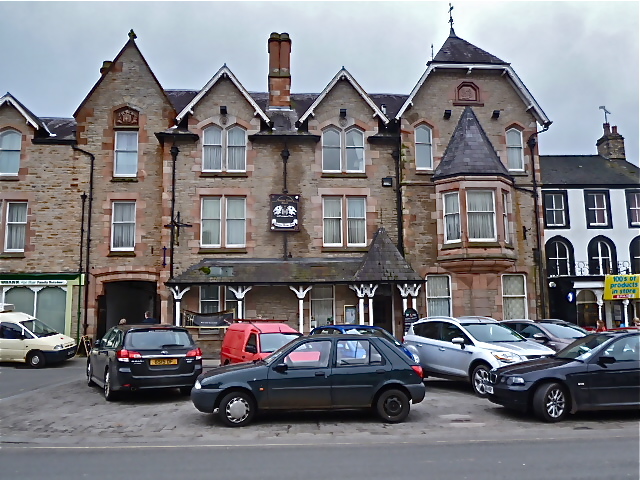
Feathers Hotel, Ludlow

Stokesay Castle and Gatehouse

Travelling back from Cornwall was a good opportunity to visit some new places. We crossed the Severn Bridge, entered Wales at Chepstow and drove up the Wye Valley, which was resplendent in the spring sunshine.  I had spent a day climbing here in 1971 with Tim Crouch from Eastcombe, but I could not recognise any outcrops we had scaled. Arriving at Monmouth, we stopped for a late afternoon drink in a square by the town hall, a veritable sun trap. Youngsters on their way home from school were having a few pints and smoke, we were hoping that Ruth Jones would pop in to fire some saucy Welsh rhetoric at them.

We drove through the Welsh Marches and eventually decided to halt at Ludlow, somewhere I cannot recall visiting before. It is celebrated for the number of listed buildings (almost 500),  a food festival, three Michelin-star restaurants and an impressive 11th-century castle. We stayed in the Feathers Hotel because it looked interesting and we were offered a room at a very good rate.  Food proved difficult to find; many of the restaurants had not yet opened for the summer, so it was a pub meal in a place that sold 10 varieties of real ale and was home to the Ludlow Pie.  The Wye Valley Bitter was a good choice and went well with the local beef.

The Feathers Hotel had been described by the New York Times as the most beautiful hotel in the world.  I am not sure about that accolade, but on returning home I found the following description on a website: The hotel is reportedly haunted and is often subject to "ghost hunts". A Victorian gentleman has been seen by guests and staff walking his dog through room 232 into room 233 before vanishing and room 211 is said to be home to a jealous spirit who appears to have an aversion to female guests; one female guest was reportedly dragged out of bed by her hair and later soaked in water while her husband slept peacefully
Needless to say, we had been given room 211. I slept well but returned from an early morning run to find Aileen drying her hair. She said she had been in the shower. 

The still air and perfect blue skies meant that it was well below freezing as I explored the environs of the town on my run. Ludlow was not a runner-friendly town; the absence of pavements and fast traffic on the narrow roads suggests that the car is king. 

We drove north through Church Stretton, a straggling small town that sits in a beautiful setting between the Long Mynd and Wenlock Edge. We were tempted to stop at Stokesay Castle, which was set like a jewel in the early morning light. Stokesay Castle is a fortified manor house built in the late 13th century by Ludlow, a local wool merchant.  We were too early for it to be open so I clambered over the gate and had a quick dash around the grounds before continuing the journey. 

The countryside ebbed into the flatlands of Shropshire and Cheshire, by which time we were travelling in what seemed like convoys of Bentleys and other limousines. Cheshire County Council had signs that boasted about the high number of road deaths, full marks for transparency, but it's not a good outcome. Nor did the signs seem to slow the cars of the nouveau riche of celebrity Cheshire as they pinged past us, emitting shed loads of carbon dioxide.


Wells and Cheddar Gorge

Wells Cathedral - the West front from the Green

Wells Cathedral Quire

Cloisters

Glastonbury Tor
Morrisons Bridgewater Distribution Centre

Cheddar Gorge
Speed sightseeing is a family trait, and the trip back from Cornwall after Aileen's birthday long weekend was a typical example. We had just two and a half hours for the 95 miles after dropping Eva at Exeter station to get to Bristol airport to drop off Gregor. We had added 30 miles to the mileage by deciding to take in Glastonbury, Wells and Cheddar Gorge. We managed it despite a couple of stops at Wells and Cheddar Gorge and food on the move in Wells.

The only blight on the journey was driving past the new Morrison's distribution depot on the M5 in Somerset. It must be one of Britain's ugliest buildings and hopefully not a symbolic harbinger of what will happen with England's new development-friendly Planning Laws.

It is the fallow year at Glastonbury, although, unlike other festivals that have fallen on hard times, the zest for Glastonbury amongst its acolytes seems undiminished. The decision to forego a year must be hard on local businesses, if not the landscape.  We sailed through the festival country below the iconic chapel, which sits on the tor above Glastonbury.

Wells is an idyllic town that, on a day such as this, could easily fool you into believing you are in an urban paradise. It is, in fact, England's smallest city, but probably the most perfectly formed, with a population of just 11,000. The high street is full of local independent shops. The smattering of banks and chain shops that have been required to fit into the indigenous streetscape without flaunting their presence with pre-packaged shop fronts - good planning. On a scorching day, we had a hot pastie, probably the best I have ever tasted. We ate in the green, facing the West Front of the cathedral, and then had 15 minutes to wander around the cathedral and cloisters. The new interpretation centre functioned well, and there were knowledgeable volunteer guides.

But Easyjet waits for no man, so we drove on to the Mendip AONB (Area of Outstanding Natural Beauty) above Cheddar Gorge. It is a limestone plateau complete with dry-stone walls, copses of ash and dotted with hundreds of ancient monuments. It is one of my favourite landscapes. We descended the cliff gorge, which was surprisingly free of traffic and tourists. We took out 5 minutes to run up the paths that climb steeply up from the gorge and take some photos. Cheddar itself is one of those tourist-focused villages with tat and ice creams that make you want to press on.  We did, and to our surprise, we made Bristol airport on schedule to drop off Gregor, who had work tomorrow. 

The next objective was getting through Bristol before the rush hour began. Driving through the Clifton Gorge brought back memories of spending several happy days climbing there with Tim Crouch in 1971 and 1972. The queues for the Severn Bridge were beginning to tail back, but we made it to Wales in time for an early evening refreshment in the square in Monmouth. All we had to do now was decide where to head next and to find a place to stay. I thought we should give Ludlow a try; the casual uncertainty of travelling has always had an uplifting appeal for me, but the birthday girl is less enamoured by this way of travelling.


Saturday, 3 March 2012

Appleby


St Lawrence's Church
River Eden

Tufton Arms Hotel on Boroughgate
Thursday, 1 March 2012
Appleby was the County town of the County of Westmorland which was absorbed into the new Cumbria Council in 1974 along with Cumberland and that part of Lancashire that reached into the Lake District from Morecambe Bay. It has always intrigued me since I memorised the county towns and capital cities in childhood. I was driving down to Sheffield to attend a course and as I was on the A66 to Scotch Corner I saw the sign to Appleby. Time was on my side, so I detoured to visit the town for the first time since the 1960s before the M6 had been built over Shap.  

I had assumed that it would be a bustling prosperous market town with traditional hotels and solid citizens.  The main street has been described as the finest in England and the local comprehensive school retains the title Appleby Grammar, its buildings that would grace any public school. I was surprised to find a place that was in a time warp and beginning to peel at the edges. There are few visitors and the mainly independent shops have a limited range of goods.

The hotels were obviously struggling and the menus did not stir the appetite so I bought some food and sat by the river on a warm March day amidst the daffodils and crocuses watching the life of the town ripple past. Apart from the school pupils raiding the fast food outlets, it seemed like a place dominated by older generations. A couple of elderly fishermen were dabbling on the river and some agricultural workers and tradesmen provided the scanty footfall on the main street. It was a douce town in decline. The house prices confirmed this, unlike the nearby towns in the Lake District where house prices are being driven upwards by the baby boomers retreating from the cities.

I began to think about what towns like this are for in the twenty-first century. If it was located within an hour of London or other major cities it would be a much sought-after place to live but it is remote from Britain's major cities and off the tourist trails of the adjacent Lake District or the Yorkshire Dales National Parks  However, with the price of travel and work becoming 'what you do, not where you go', places like Appleby could be resuscitated. It is finely sited on the river Eden, sits amidst pleasant rolling countryside, boasts some splendid historic buildings and has that most elusive quality of being away from the bustle and commercialism that has destroyed the fabric and social networks in much of urban Britain. It has a well-performing school and is close to Penrith which is thriving sitting on the main railway and the M6 motorway. 

Appleby needs to develop a vision for its future. I am not sure that the current descriptor 'lots of interest and old world charm' will do much to dispel the impression that I had - a small town in need of a new purpose and a bit of excitement and not just during Appleby Horse Fair, the biggest Gypsy Fair in the UK.