Sunday, 30 June 2024

Stone Arthur

Stone Arthur Summit

Grasmere from the Stone Arthur Path

Michael Nook Beck

High Close Youth Hostel

Sunday, 30 June 2024

Ascent:     432 metres
Distance.  4 kilometres 
Time:       1 hour 3 minutes

Stone Arthur      504m    39mins

A grey day with rain probable meant we had a lazy start as we had breakfast and watched Laura Kuensberg unleash her overinflated journalistic ego whilst interviewing Rishi Sunak. It was his last chance saloon as he slithers into a less traumatised existence. He was as belligerent and defensive as ever, unable to accept the facts of his government's mistakes that he was taunted with. Accountability and Integrity were never his strong suits. He rolled out his usual fact-checked lies about his opponents with the venom of a teenage miscreant, never failing to pour scorn on Keir Starmer when challenged about his own policies. 

We decided to go out and get some exercise, Gregor was starting his training for the Berlin marathon and I was keen to climb a Wainwright hill. Most of the tops were in the cloud so we set off for Tarn Crag above Easedale Tarn. Parking proved impossible, so we headed for Stone Arthur above Grasmere. We found some parking at Michael’s Nook and we were soon enjoying the walk alongside the gurgling beck that runs alongside the beautiful Lakeland houses that snuggle the hillside.

As soon as we reached the steep well-built stone path, Gregor disappeared into higher altitudes as I kept what I thought was a decent steady pace. After 150 metres of ascent, the path traverses at a more gentle gradient until it reaches a sharp left turn before climbing the final 169 metres to the summit. The soundtrack today was of Meadow Pipits. Just before I reached the summit Gregor began the descent, he would run back to Langdale in what would be a 22-kilometre run. 

I overtook a Geordie couple helping their 17-year-old blind Jack Russell up the final stony section of the climb. The dog was struggling but had always enjoyed the hills and its indomitable spirit was evident as it topped out a few minutes later. The descent was fairly quick, there were several groups of young people struggling up the steep stone path and asking how much further. Maps are too much bother and they had probably not discovered OSMaps online. The rain had held off and it had been a fine outing. 

On the drive back over Red Bank I stopped at the High Close Youth Hostel. We always came this way on arriving for our Langdale week to capture the views of the Langdale Pikes before descending to our holiday destination. I had always wanted to revisit this special place but the family were more anxious to get to Langdale for a swim. I had stayed at the hostel during my first teenage holiday with 5 friends. 

We had ten days of youth hostelling in the Lake District with mountains, beer and girls as our objectives. The highlight was a late afternoon in glorious sunshine on the west-facing terrace of the Youth Hostel. A record player was playing Bach, the Langdale Pikes looked perfect, and about 40 teenagers were chatting each other up and checking each other's itineraries for the week ahead. I wandered around the gardens but the sunshine and excitement of the 1960s were missing. The then pristine lawn was less well cared for, ruined by a fire pit, and the hostel looked less well maintained. It reinforced the sense that I was part of the lucky generation that was able to book affordable holidays, taste real ale, climb unspoiled mountains and start an analogue romance on the west terrace of High Close Hostel.

Little Mell Fell

Matterdale from Little Mell Fell

Saturday, 29 June 2024

Ascent:       215 metres
Distance:    4 kilometres
Time:          57 minutes  

Little Mell Fell       505m    36mins

Gregor and I were on the way to Langdale, 40 years exactly since our first visit when Gregor was 3 months old and we climbed the Langdale Pikes, carrying and cajoling our three under four-year-old children. We watched the family grow and banked our memories as we explored every corner of the lakes. We swam, walked, climbed, sailed, canoed, raced, visited museums, attended events and had a drink and meals in most of the pubs. This year it was just the two of us.

We had started slightly late and after calling in at Penrith for some provisions, I thought there would be time to climb Great and Little Mell Fells. We headed east on the A66, Lakeland was dressed in dull colours and rain was threatening. We decided to climb Little Mell Fell from Green Barns after failing to find parking on the road to the north of the hill. We squeezed into the start of an unused tractor track that made a zig-zag to the higher slopes. At the end of the track, a small herd of cows with many calves were grazing with bucolic nonchalance.
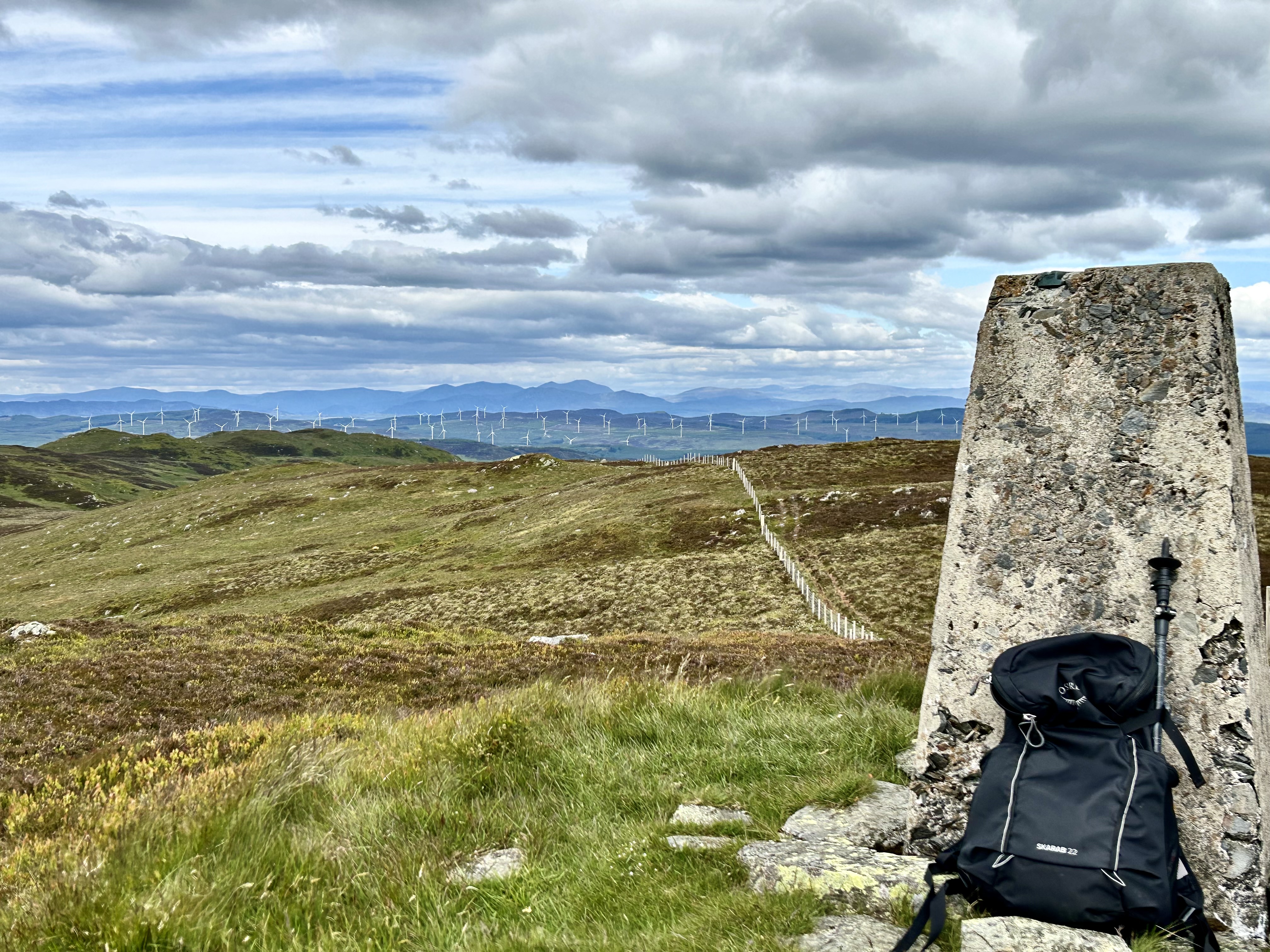
The final part of the climb was through grasslands towards the lonely trig point. Ullswater snaked its way through the fells to the south and east and clouds skimmed the tops of the eastern fells. The music was provided by skylarks as they dipped and dived in the gentle breeze. We descended down the main path to the south to create a circuit and then headed back along an empty road to Lowthwaite and Green Barns. It was beginning to rain and time was pressing if we were to make Langdale in time for the Euros that began at 5pm. I suggested that we forget Great Mell Fell, it would allow Gregor to have a 9-kilometre run from Ambleside to Langdale if we continued via the Kirkstone Pass. I would sign in and unload the food and stuff for the week, it would jolt my memories of all the wonderful previous holidays with Aileen and the children. 

I checked the news before the game started. Amidst all the depressing news about the general election campaign and the fallout from Joe Biden's fall from grace during his debate with Trump, there was sad news about the death of Joss Naylor, the legendary 88-year-old fell runner. He had been an astonishing athlete on the hills, training by proxy as a sheep farmer on his hill farm in Wasdale. I had the pleasure of meeting him during a Mountain Marathon in North Wales when he was partnered by Mike Walford, one of my school cross-country colleagues who had become a successful fell runner in the Lake District. We sat with them by the tents at the end of the first day and Joss regaled us with tales from his remarkable career. He also competed in the world's biggest liar competitions held in the Bridge Inn pub in Wasdale every year but his achievements were the truth.

Great Mell Fell from the ascent of Little Mell Fell

Little Mell Fell 

Peak Joss Naylor


Wednesday, 26 June 2024

In the Thick of the Election

Jenga: the government's operation mode

Rishi Sunak's general election is the mistake that keeps on giving. I had predicted a summer election to some colleagues in May, and they guffawed, but I did not have the gumption to make a bet. And that is my problem, the UK has become a government-franchised casino where aspiring neo-capitalists make money on their phones without ever producing anything.  I still live in a world where price, outcomes and community benefits are what matters.

Think about it.  Government procurement of nuclear power stations, HS2, hospitals, PPE equipment, Test and Trace and consultancy advice for outsourcing services has been a bonanza for unscrupulous middlemen (and women) who have driven up inflation on facilities and services. These used to be delivered by local democratic bodies that were more prudent and focused on getting the best cost, and on-time delivery whilst supporting local businesses. Only 10 of the 40 hospitals promised by Boris Johnson have made progress, HS2 has been cancelled apart from the most expensive bits in the Home Counties where the cost of land acquisition, tunnelling to satisfy the 'loyal' Tory voters, and finance and design costs have gone stratospheric. PPE equipment did not meet specifications and much was trashed and most consultancy advice was lost down the back of the number 10 sofa.

The NHS is at the heart of most people's priority for rescue. I remember it was working extremely well when I retired 14 years ago. I could get an appointment with a GP on the day of phoning, there were annual checks for several common ailments, my wife had regular breast screening and A&E worked well apart from Friday and Saturday nights when alcohol had taken its toll. Hospitals were usually local and well-managed. Community care was usually provided by councils and delivered by someone local who could turn up in the evening to clients if there was an emergency. Most of these characteristics are sadly gone. 

Andrew Lansley's jenga-inspired reforms started the rot, knocking down existing structures and then rebuilding them at a cost that amply rewarded consultancies and many senior health managers. Local hospitals that served their communities were replaced by mega hospitals, designed, built and inflated by PPP contracts that generated massive profits for the finance and construction cartels that took an ever-increasing share of NHS funding. These mega hospitals are difficult to access, too complex to be efficient or effective, infested with building and technology malfunctions, and encouraged the medical silos to put their demands above patient needs. No wonder they are in special measures.   

And community care, well, that has languished as a bottom feeder squeezed out of resources, outsourced to companies who paid minimum wages whether in residential homes or their peripatetic carers. This should be the priority investment to save for the NHS.

The rail franchises failed again and again and several have been replaced by government-run operators like LNER. The privatised water companies introduced by Thatcher and Major governments and allowed licenses to pollute by the water regulator have provided excessive dividends for investors but failed to invest in the infrastructure so that our rivers and beaches are the worst in Europe. The same Europe that had introduced water and air quality standards that have been sacrificed on the altar of Brexit.

We are still uncovering the extent of the government's lethargic management of COVID. The government wasted £billions on badly procured equipment, temporary hospitals and applications and failed to harness the knowledge and experience of public health agencies and councils. 

The bizarre Rwanda scheme for off-shoring asylum seekers has cost £370m without a single person being sent to Rwanda. It will cost £600m if 300 people are sent there according to the Migration Observatory. 

Much evidence of the Government's failures has been kicked into the long grass. Many £millions have been spent on Inquiries that were never intended to be reported until after the general election. What further acts of incompetence will we discover when Grenfell Tower and the Covid inquiries eventually emerge from the burial chambers of the Johnson/Truss/Sunak opaque government?  

Volume house builders make 20%+ profits by building houses designed and replicated across dozens of sites by CAD systems rather than architects and designers. They take little cognisance of landscape or vernacular buildings, they are often poorly specced, cramped and only as sustainable as required to meet minimum standards. Developers have been land banking for years and only develop when the market is favourable. They try to avoid planning conditions that require a proportion of houses for social renting or the provision of play parks, pathways and contributions for other community facilities or services.

The Labour Party blaming councils for delays in planning shows an ignorance that does not bode well for increasing the rate of housebuilding. The land acquisition by councils, the design of housing, a shift to net zero housing and the provision of community facilities should be at the forefront of new housebuilding policy. The blitz of planning regulations threatened by Keir Starmer is the shibboleth of lazy thinking. Planning decisions must reflect community concerns, not the land banking and excessive profit-making of volume builders.

All bets are off about who will not win the election, the electorate has long ago decided that it will not be the Tories with their irascible PM and Gone Girls and Boys.

Rant over, for now.


Friday, 14 June 2024

General Election Half-Time

Half-Time Prime Eviction Candidates
Chris Philp

Emily Thornberry

Halfway there, the campaigning for the general election has been dire. This is not surprising since the government, which should hold all the cards when calling an election, has yet to achieve anything to crow about. Negativity has become the lingua franca of all parties. There is much to be negative about - Brexit, Covid, the cost of living, mortgage rates, NHS, community care, housing and public services. Immigration, policing, pollution, HS2, and delays to public inquiries have been catastrophes. Tax is at its highest ever level and the number of Tory MPs involved in corruption or sex scandals has broken all records. Rishi Sunak has been helicoptered around the country like an amazing dancing bear. He generates pathos and despair amongst his MPs as well as 80% of the electorate. 

The Labour Party has tied itself in knots by their pledge to make no tax increases and a manifesto that is light on progressive policies. It has pegged its future to the Tory's spending plans, a wishlist of economic growth and, in the meantime, a remix of austerity. The country is so disillusioned with the Tories that Jeremy Corbyn could probably have won this election. He would have been a step up from Johnson, Truss and Sunak. Meanwhile, Keir Starmer is campaigning like a human air fryer - safer, more cost-effective and environmentally friendly but not able to produce anything exciting. 

The other parties are having fun. Ed Davy in particular, as he buzzes around the country in LibDem 1, the election bus, there is no LibDem 2, it is just another Lib Dem joke, geddit?. But he has modelled himself on Mr Pastry as he clowns about but combined with his sincere broadcast about his role as a carer for both his mother and disabled son he has got into the game. Daisy Cooper has been a cheerful accomplice and with no chance of forming a government they have been able to offer more progressive policies than Labour in the safety of knowing that they will not have to do a Nick Clegg and rescind them in office.

The Greens have also benefitted from the security of being able to draft their manifesto as fiction and provide the reader with some optimism paid for by the UK's non-dom citizens and the oil companies. Their joint leader, Carla Denyer, has performed well and scored some good points during the numerous leadership debates when the two main parties have been slugging it out for a scoreless draw. Similarly, the Welsh and Scottish Nationalists have landed some punches, and unlike the Reform Party and their leader who must not be named, they have focused on the issues that matter most. In Scotland, John Swinney has had a torrid time as the other parties have lambasted their performance over the past 17 years. Swinney, a sincere and competent politician, has inherited the fallout from the self-combustion of Alex Salmond, and the inglorious exits of Nicola Sturgeon and Humza Yousaf.

The press has been predictably true to the political prejudice of their owners and the BBC has tried to be balanced in what is one of the least well-balanced elections since 'Things can only get better." Comedy shows have not been afraid to ridicule the trio of prime ministers who have been responsible for the chaotic events of the outgoing government.

Rishi Sunak has had little support from his cabinet, they seem to have gone to ground, and even omnipresent rent-a-quotes like Grant Shapps have gone awol, although Penny Mordaunt always enjoys a good fight. The ultimate Tory deterrent, Chris Philp, makes me reach for the zapper faster-than-you-can-say Emily Thornberry. They would make a great pairing for GB News, and be guaranteed to eliminate its few remaining viewers.


Sunday, 9 June 2024

Amulree Grahams

Meall nan Caorach and Meall Reamhar

Sunday, 9 June 2024

Ascent:              525 metres
Distance:          10 kilometres
Time:                2 hours 50 minutes

Meall nan Caorach      623m.     1hr 12mins
Meall Reamhar.           620m.     1hr 48mins

After leaving Dunkeld following a Sunday brunch with Emily and Gregor the day after their wedding, I drove to  Amulree, crossing the A9 was like stepping into a skipping rope going like pepper. I had planned to climb two Graham Hills that faced each other at the head of the Girron Burn, I figured that they would be manageable after a couple of days of indulging in wedding celebrations.  There is parking space for a couple of cars at the start of the track to Girron, an empty farm building, and then a tricky path that leads to a track that continues for 3 kilometres to the bealach between the two Grahams and is named Grouse Butts on the OS map. I met a walker coming down, he was from a walking club in Lancashire and had opted out of climbing Meall nan Caorach, the second hill, leaving it for his younger colleagues. He was eighty but looked in fine fettle and had managed 210 Munros but had declared from finishing a Munro round.

Shortly afterwards, I left the track and made a rising traverse to the summit of Meall nan Caorach. It was steep but mainly over grassy and heather-covered ground. The visibility was good but it was quite cool for June. I dug out my wind top at the summit and admired the 360° views. I was staggered at the number of hill tracks festooning the hillsides, presumably built to give access to grouse shooting. It was a steep drop of 160 metres to Grouse Butts and a similar steep climb to Meall Reamhar. I was making reasonable time and after a break for a drink and some photos, I decided to descend down the ridge to the northwest rather than dropping down to the track. Three Land Rovers were making their way down one of the tracks to the west of the summit. The descent was less straightforward than I had expected with several boggy sections but the compensation was the prolific bird life with dozens of meadow pipits and lots of grouse in the heather.

Some large erratic boulders provided a picturesque foreground for the Griffin wind farm about 10 kilometres away.  A large and healthy-looking rowan tree was growing out of another large boulder and opening its fissures in the process.  I made a beeline for the car but came across Girron burn that was slow-moving and about 2 feet deep. It took an extra 10 minutes or so to double back and cross it upstream where it was running faster and shallower, but I still ended with wet feet. The walk had been the perfect way to recuperate from the food and drink of yesterday. I was home by 6pm for a bath to remove any ticks as I had been wearing shorts whilst walking through long grass, bracken and heather in deer country.

Summit of Meall nan Caorach

Meall Reamhar from Meall nan Caorach

Meall nan Caorach from Meall Reamhar

Looking north to the Griffin Wind Farm

Lomond Hills from Meall Reamhar


Erratic boulders

Rowan Tree on the descent

Monday, 3 June 2024

Summertime and the drinking is easy

Ben Lomond as May fades out
Setting up the Race in Killearn Park
Killearn Houses on the trail
Announcing the first finisher
32:44
Killearn 10k Trail Rcae
View from the Village Hall
Summer arrived on 31 May with two days of sunshine and a warmth that made you thirsty. It was the Killiearn 10k trail race, the sort of event I enjoyed in my running days. Gregor was competing for the first time in what is now his local race. A real beer festival was also taking place at the Old Mill pub. It seemed a good way of spending some time after a hard day in the garden and still feeling some aches from my latest COVID vaccination two days ago.

Killearn is one of the more salubrious villages that nestles beneath the Campsies and enjoys panoramic views towards the Highlands in the northwest. It was the home of George Buchanan, the historian and humanist who argued that the source of all political power is the people. The massive monument in the village suggests that, despite its twee characteristics, Killearn celebrates its radical roots.  

I arrived at 10:00am and watched the organisers erecting the tents, tapes and other paraphernalia that are required for well-supported community-run events. Dozens of marshalls were being despatched to locations along the trail that climbs out of the village and then runs along an old pipeline route to beyond the Dungoyne Distillery and back and involves over 150 metres of climbing. The field of 250 runners included lots of locals, a couple of football teams and a running club from Glasgow. There was an equal number of males and females. 

There were no over 70s, perhaps I should have entered. I jogged out to the 2.5-kilometre point to watch as the race climbed steeply to the pipeline. Gregor was going like a steam train and had over a minute on the next couple of runners.  I decided to run back to watch the finish and caused some confusion among the marshalls as I ran past at a pace that would barely achieve an hour for the 10k. The Police even stopped the traffic as I jogged down to the Main Road. The sergeant called me over, he had been at school with my daughter over twenty years ago and wanted to catch up.

I got back to the finish line about a minute ahead of Gregor who was 5 minutes ahead of the next finisher in an impressive time for a hilly 10k over tough terrain. Emily beat her hoped-for time and we hung around for the prize-giving. Then on to the Beer Festival, it was already heaving as the runners, visitors and locals soaked up the beer and the sun in conditions that restore your faith in summer days. After using up my couple of tokens and realising that the excellent draft Summerisle was perhaps a little too tempting, I baled out. I had just returned home when John called round he had been hillwalking in Glencoe as he nears the completion of his fourth round of Munros. We discussed a trip to Fisherfield later in the year. It had been a good day and the European Cup was still to come.

Buchanan Monument

Summerisle mythical island of the Wicker Man


Friday, 31 May 2024

What about Local Government?

Amidst all the flotsam of policy pledges and gimmicks being thrown out by the political parties as they fill in their fake dating app details for their electorates, something is missing. There is no commitment to respond to the immense damage done to local government services since George Osborne declared austerity in 2010. The total spending power of councils in England fell by 26% between 2010/11 and 2020/21, according to the National Audit Office. In real terms, core spending has been reduced by 11% between 2010/11 and 2024/25 according to a Parliamentary report on Local government finances: impact on communities. Scotland, Wales and Northern Ireland receive equivalent funding from Westminster, so these figures give a measure of the massive scale of decline in locally provided public services.

After the cost of living and NHS waiting times, the most frequently heard issues from the public during the election campaign were, or are, the responsibility of local government. There are many of them - the lack of housing, shortage of community care, potholes, poor and diminishing public transport, fewer support staff for special needs children, run-down schools, the cost and shortage of nurseries, closing sports facilities and libraries, declining town centres, slow responses to planning, building and other applications, failing water and sewage services with pollution to rivers and beaches, reductions in community policing, and a woeful lack of activities for young people. 

According to the National Audit Office, the services with the greatest reduction in spending up to 2020 were cultural (-37%), planning and development (-36%), non-school education (-32%), housing (-26%), and roads and transport (-24%).  A third of all libraries closed, and 14% of bus route mileage was closed. This is a staggering decline in public service provision, exacerbated by the growing number of elderly requiring social care and the escalating costs of many outsourced services.

Who determines what councils can spend? Well, central government, whether it is Westminster or Holyrood. They have both been merciless in stripping out grant support for councils and/or freezing council tax over the past 14 years. That is how austerity works; it means that the opprobrium for reduced public services can be devolved onto councils. The increased financial support for the NHS and the government's obsession with mega projects, such as HS2, Nuclear Power, Brexit, and COVID, have been at the expense of the provision of everyday public services for communities. Levelling up has been less than 10% of the funds withdrawn from councils. The evidence is that these funds, when allocated, are more likely to go to the constituencies of government MPs so that they can claim the kudos rather than to the most needy towns and communities. 

Staffing levels in local government have been severely reduced, knowledge has been lost, innovation and renewal have been stultified, and talented staff have been replaced by consultants and outsourcing companies. It is a bleak scenario that the UK and Scottish governments have imposed on local government. Cynically, it allows them to distance themselves from culpability. The press and media are no longer interested in local issues; newspapers have been closed or regionalised under some franchise arrangements. The soap operas of Westminster and Holyrood have kept them busy with all the corruption and faux cage-fighting that exists in these bastions of our dumbed-down democracies.

Even the dozens of podcasts that invade our lives fail to focus on this narrative of despair about local democracy. They do not seem to understand that most of the life-changing innovations for people and places were designed and built by our municipalities in times when they were free from the tentacles of control and inspection, budgetary control and centralised edicts that emanate from central governments. Central governments that have never been effective in managing or delivering services, look at the defence procurement or the cost of inquiries, not to mention the cost of building or maintaining parliaments. 

Yet history tells us that most essential services were innovated and introduced by local government, not central government. Most public health measures, including the provision of water and sewage, schools, hospitals, poor houses, gas works, electricity power stations, social housing, public transport, libraries, residential homes, home care, and leisure facilities, all emerged from local municipal, church or philanthropic endeavours. They were refined and shared between municipalities, ensuring a rapid spread and refinement of best practices. 

Why would any progressive central government want to remove the ability of local government to drive improvement and innovation other than to fulfil their own sense of entitlement to power? Unlike most European countries, the UK local government is not enshrined in a written constitution; it is subject to control by the central government. It is time for this to change, and along with other top priorities, this should be a commitment for the next government.  Change is required to restore local democracy; change is not just a slogan.


Monday, 27 May 2024

An Alphabetic Legacy of the Tory Years

I have listened to several speeches by the Prime Minister since he announced the general election would take place on 4 July. The outgoing parliament has been one of the most corrupt and disorganised in my lifetime with more cases of sexual misdemeanors and suspensions than ever before. We have had three Prime Ministers, two of whom have been dismissed by the Tory Parliamentary Party for their indiscretions and sinking the economy. With opinion polls indicating that this has reduced the Tory vote to a mere 23% of the electorate, some contrition might have played well. After all, Rishi Sunak had promised integrity, professionalism and accountability when taking over from Liz Truss.

Forget it, he has immediately weaponised the party's social media, the right-wing press and think tanks to pour lies and half-truths about the opposition parties. His speeches, laced with lazy sound bites and the abuse of statistics, have made me apoplectic with rage. At least we knew that Boris Johnson just made up the facts as he went along, Sunak tries to give the impression that they are accurate. It confirms all the evidence that has piled up during his tenure as PM. He has delivered on nothing and his only plan is to get the hell out of Downing Street as soon as possible in the second half of the year when the election is called.

Listening to the PM as he flies around the country completely junking any accountability for his non-delivery of services or broken promises prompted me to scribble a catalogue of disasters during the l4 years of government since George Osborne launched austerity. The mistakes and incompetence of the Cameron, May, Johnson, Truss and Sunak governments have devastated public services, prevented growth, kicked the righting of tragedies into the long grass and reduced the UK's influence in the world. As an aide memoir, I have listed the most egregious policies and tragedies, the MPs suspended and those most responsible and the people and organisations who have put their shoulders to the tipping point of chaos. I am sure I have missed many events, some MPs who have helped create the mess and there will be lots of individuals, donors and organisations who are equally responsible but less transparent to those listed.   

Events, Tragedies and Cock Ups  

  Austerity   

Brexit

Climate Change

          Community Care 

Contaminated Blood Scandal

Cost of Living

Covid-19

Debt

Emergency Waiting Times -NHS

Fracking

          Fuel Escalator 

Grenfell Towers

           House Building 

HS2 & Heathrow Expansion

Immigration

Insulation of Homes

Indyref 2

Justice System

King's Coronation

Levelling Up

Leveson Inquiry

Local Democracy

Metropolitan Police

NHS Reform (2013)

Oil Licences

Olympic Legacy

Partygate

Policy Soundbites

Post Office Horizon IT

Prisons

Public Services

Queen's Funeral

River/Beach Pollution

          Rail Franchises 

School Catchments & Support Services

        Skill Training 

Strikes

Trade Agreements

Train Price Ticketing

United Kingdom

          University Funding and Foreign Students 

VIP fast-track for PPE

Vote Leave Campaign

Windrush Scandal

World Beating Jingoism

XIV -years in power

Youth activities

Generation Z

The cast of MPs involved in the Tragedy

Dame Andrea Jenkyns

Dame Andrea Leadsom

Andrew Budgen*

Andrew Griffiths*

Baron Andrew Lansley

Alex Salmond*

Boris Johnson*

Chris Grayling

Chris Huhne*

Chris Pincher*

Crispin Blunt*

Lord David Cameron

Sir David Davies

 David Warburton*

Dominic Raab*

Douglas Ross

Esther McVey

Sir Gavin Williamson*

George Osborne

Grant Shapps

Sir Ian Duncan Smith

Imran Ahmad Khan*

Sir Jacob Reece-Mogg

Sir Jeffrey Donaldson*

Jeremy Corbyn*

Jeremy Hunt

          Sir John Whittingdale 

Jo Swinson

Julian Knight*

Kemi Badenoch

Kwasi Kwarteng

Lee Anderson*

Liz Truss

Liam Fox*

Matt Hancock*

Michael Gove

Baroness Michelle Mone*

Nadim Zahawi*

Nadine Dorries*

Neil Parish*

Nick Clegg

Nicola Sturgeon

Owen Paterson*

Peter Bone*

 Dame Priti Patel*

Rishi Sunak

          Robert Jenrick  

Rob Roberts*

Scott Benton*

Sir Simon Clarke

Steve Baker

Suella Braverman*

Therese Coffey

Uriah Heap

Sir Vince Cable

William Wragg*

       Yuri Geller 

        Zac Goldsmith 

*   MPs suspended or resigned or subject to criminal investigation

Supported by

Andrew Neil

Lord Anthony Bamford

Sir Charles Moore

Centre for Policy Studies

Baroness Dido Harding

Dominic Cummings

Lord Evgeny Lebedev

Elon Musk

Lord David Frost 

Duke of York

Frank Hester

Sir Frederick Barclay

GB News

Institute of Economic Affairs

Jeremy Clarkson

Kelvin MacKenzie

Laura Kuensberg

Mathew Elliot

Paul Dacre

Paula Vennells

Policy Exchange

Rupert Murdoch

Simon Case

           Tony Abbott 

Viscount Rothermere

X formerly known as Twitter


Thursday, 23 May 2024

Election Time, then the Living is Easy

Just Winging it in the Rain

I wasn't surprised at the calling of an election for 4th July. It is the second half of the year, and things are getting worse with the build-up of Inquiry publications requiring significant compensation funding and no room for tax cuts. Tory MPs have been scuttling the good ship Lollipop with all the loyalty of Tory MPs. Rwanda was a pious hope, and Rishi Sunak has become more knowingly economical with the truth than Boris Johnson was ever unknowingly aware of it. Why hang on to make the difficult decisions when you can dump them on the knighted bloke opposite?

The reaction from his party wasn't that supportive - "suicidal, crazy, shocked, confused, angry, a gamble and what a clown" were just some of the comments. Since the announcement, another 5 Tory MPs have said they will not be standing, bringing the total to 73.

The public didn't share this view; it was "thank god, about time." Esther McVey, the Minister of Common Sense, disagreed; she thought he should hang on as things would get better. So did the nearby crowds in Whitehall who drowned out the PM's speech calling the election by playing 'Things Can Only Get Better', the D-Ream theme tune for the Labour landslide victory in 1997.

After 14 years in government, during which the UK has had virtually no growth, declining living standards, a collapse of public services and Brexit, their time was up. This was made inevitable by the emergence of many scandals from the Post Office Horizon to Grenfell Towers, a disastrous Covid response and HS2 costs rising faster than Usain Bolt. They had also lost any international influence and respect; the government had hit the buffers and delivered very little other than disenchantment. Rishi Sunak knew it and had a Plan as he repeated ad nauseam. His plan was to get out of the job as soon as possible. He would do some Californian Dreamin' on American Independence Day. Living would be easy away from the imprisonment of being a makeshift Tory leader.  


Tuesday, 21 May 2024

Klopp's Last Sunday


Anfield Grand Departure

It was a warm May day and Jurgen Klopp's final game as the manager of Liverpool. It has been a crazy eight and a half years since he arrived at Anfield. I had recently loaded an app to follow the flight path of planes, and it allowed me to watch his flight into Liverpool on an October day in 2015. This followed the sacking of Brendan Rodgers, who had always flattered to deceive. Klopp's plane was to land at John Lennon Airport but the app showed that he continued to head for Anfield where the plane dropped in altitude and looped around the ground before heading back to the airport. A gesture that told me he was genuine, someone who would be a fan as well as a coach and manager. In his 491 games in charge, he has won a higher percentage of games, 60.9% than anyone else including Kenny Dalglish, Bob Paisley and Bill Shankly. His teams also scored the most goals per game (2.1) than any other manager. These statistics mattered less than the sheer joy of watching his teams terrify their opponents with pace and pressing. 

I had gone to Gregor's to watch the game on Sky,  I have steadfastly refused to buy anything owned or part owned by Rupert Murdoch, it is the prize exhibit in my boycott portfolio. Before the game, we went to Mugdock Park, it was overflowing with hundreds of visitors and we found the last space in the overflow car park. Emily was playing in her band, we found seats in the parkland adjacent to the bandstand and baked slowly in the summer heat until it was time to retreat to the TV. 

As a spectacle, Liverpool's 2-0 win over Wolves was not that exciting. It was the send-off afterwards that captured the mood of the players and the fans told you that this was the end of an amazing feelgood era, Klopp doesn't do special and he spent the hour after the game cuddling players, and their families, the staff and members of the crowd whom he passed. The caption on his T-shirt 'I will never walk alone', matched the occasion and was a mark of the man. Almost as good as the name of the Chinese takeaway cafe next to Anfield -'Wok On'. 

It had been a long watch so Gregor and I went for a walk in the nearby countryside on a sparkling evening. After spending time watching the red squirrels play in the massive pine trees we charged through long grass and an oak forest to find the splendid Dualt Spout, a waterfall that is a hidden gem screened from the public by the absence of any paths. The only downside is that I am picking ticks off my body two days later. A Gusto meal and rhubarb crumble at 9pm completed the day. It was still light as I arrived home at 10:30pm.


Mugdock Pond

Spot the red squirrel

Dualt Spout

Saturday, 18 May 2024

Ben Oss & Beinn Dubhchraig


Waterfalls below Beinn Dubhchraig

Friday, 17 May 2024

Ascent:       1156 metres
Distance:    24 kilometres
Time:          6 hours 51 minutes

Beinn Dubhcraig.   978m.     2hrs 29 mins
Ben Oss                1029m.     3hrs. 58mins 


I had planned to climb Ben Lui on what promised to be another rare sunny day. First, I had to visit the Medical Centre for some stitches to be removed so the start was later than I would have wished. I also needed to acquire some hill fitness and noticed whilst waiting for the nurse that the Met Office forecast was for fresh easterly winds on the hills. If I began the walk from Dalrigh and climbed Beinn Dubhchraig and Ben Oss first, the wind would help on the 450-metre slog up Ben Lui. On five previous outings, I have always climbed the four hills together but I was no longer collecting Munros,  Beinn a' Cleibh, the undistinguished outlier to Ben Lui, could be forgotten. It is either a long out and back from Ben Lui or requires a descent to Glen Lochy and the uncertainty of hitching a lift back to Tyndrum, hitching is not as easy as it used to be.

Leaving Dalrigh and finding the right path always seems like a bit of a lottery. I did well initially helped by OSmaps online, I found the quickest route to the bridge over the river St Fillan and walked alongside the railway line before crossing it and coming to a junction of paths. I stopped to look at the map, the more obvious track headed south alongside the Allt Gleann Auchreoch, I thought this may be a better route than that I had followed previously along a boggy forest path. A walker behind me had no such doubts and went the other way and, as I discovered later in the day, he had thought of telling me that the route to Dubhchraig was the lower path which had a bridge over the river. I was walking well up the track but after a mile, I realised this was a far longer way and that I should drop down to cross the river and ascend what looked like an easy grassy slope between the plantation and the native Caledonian forest.

I dropped 40 metres to the river which was a raging torrent. It took ten minutes to find a possible crossing point that required a leap across a deep chasm, my nerves and shoes held. After climbing up the bank, the grassy glade turned out to be deep grass engulfed in boggy moss that made every step twice the effort. It took 45 minutes to cover a mile before I spotted the real path on the other side of the Allt Coire Dubhchraig. It was boggy but knew the way to the summit. I relaxed and enjoyed the climb as the path meandered its way to the summit ridge. I had probably lost 40 minutes by not taking this path from the railway line. The final half kilometre to the summit was a steady climb. It was approaching 1pm as I reached the bulky but untidy cairn. I took a few photos, rebuilt the top of the cairn in my usual style and had some food whilst a raven circled above checking for morsels. 

It is a fairly steep descent of 180 metres to Bealach Buidhe, a ptarmigan croaked at me as I passed. The path towards Ben Oss is level for a few hundred metres until a cairn from where a steep path climbs towards the 941-metre northern top. I began the climb as I saw someone begin the descent and we met about halfway up. The young woman from Biggar was at that stage of her Munro round that has taken hold of your life. So many adventures had and so many more to come, and like most young female hillwalkers she was also into outdoor swimming. She had just returned from a trip to Knoydart, and I envied her for the times ahead. As I neared the top of the climb I met a teacher from Edinburgh who was on his 137th Munro, we had another longish chat. He was about to head to Gairloch to supervise some of his school pupils and was hoping to walk the Glen Affric Munros. 

I had lost another 25 minutes in conversations but enjoyed meeting younger people who were captivated by Scottish hillwalking. The conditions were perfect and the ramble along to Ben Oss was a treat. I finished my lunch and contemplated the timings to reach Ben Lui. It was almost 3 pm and would be approaching 4:30 pm before I reached Ben Lui. I wanted to be down to listen to Dead Ringers on the radio on the way home. I continued down to Creag Dubh a' Bhealaich, but twisted my right knee on the descent. Whilst there was no apparent problem on the less steep slopes I began to wonder whether the rocky twisting descent of Ben Lui would inflame it. I am conscious that injuries at my age take weeks not days to recover and this is the prime walking season. I glanced down Coire Laoigh and spotted an obvious descent route from near the bealach. Ben Lui could wait. I took my time on the steep descent in the company of dozens of frogs and reached the Coire floor with no further knee damage.  There was the trace of a path down the west bank, a 3-kilometre walk to the track that serves Ben Lui. The conditions were benign with a cooling breeze to keep any sweat at bay.

I reached the track from Ben Lui by climbing up 70 metres, a walker was a hundred metres behind me. As we approached Connonish, I held a gate open for him as he approached and we struck up a conversation. He had been the person who had thought of telling me the route to Dubhchraig in the morning. He had managed Ben Lui and had obviously been moving well. We walked together for the 5 kilometres back to Dalrigh. He originally came from Sheffield, allowing us to talk animately about Sheffield pubs, Sheffield Wednesday, and even the mercurial  Sheffield United midfielder, Tony Currie. We had both been to Liverpool University although he was about ten years younger which prompted more stories about Liverpool, although I never got around to telling him about making a film with Billie Whitelaw. We had started to talk about hill walking, he lived in Edinburgh for many years and knew the Scottish Hills intimately and had taken to walking the Borders Hills as the sustainable alternative to going to the far north.

Without any prompting from me, he exploded with indignation about the North Coast 500 and how it had despoiled hill walking in the far north as accommodation was now either non-existent or too expensive, hotels and restaurants were full of tourists and laybyes were clogged with camper vans. We could have done a podcast on the subject. He had also walked the GR20 in Corsica and had worked for BT with colleagues whom I knew. We could probably have done a weekly podcast on places, people, mountains, football teams and big walks that we both had experienced. 

The final 5 kilometres had flown by. We were back in time so I could listen to the news as well as Dead Ringers. After a bath and a beer, I managed to stay awake for Have I Got News for You and to load my photos onto the computer. It had been a good day and sleep was calling until a cramp in my leg postponed it for a few minutes.

River St Fillan at the start of the walk

Rerouting from Gleann Auchreoch

Beinn Dubhchraig  looking towards Ben More and Stob Binnein

Ben Oss and Ben Lui from Dubhchraig

Ben Lui from Ben Oss

Ben Lui from Creag Dhubh

Looking up Coire Laoigh