Thursday, 27 March 2014

Parlick Hill, Bowland Forest


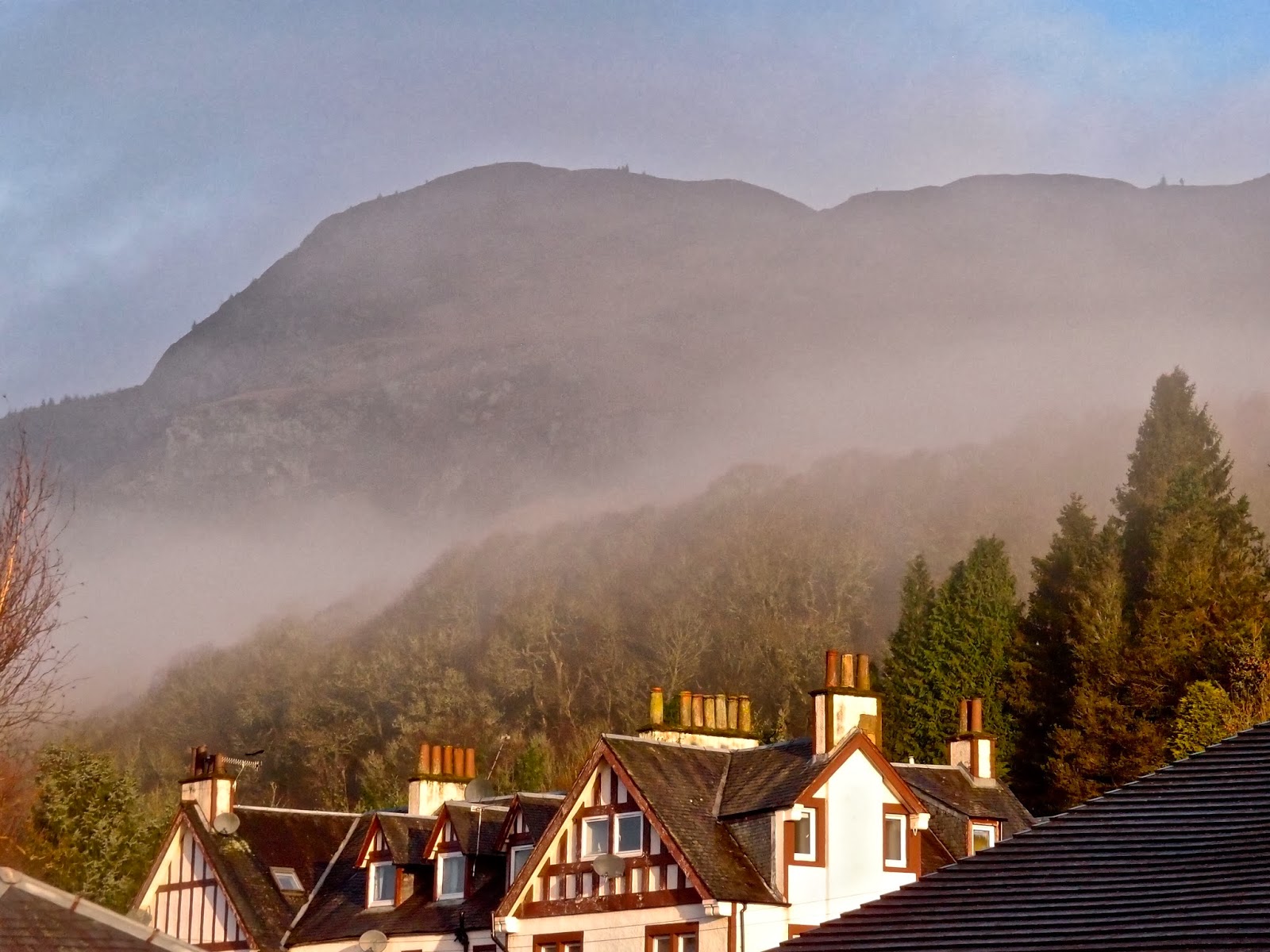
Parlick in first light
Pendle profile
Parlick from Saddle Fell
Keep Up
Pendle from Parlick
Beacon Fell from Parlick
Mallards posing and reposing
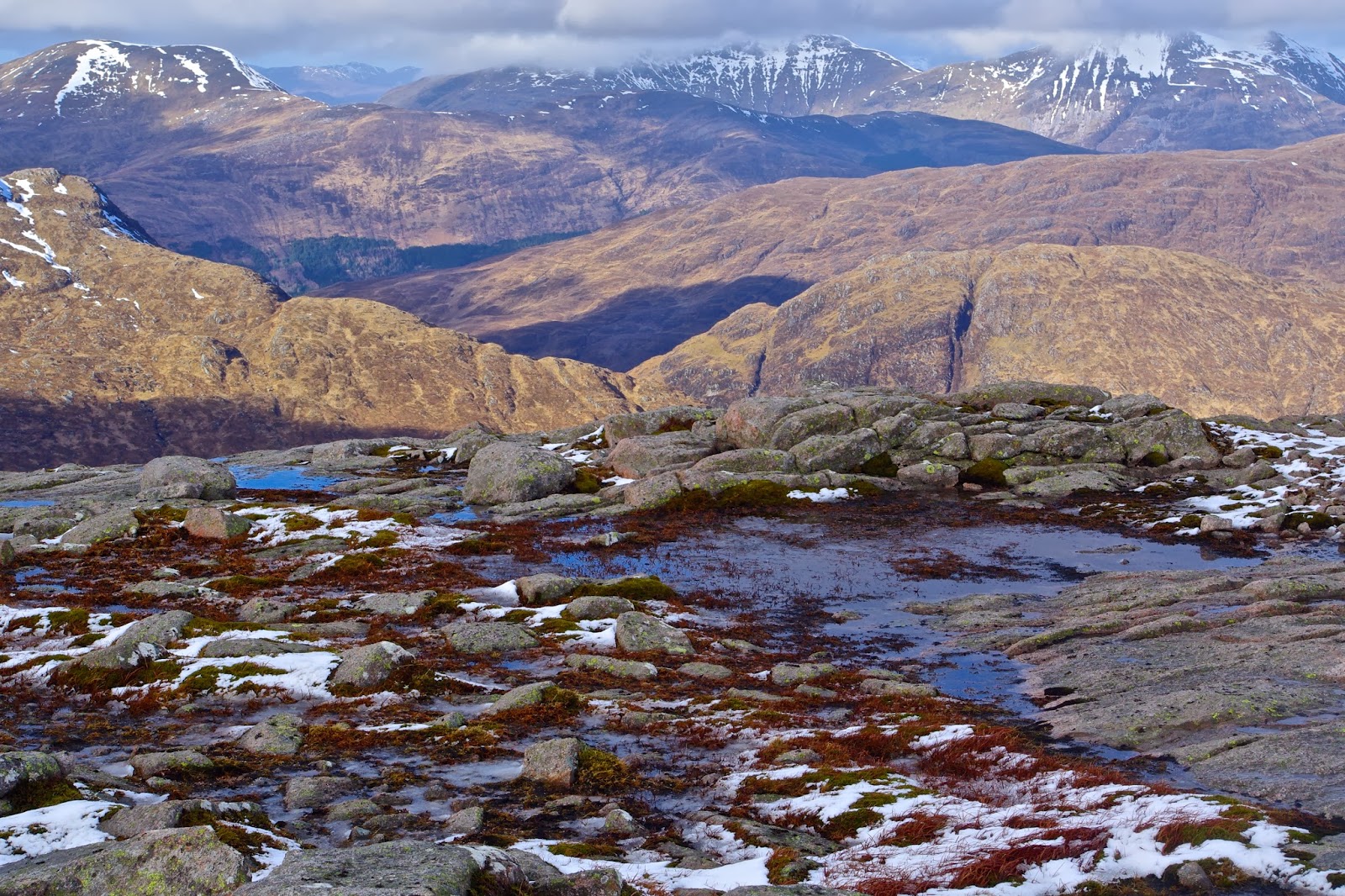
It was an unusual start to the day, after a late arrival the previous evening at my brother's house and overloading on my favourite creamy Lancashire cheeses, we agreed an early morning walk. By 6:30am we were taking two dogs for a round of the hills north of Chipping including Parlick, a regular Friday night jaunt as a teenager after the pubs had closed. It was just above freezing and the light was at its best with the sun streaming in from just above Pendle hill to the east. We walked through the dairy farms that produce the very best of Lancashire Creamy Cheeses and ascended by Saddle End Farm. It was a long steady climb up Saddle Fell with superb views across to Pendle Hill and south to Jeffrey Hill that now seems to go under the name of Longridge Fell.

We let the dogs off their leads when we reached the summit plateau where a new path had recently been laid leading northwards to Fair Snape Hill. The path made for easy going as we were blasted by some sleet. The occasional grouse greeted us with their usual whirring and squawking but there was no one else out at this early hour.

At the summit of Parlick I surveyed the landscape of my youth. Longridge Fell, a long low ridge hiding the Ribble valley, it was the venue for a family walk every Good Friday with a picnic at the top; Pendle Hill is a more strident ridge and home of the Lancashire Witches, a book we had read at Primary School. The river Loud where I had spent my first night camping and freezing in a blanket whilst my father went night fishing. Nearby the Beacon Fell Country Park was being shorn of trees and beyond it the Lancashire Plain dribbled out to the Fylde. I had cycled and walked round these landscapes in all school holidays and my dissertation at university was the geology and settlements of the Loud valley. We had turned a car onto its roof whilst following the Tour of Britain cycle race through the Trough of Bowland but in the days of less flimsy cars we flipped the Morris Minor back onto its wheels and chased the race to Blackpool. On most family special occasions we celebrated in the many local hostelries that served generous portions of local produce and recipes. This largely unknown and unblemished rural hinterland of industrial Lancashire conjured many happy memories.

We descended the steep side of Parlick and followed the mainly well maintained Lancashire local roads back to Chipping. The mill pond was a hive of activity as the birds busied themselves with courtship rituals. A fine way to start the day and made all the more enjoyable when a full breakfast was placed in front of us.

Monday, 24 March 2014

Kinder Scout

Crowden Clough and the descent route

The start of Jacob's ladder

Edge of the plateau

Approaching Kinder Low

Gritstone sentinels

Kinder Low trig point

The summit cairn, no wonder no one finds it

Pym's Chair

Snow on the Edge

Saturday, 22 March 2014
Ascent:          420 metres
Distance:       10 kilometres
Time:             3hrs 27 minutes

Kinder Scout  636 metres       1hr  41 mins

Another long-standing ambition was achieved today. I had promised Kath, a friend from University days, to climb Kinder Scout 45 years ago. Saturday morning lectures, Saturday night gigs in the students' union, followed by Sunday morning blues in my digs, and a lack of transport meant we never got around to it. After a lifetime of hill walking, I felt it was time to visit the site of the Kinder mass trespass in 1932 and pay tribute to the determined folk who had been the catalyst for opening access to the hills and nudging us towards National Parks. I contacted Kath during a visit to Sheffield and arranged to fulfil the promise. She seemed delighted and gifted me a beautifully illustrated book of Kinder Scout by Roly Smith, published by Derbyshire County Council.

I had spent the day before in Sheffield on a course at the University and stayed with my niece overnight. I made an early start on a cold morning, travelling by bus through old haunts in Sheffield to meet Kath. It brought back happy memories, as did the drive in her car to the Peak District and Kinder via Edale. The skies were clear, and the southern edge of the vast Kinder peat plateau was inviting, its collection of gritstone tors punctuating the skyline.

We decided to follow the Pennine Way route via Upper Booth and Jacob's ladder with the hope that it would be more sheltered from the strong westerly winds. Despite the clear conditions, there were relatively few people on the trail from Upper Booth that brought us to the start of Jacob's ladder. A well-constructed slabbed path rises steeply up to Edale Head and then curves around to Kinder Low. The wind was bitingly cold, and there was a flurry of sleet just before reaching Kinder Low. Several parties were sheltering here, and a lone fell runner of pensionable age jogged past, oozing contentment with every step.

This was the onset of where the peat hags and groughs began. After pausing at the white trig point beyond Kinder Low, where other groups had stopped for an early lunch, I took a bearing for the official summit at 636 metres. There was no visible sign of a high point or a cairn. Only a scattering of white bags, containing the empty boxes of grasses that had been sewn into the bare peat banks, gave any feature to help navigation.  Fortunately, my bearing was pretty well spot on and after about a kilometre, the minimalist summit cairn became evident. I suspect that even scouts would have trouble finding it! I despaired that the highest point of the Peak District was just a peat bank and less like a peak than any hill I have ever been on. Even though there were by now a dozen or so parties of walkers either at Kinder Low or at Crowden's Tower, none of them bothered to search for the summit; perhaps they had already been there and knew not to return. I felt like an obsessive peak bagger, and I probably am.

Finding a way to the edge of the plateau was not too difficult despite the undulating peat banks. A white hare sprinted along the groughs and a raven briefly glided past. After a quick climb up Pym's Chair and as the skies turned an ominous grey, we made for a group of gritstone tors, the Woolpacks, to get some shelter. Lunch was interrupted by a snowstorm, the wind was eddying around the overhanging picnic rock and blowing away the cress from the crayfish salad that Kath had brought. It was not easy to consume in a near white-out with a plastic fork. It would have been easier and more appropriate to have eaten a Kinder egg.

Visibility was not good, and as the conditions deteriorated, I decided to seek the most direct descent, which involved following a path along the ridge to Crowden Clough. There was a direct route down the open hillside from here, and we had emerged from the cloud. The fields were full of sheep and it was lambing time, so I worked around them and crossed the Crowden brook before following a path back to the road to Upper Booth.

It is not far to Edale and escaping the cold into a warm, crowded inn was reminiscent of many similar occasions when I had walked in the Lake District and made it down from the hills by lunchtime. There was time for a coffee to thaw us out and a beer before saying farewell to my long-lost friend and catching the train to Manchester. It had been a long-anticipated outing in very different landscapes than I have become familiar with in the Highlands, but I was inspired sufficiently to consider an attempt to walk the Pennine Way.

All peat and no peak

Wednesday, 19 March 2014

Slow Running

First Running  Shoes - Reebok AZIIs c1983

I was intrigued by a review of Richard Askwith's latest book Running Free, in which he deconstructs the industrialisation of running. He defines the seven ages of running, most of which I have passed through, and like him, I am now probably most at one with what he calls 'slow running'. It wasn't always so; most runs until the age of 45 were aimed at improving my PBs.  Slow running is the exercise equivalent of slow food, something done naturally with no inessential ingredients and allowed to take place at a pace that allows appreciation of our environment rather than a timetable of set mileages. 

He demolishes the need for an increasingly expensive range of running accessories from £100+ shoes to energy supplements, GPS watches, phone apps, and worst of all, in his view, adventure races. It made me reflect that we had quite a lot in common. Although, unlike him, I still time every run on my 28-year-old Casio watch and record any PBs, which I achieve nowadays by finding new routes rather than going faster on routes that I used 10 or 20 years ago. I also have a yearning for adventure races, having completed 12 International Mountain Marathons and the Island Three Peaks Race. These were the highlights of my running career, along with the Snowdonia Marathon. But Richard Askwith is probably correct, they are as much about marketing for running gear and equipment and an event to claim on social media as a way of competing in the great outdoors.

After 30,000 miles or so of running over 30 years, 130 races from 800 metres to multi-day 65-mile hill races and membership of 3 running clubs, I figured that I had the knowledge and experience to agree that Richard Askwith has got it right when he extols the virtues of 'free-running'. I have just returned from an 8-mile run around the forest, taking in two new loops that I happened upon in the last few months. I go out whatever the weather and run at the speed I feel like. Just occasionally I am flying, but most of the time it is as much about admiring the scenery, spotting the wildlife and enjoying some health-giving exercise.  In recent years, as my patience levels have increased, I have even taken to stopping and talking to familiar faces who may be out cycling or walking dogs.

And as for running kit, it is ridiculously cheap compared to other sports, helped by a drawer full of old T-shirts won in races. My kit for a winter run today was:

  • Adidas Kanadia 4 trail shoes, last year's version bought for £32 from sportsshoes.com
  • Ron Hill tracksters from 1995 Karrimor International Mountain Marathon - £8
  • T-shirt from the launch of the National Park in 2002 - free
  • Montane wind top  - £30
  • Casio watch bought in 1986 - £14
  • Buff bought in Hong Kong for £2
  • Socks, my luxury item- Smart Wool PhD - £9
  • Gloves -Ron Hill running gloves - £4

So all in all, I am running with just £100 of gear, admittedly I have to buy a couple of pairs of shoes each year, but with 150 -200 runs a year on trails through woods and up hills and with no gym or health club charges, it has to be the bargain of all sports. I am running free and for free. If that is slow and the sixth or seventh age of running, then I'm fine with it.

My free-running trail

Tuesday, 11 March 2014

Beinn Trilleachan

Snow-capped summit of Beinn Trilleachan

Ascent:      1035 metres
Distance:   9 kilometres
Time:        5 hours 6 minutes

c  Beinn Trilleachan    839m    2hrs 52mins

At last, the weather was changing and on the first day of the high pressure I headed for Glen Etive and the massive primeval-looking mountain of Beinn Trilleachan. I had admired it on numerous occasions from Ben Starav or Beinn Sgulaird but it is a long way to drive down Glen Etive for a single corbett. This was my first mountain walk of the year so it seemed appropriate to collect the nearest unclimbed corbett. Despite the forecast of high pressure and a dry day, it was no brighter than most of the others over the last three months and there was a clammy damp warmth in the air.

Keith arrived at 8:30am and I drove to Glen Etive which took almost 2 hours, it was 11:00am by the time we had parked at the small car park at the the foot of the Glen and had changed into boots, gaiters and then assembled and filled our rucksacks with crampons, ice axes and other winter walking gear. They were mostly unneeded and there were times on the ascent when a wet suit would have been more appropriate.

From the car park, we crossed the forestry track that climbs northwards and kept to the outside of a forestry fence that climbs at a reasonable gradient to 170 metres. The ground was sodden and unforgiving. It did not change all day. When we reached the flattened section we turned towards the massive bulk of Beinn Trilleachan and started a steep ascent through wet grasses seamed with slabs of moss veneered granite.

Although I was reasonably fit from regular running, it was no moonwalk and, although I kept going, my legs were leaden from competing against both gravity and suction from the ground. The compensations of the views back up Glen Etive and across to Ben Starav were a scant consolation. Above 600 metres the gradient lessened and we began to traverse patches of wet snow.  It was reasonably stable but with each step, we would sink into a foot or so of the wet stuff. It was with some relief that we reached the long ridge of granite slabs that define this fine mountain.

The sun was trying to breach the clouds but was unsuccessful during the ascent. There was an easy section across the slabs to the top at 767 metres. From here the views down Loch Etive came into view and we could see back to the nearby munros of Beinn Sgulaird and Beinn Fhionnlaidh. Across the glen, Ben Starav remained obstinately in the cloud. The descent from this top in the cloudy conditions was trickier than it should have been. We veered to the right to avoid the steep slabs overlooking the loch. We ended up having to negotiate rock bands which would have been easier on a direct route as we discovered on the return. The final climb of 150 metres was up a long snow slope but the snow was in better condition and it made for an easier climb. We took 15 minutes at the summit hoping that the sun would arrive, it didn't but the tranquillity of a winter view towards Glencoe was splendid and the luxury was a flask of coffee and some jam butties.

The descent was glorious, the views opened up, the sun arrived and warmed the still air and we schussed down the snow fields. We climbed directly up to the 767m top and after joyously taking photos and admiring the superb setting we squelched our way back down the grass and slabs to the car. It had taken longer than we had anticipated but that feeling of smug tiredness from a day well walked lifted our spirits. The deer were grazing along the road all the way up the glen, the waterfalls were sparkling and a vanload of kayakers had arrived to take advantage of a spectacular evening. Let another year of mountain walking begin.


Initial ascent up the boggy path

Climbing towards the 767m top

Looking back to the 767m top - take the direct route

View over the slabs to Fraochaidh and Beinn Bheithir

Keith as the sun comes out

Looking up Glen Etive

Looking down Loch Etive towards Ben Cruachan

Beinn Fhionnlaidh from the slabs


Ben Starav and Loch Etive  from Trilleachan Slabs

Glen Etive with the Buchailles showing their snow caps

Walk over - looking down Loch Etive

Monday, 3 March 2014

Ard Spring and Crimea

Ben Lomond in the clouds

Morning mist rising

Loch exit


I missed my early morning run this morning as I became absorbed in the emerging events in Ukraine and decided to have breakfast instead. Listening to William Hague obfuscate over Ukraine was not very reassuring. To describe the Russian occupation of Crimea as the "biggest crisis" facing Europe in the 21st Century and then to fail to offer any response was diplomatic jiggery-pokery. Crimea is an autonomous republic transferred to Ukraine in 1954 but has a Russian-speaking majority. It was occupied by Russia with no resistance from Ukraine and no military engagement. It would seem that the chessboard of nations in east-central Europe has still many moves left before a stalemate is reached.
Maybe I am naive, but the reaction of the United States and the UK government, as well as the United Nations, sounded quite bellicose compared to their continued failure to respond to genocide in Syria and the Central African Republic. I am sure that the threat of losing Russian gas for much of Europe and the prospect of facing up to the Red Army will make them think again.

During my search for information, I discovered that Russia has military bases in five countries, including Ukraine, which shares a border with Russia. This is well short of the UK, with military bases in 10 countries including Gibraltar, Cyprus and the Falklands.  The USA has bases in 30 countries, including Kyrgyzstan, Turkey and Bulgaria, which are all quite close to Russia. Diplomacy seems to be little more than nuanced hypocrisy.

As I listened to the radio and perused the maps of Eastern Europe, I was rewarded by the arrival of the sun, and I decided on a walk instead of the usual run. The morning light was the best of the year, so I took the camera and walked along the shores of Loch Ard. I was rewarded with glorious views and wet feet. The months of wet weather had soaked all the paths and the Loch level was at maximum height with the fast current just skimming the underside of the wooden footbridge at the exit of the Loch. By 10:00am, I was home and fencing the garden to keep out the herd of feral goats. I suspect it is a forlorn hope - I am making a lot of noise that will have little effect, a bit like trying to get Russia out of Crimea.

Friday, 28 February 2014

And Quietly Flows the Forth


Forth flowing in its bed
Aorora Borealis over Menteith Hills
After three months of persistent rain and a perpetually waterlogged flood plain, the River Forth was contained within its banks today. The sky was a watery blue this morning as it recuperated from last night's aurora borealis. The cold air was a relief after all those damp dark days that had confined us to winter wallowing.

And there were signs of plant life stirring with vibrant greens and yellows poking through the grey/brown carnage of winter hues. In the forest the trails were gilded by golden mossy pools and decorated by blobs of frogspawn. The Lemmahamish buzzard had found a partner and they were circling above the river Forth with no malice intended. I would have had a spring in my step as I jogged round had I not being nursing a sprained hamstring.

Spring ahoy
Willow warming
 A real skyline visible at last
Floods in retreat


Sunday, 23 February 2014

Corporation Buses

Leyland Tiger single-decker in Preston Corporation Livery

Childhood memories are deeply imprinted and when I happened to see the above bus on 'Call the Midwife' tonight, it immediately brought back fond memories of catching it on Deepdale Road when I was a toddler. Its terminus was at Blackpool Road next to Deepdale football ground and close to my grandparent's house. I usually managed to persuade my mum and grandma to skip the double-deckers and wait for this bus when going into town. It was one of only three single-deckers in the fleet of brown and cream corporation buses. In those days the timetable was to the nearest half minute and buses kept to schedule because the work hooters and school bells were unforgiving of latecomers.

The bus ended its days as the free bus to Preston's first supermarket, Fame, which opened in an old cotton mill in Dundonald Street in the 1960s. Its endearing feature, the back platform, was like those on the double-deckers and was an invitation to run after the bus and jump on by grabbing the pole as the bus accelerated away but had to de-clutch whilst going through the gears. I contrived to do this most mornings by leaving home late, it was one of the highlights of going to school although my schoolmate disagreed. He seldom managed to make the platform and had to wait seven and a half minutes for the next bus. It also guaranteed the ire of the bus conductor but the attention of the girls from Larkhill Convent.

Seeing the bus again was a powerful reminder of how cheap, punctual, and reliable the bus service was when the Corporation ran the buses. Municipal enterprises provided efficient transport services before their forced disposal by the Thatcher government in the 1980's. They provide a quality service compared to the bus services today which are delayed by traffic and are, despite hefty subsidies, too expensive for many dependent young passengers. And with closing doors you can't contemplate chasing them down, let alone knowing when the next one will arrive. 


Thursday, 20 February 2014

Flooding again, where's the PM?

Flood Plain does its job

Horses in retreat, visit from PM imminent?

A bund here would stop 95% of the flooding events
Flooding is a way of life in the village with at least three or four floods a year when the road is blocked, the sandbags are stacked up and the school gets closed. But not today, it is only a minor flood, although it might be classified differently had it been in Oxfordshire, the PM would make a visit for sure.

Every couple of years the river trespasses over the thresholds of the houses and the hotel on the main street but not a penny of compensation or investment is forthcoming. The cost of a stretch of bunding, where the field that hosts the flood as flood plains should(see above), but spills onto the road. It would be a lot cheaper than dredging a few metres of a Somerset dyke or waiting for the Scottish Government to pay consultants to come up with an unaffordable scheme. Today, the horses in the field had to hunker down on the last triangle of the field above the waterline next to the minister's house but there was no visit from the PM.

Perhaps the PM thinks it is up to the First Minister, but he would probably say: "No it's no(t)"! He is too intoxicated with controlling expenditure from Holyrood rather than allowing democratic decisions to be taken at a level which understands the importance and relevance of making decisions that are usually far quicker and far less likely to be encumbered with the excessive bureaucracy and indulgence of consultants reports.

Saturday, 15 February 2014

Tom Finney


Chelsea v PNE at Stamford Bridge 1956 - The splash
The news of Tom Finney's death this morning was not unexpected at 91 years of age. It marked the end of a football legend who has been a dominant presence throughout my life. I had last met him five years ago at my father's funeral, they had been lifelong friends. They had grown up together in Daisy Lane, Holme Slack, a five-minute walk away from Preston North End's ground at Deepdale. My father had never been a footballer, his sport was cycling but they had the bond of growing up in the Depression of the 1930s. Tales of their boyhood escapades were endless: looking after the cars of football supporters for a few pennies and then driving them around wasteland behind Manor House Lane during PNE home matches, getting sacked from their paper rounds after arriving back late from fishing at Hesketh Bank, and being forced to eat a bucket of apples after being caught sapping for apples in a local orchard were just some of the many stories they shared when together.

They kept up their friendship in the war whilst on leave from the Eighth Army by meeting up in Alexandria in Egypt during the African campaign as in the photograph below. In later life, they kept in touch regularly through their local business associations. Tom Finney had a plumbing business during his professional footballing days, players in the top league teams were lucky to be paid the average wage. Dad never had anything but praise for Tom as a friend and a good citizen, sentiments that were echoed by everyone else commenting today,.


I knew that Tom Finney was a legend even before I went to school. We lived at my grandparent's house at the time and shortly after 5pm on the Saturday of every North End home game at Deepdale, my grandad would waltz in with my Uncle Jack and their friend Ernie Rigby. They would recreate North End's goals in the front room. This was before televised games or action replays so they would direct their own version of the highlights. I would hear "Finney beats one, beats two, feints inside and left foot lob into the top right of the net. GOAL...." as the three fifty-something men dribbled around the chairs and kicked cushions. I grew up thinking that this was men behaving normally although my grandma didn't agree. She would shoo the visitors out of the house before they decided to extend the analysis of the game by sending out for a jug of ale from the Acregate Arms.

I was taken to my first game at Deepdale for the Easter morning 11:00am kick-off against Tottenham Hotspur by my grandad as a six-year-old. From the age of eight, I watched virtually every home game until Finney's retiral in a 2-0 victory over Luton Town. My banner saying 'Goodbye Tom' was featured on Match of the Day, which was unfortunate because my mother then realised that I had taken and ruined one of the sheets as well as getting paint on my clothes.

Tom Finney was a one-club player who rejected the overtures of the Italian clubs to stay in his home town for £14 a week. His total earnings throughout his career were £15,000. Updating this to today's value of the £, this is about what Wayne Rooney earns in a fortnight, not counting his sponsorship deals, during which he often doesn't play a single game. Finney, on the other hand. played 473 games for North End and 76 for England for his £15,000 over 14 years.

His skills were mesmerising, he would beat opposing defenders by feinting one way and going the other with the ball. He was a very direct advancing player and could send over tantalising crosses or cut inside and score goals with both feet. He could play on either wing or centre-forward, he was good in the air and scored goals for PNE and England at a rate that compared with the very best centre-forwards like Nat Lofthouse of Bolton Wanderers. Although he was regularly and ruthlessly chopped down by opposing full-backs, he played almost all games, often carrying minor injuries. This was at a time when there were no substitutes and medical support came from a sponge man with a bucket of cold water and aided by the roars of the crowd.

Amongst PNE's best games were the derby matches against neighbouring Blackpool. They were both good first-division teams in the 1950s. Stanley Mathews, 'the wizard of the dribble', was the other great England winger. It was the chance to compare and contrast the two outstanding players of their generation. Mathews was a two-dimensional player; he kept the ball on the ground and his mazy dribbles could turn a full-back inside out. Finney could do that as well but he was good in the air with a prodigious leap and he had a fourth dimension to his play in the way he timed his runs or passes into space. He practised total football long before the Dutch maestros - Neeskens and Cruyff - were winning plaudits and World Cup matches.

I probably saw him play 60 or so games and the one that stands out was the 8-0 demolition of Birmingham City on a sunny Saturday in February 1958. Finney scored two goals in the first half, one by dribbling past three players as he carved his way to goal from the halfway line and released an unstoppable shot past Gil Merrick, Birmingham's England international goalkeeper. He went on to set up hat tricks for Tommy Thomson and Sammy Taylor in the second half. It was poetry on bare earth and North End went on to finish second in the league to the then-mighty Wolves.

Finney's sportsmanship was exemplary and the respect from fans across the country was universal. It included the knowledgeable Scottish fans who watched him take them apart in the home internationals at Hampden. Uncle Jack used to go to these games, Glasgow was as near Preston as London, and he always claimed that Hampden had a far better atmosphere than Wembley. He would wear his PNE scarf and be bought drinks before the game because he could regale Glaswegians with his tales of Finney.

When I was seven my father got Tom to come round to the house and present my birthday presents: a complete PNE strip with a number 7 stitched and a PNE badge press studded onto the shirt. Tom Finney boots completed the kit, they were made of stiff brown leather that required a lot of dubbin before they became bearable, come to think of it they never did become bearable because we mainly played in the street and studs weren't much good on the asphalt. Tom gave me a copy of his book "Instructions for Young Footballers" which included the famous photograph of him slaloming through the water at Stamford Bridge when football pitches were decorated with puddles and less well-drained than today. At the home games, I used to sit on the cinders by the right-wing corner flag at the Kop end. On a couple of occasions as the ball was thrown back to the pitch by the crowd I caught it and handed it to Tom to take a corner. He would thank me by name and ask how was I doing. It was a no-brainer that I played right wing until I was 16 when wingers went out of fashion.

As I heard the tributes to Sir Tom this morning I became nostalgic for the days when I would walk to the ground, watch the top teams for 1s 9p and become part of the thirty-odd thousand faithful fans at one with their team. The walk home after the game in the midst of the streaming crowds along Skeffington Road was part of the entertainment, we could dissect the game and eulogise about Finney's performance. I have seen about 300 first-class games in my lifetime with about half of those at Deepdale, I never went as often after Finney retired and PNE were relegated from the top flight the following season.  Most of the games I watched were in the 1950s, 1960s and 1970s when it was easy to get into games, no advance tickets were required and admission charges were a whole lot cheaper than today's extravagant prices.

No player since those glory days of PNE in the 1950s has matched Finney for consistent excellence, he was a game-changer. Only Franz Beckenbauer, Gunther Netzer, Colin Bell and Kenny Dalgleish of the players that I have watched could emulate Finney: they were all team players who could nevertheless swing a game by themselves.

But then I have fallen out with football and not seen more than 40 games in the last 20 years. These have been mainly Scottish Internationals, or games at Deepdale when visiting my parents; neither providing games with great players. Despite the huge hype about the premiership, I have only attended a couple of premiership games at Blackburn when Shearer was in his pomp. Sky has funded an organisation, the Premier League, that has made fans secondary to sponsors, and TV schedules. This has allowed clubs to hype up salaries to top players that are unjustifiable and unsustainable as many clubs are finding out. I doubt that the premiership has thrown up many Finney comparators, Ryan Giggs and Thierry Henry come nearest and Louis Suarez is having a similar impact this year but he is no gentleman.

All-seater stadiums, high ticket prices, overpaid payers and Sky taking over TV coverage have all diminished my attachment to the game. The game may be faster and on better pitches but the joy of spectating came from standing on the terracing. The camaraderie, the sense of local pride and being able to spontaneously go to matches without hunting for overpriced tickets. I have never enjoyed sitting to watch a live football game, it destroys the involvement and emotions that are so buoyant in a swaying crowd when you are on your toes through all the turmoil of a game. I admire how the Germans have retained the atmosphere, and the crowds and kept realistic pricing by building safe terracing.

Tom Finney was the standard for all that was honest, skilful and courteous to opponents and fans. He displayed a loyalty that has sadly all but disappeared from the game today. Finney epitomised what football should be all about empathy with the fans, a deep commitment to his team and respect for all his opponents. He played locally but won respect globally. As they say in Glasgow: Finney - Pure Dead Brilliant and so he was.


Thursday, 13 February 2014

St Paul's, 378 steps to heaven

St Paul's

Quire
Any trip to distant world cities is dominated by visits to buildings and museums that are the roots of the city's foundation and culture. London has never fallen into this category; it is a place to pass through or to do business, and my only regular visits have been to the National Gallery or the Tate. Last week was different; we had a couple of free days, and we happened to be walking past St Paul's Cathedral as we alighted from a bus during the underground strike. We decided to take a tour of St Paul's as the morning showers graduated to afternoon sunshine. We bought tickets for the well-produced multimedia guided tour and thoroughly enjoyed a couple of hours in the spectacular interior of St Paul's.

The unexpected highlight was the ascent of 259 steps to the Whispering Gallery, which runs around the interior of the Dome. It gets its name from a quirk in its construction, which makes a whisper against its walls audible on the opposite side. We continued upwards to the Stone Gallery, the first of two galleries above the Whispering Gallery that encircle the outside of the dome. The Stone Gallery stands at 173 ft (53.4 metres) from ground-level and can be reached by 378 steps. The clouds were in retreat, and the clarity of the views was perfect. The entry fee was worth it for the view alone.

View to the South West from the Stone Gallery

Shard to the south east

The city from the Stone Gallery