Monday, 2 June 2025

Gravelfoyle

Gravelfoyle Aqueduct Trail 


Loch Ard Rob Roy Cave loop

I was in the Ribble Bike Store in Clitheroe last October, eager to purchase a Gravel Bike after being urged to do so by a friend during rides up gravel trails to some of the remotest Munros. She had one of these lean machines that was only half the weight of my 20-year-old Mountain Bike. The carbon fibre bikes were the lightest and looked the best, but they were not set up for panniers, and I had a notion to cycle the Western Isles as a reprise of a trip I did almost fifty years ago. I couldn't decide between steel and titanium, and the delivery time for a Ribble bike was 3 months. Additionally, there was a £300 charge for choosing a colour.

A fellow customer from Derbyshire encouraged me to get the carbon fibre frame, which had the best colour range. He told me that he visited Gravelfoyle in Scotland every year to enjoy the amazing bike trails there. "Where's that?" I asked, thinking it was a name for somewhere in Dumfries and Galloway. "It's in Aberfoyle, near Stirling, that's where I go for my cycling holidays on my Gravel bike, it has miles of trails". I had lived in Aberfoyle for thirty years and usually would run on the 200 miles of "Gravelfoyle" trails in the Queen Elizabeth Forest Park at least four times a week. There were a few other runners, and when our children were young, the only cyclists other than us were local families out for rides on bikes that were meant for surfing the asphalt. 

I bought a Saracen Mountain Bike in 1990, mainly to access distant hills when climbing the Munros, but I used it on the local trails on days that I did not have the inclination to run. When the back stays broke, I bought a heavier Trek Mountain Bike with front suspension and it is still serving me well, although it has worn out lots of tyres and is a real heave to get on the roof of the car. I was keen to purchase a new bike, but time passed, and I gave up the notion in March after a viral illness that left me listless and legless. I have even had to stop my morning run/walk up the local hills. The six weeks of sun-blessed spring weather, perfect for hillwalking, were spent in the garden repairing patios, chopping trees and planting hedges.

My daughter and family came up for half term, and on the only decent day, we decided to visit Aberfoyle and hire some bikes for a ride on the trails where I had run over 18,000 miles on the forestry trails that were now referred to as Gravelfoyle. The Queen Elizabeth Forest Park had been my playground, gymnasium and escape from the daily grind of work. I knew all the routes, but they now have names and are visited by legions of trail bikers. My daughter and grandson had to hire bikes so I decided to hire a Gravel Bike rather than take my faithful but heavy Mountain bike. The son of Cindy, an excellent physiotherapist and potter, was working in Aberfoyle Bike Hire shop. He kitted us out and sent a message to his mum saying we might visit her after the ride. He provided me with a featherweight GT Gravel Bike to snake the trails. 

We had three hours, and I decided that we should use the route I used to run when preparing for marathons or mountain marathons. An easy cycle through the village and Manse Road and on to Lochan Spling and Duchray Castle. It was hilly at first and then segued into a series of gently undulating sections towards the aqueducts over the Duchy Water that carried the water supply from Loch Katrine to Glasgow. The cycling was perfect as I shuffled through the gears and enjoyed watching the others as they revelled in cycling somewhere totally different from their normal rides on the London bike lanes. We stopped for a snack by Duchray cottage, and another cyclist zoomed past on his descent to the aqueduct. The only other cyclist we saw all day. There was a route sign for the Aqueduct trail, the very same route I had used when training for the Snowdonia Marathon in 1988.

We began the return journey by dropping down to a bridge at Blairvaich over the Duchray Water, where locals bathed in the Black Linn waterfalls on summer days. The sun had emerged as we headed back on the Statute Labour Road towards Loch Ghleannain. Kit had got his second wind, fuelled by an apple and some water and was charging up the inclines. We took a turn down to Loch Ard before returning on the trail alongside the shore. There is a spectacular loop down to Rob Roy's Cave, which was the highlight of my regular 8-mile run for many years. Arriving at Milton, it is a mile back to Aberfoyle on a path initially and then along the road. I used to take the children running on this route when they were at primary school. Gregor ran the mile in 7 minutes 40 seconds as a 7-year-old. I wish I could still do that. We passed our old house and arrived back at the Bike Shop with half an hour to spare. Perhaps I should have a rethink about buying a Gravel Bike. 

After returning the bikes and catching up on village news we headed home over the Duke's Pass, dropping in at Cindy's pottery where a milk jug was bought by my daughter and then past the Trossachs Church where both myself and my daughter had been married and then past Loch Venachar where we had visited Aileen's parents at ther cottage almost every weekend. It was the end of half term for the family, and with some sadness, I dropped the family at the station early on a wet and windy Sunday morning for their return to London.

My hired Gravel Bike

Lochan Spling

Towards Beinn Bhreac

Ben Lomond

Rob Roy Loop

Alongside Loch Ard 

Kitchen Iris

Leaving for London


Saturday, 24 May 2025

British Grand Prix 1955

Stirling Moss wins in a Mercedes-Benz.

Before the Monaco Grand Prix, Max Verstappen described it as the most boring race on the calendar. He was right, although there is fierce competition from other race tracks in the Formula One multi-million-pound climate change generator. As a small boy, I had been obsessed with racing cars when Grand Prix racing was rooted in mechanical inventiveness and fearless men with moustaches. Dinky Toys provided my generation of children with models of mechanic-built cars from the 1950s, including Ferraris, Alfa Romeos, Maseratis, Coopers, Talbots, and Vanwalls. I had them all, mainly as birthday gifts or as recompense from my parents following hospital visits for childhood accidents when I was stitched up after jumping out of trees or bike crashes. 

As a treat, my father took me to the 1955 British Grand Prix at Aintree in Liverpool. It was the first time that Aintree had hosted the event. He worked on Saturday mornings, so we cycled 8 miles to his work at the Lostock Hall gasworks. I was on my new bicycle received a few months earlier on my seventh birthday. I had fitted a cyclometer and was cycling up to 200 miles a week, mainly around the housing estate but occasionally taking longer rides that were supposedly out of bounds. Dad arranged a lift with Alf Brierly, a burly lorry driver, who was delivering coke from the gas works to Ormskirk, where he dropped us at the station. 

My dad arranged with the Ormskirk station master to leave our bikes in the station waiting room. They had been transported to the station on top of the coke in Alf's lorry. A steam locomotive pulled us to the Aintree Station. The Grand Prix circuit was at the same location as the Grand National horse racing circuit owned by the formidable Mirabel Topping, who wanted to capitalise on the large crowd capacity at Aintree to generate more income. Entry was cheap to sit on the grass banks, and we found a spot on a sunny afternoon within 20 metres of the race track. We were in time to watch the warm-up laps when the cars seemed to cough and splutter around the 3-mile circuit. The mechanics were fiddling under the bonnets of the cars to tune the carburetters and pouring in petrol from large jerry cans whilst the drivers were having a last fag before the race started. Safety was a concept yet to be acknowledged in motor racing.

Fangio, the five-time world champion, and Stirling Moss were driving the works Mercedes-Benz cars and taking on the Maseratis and Ferraris that had dominated events in recent years. The silver Mercedes looked sleeker and bigger; it was German technology versus Italian flair, as the remarkable video Aintree British Grand Prix that I discovered on YouTube shows. 

It was the first time that a British driver, Stirling Moss, had won a British Grand Prix, although Fangio was within a couple of cars' lengths for the whole race. It was alleged that he allowed Moss to win; they were on good terms, unlike many of today's pairs of drivers. The next two cars were also Mercedes. Mercedes was virtually unbeatable in 1955 but withdrew from Grand Prix racing at the end of the season following fatal crashes at the 24-hour Le Mans sports car race. 

Given the number of breakdowns and pit stops for repairs of the other cars, there was plenty to watch. Dad had brought a water canteen and an aluminium sandwich box with some meat paste sandwiches in his ex-army haversack. The whole day out must have cost less than 15/-(75p) for both of us, and that included the entrance fee for the GP and the return train fare from Ormskirk. The ordinary public had arrived by public transport in their thousands, and we were able to walk over and see the cars and rub shoulders with the drivers at the finish of the event. It was an egalitarian event, a far cry from the cheapest tickets in Monaco that cost €2350 on the Monaco Ticket website and that would not get you within shouting distance of the grandstand, let alone the cars and drivers.

The stationmaster had kept our bikes in the waiting room, so we had a 21-mile cycle home on main roads. It was more excitement for a 7-year-old, the chance to be passed on the main roads by speeding vehicles. The next day, my dinky toys were lapping around the perimeter of the rose-patterned carpet before breakfast. I didn't have a Mercedes; Dinky die-casts of the Mercedes had not yet been made. I let the Aston Martin (22) sports car win, beating the Maserati(9) and the Ferrari(5). The Grand Prix had been a grand day out, but the ride in the lorry, the steam train and the long cycle home were a part of that. And I got nearer the cars and drivers than anyone paying for the cheapest ticket in Monaco would manage. Egalite!

Stirling Moss in Mercedes-Benz

My Maserati Dinky Toy


Thursday, 8 May 2025

199 and Out

It was another gorgeous morning, cool but still, blue skies patterned by nature's artistry of the cirrostratus clouds, creating patterns that blow your mind. It was a significant day; I had finally come to terms with my age and condition. I have always been an optimist, believing that I should be able to continue to do things I had always done.  Running all the way up my regular hill, Lime Craig, was proving tricky. I last did it in 2020. After the lockdown, it was difficult to build up the fitness to run up the steeper sections of the 300-metre hill. I continued to go up three or four times a week once they removed the tapes that prevented people from going up hills. Unlike golf, sailing, and other high-end outdoor sports that had convinced Boris Johnson to allow them the freedom to roam with impunity, hillwalkers and runners were still deemed a danger to social isolation.

The result is that I have been stuck on 199 runs up Lime Craig since my first ascent in 1988. I had intended to donate a bench for the summit on reaching 200 so that I could have rest there during my dotage. I had even spoken to the Forestry Commission to see if they would allow me to transport it up the narrow private track. As it happened, they decided to provide a bench in 2021 and by serendipity, I was there on the morning they were installing it. At the time, I was going up the hill four or five times a week for my morning exercise. I helped the two forestry workers find the best position so that visitors could enjoy the views westwards along Strathard, Loch Ard and towards Ben Lomond. 

I had started to run up the hill from Aberfoyle in 1988 when we moved there from Glasgow. I was a road runner but training for the Snowdonia (Eyri) Marathon, which involved 3061 feet of ascent in three major climbs. Two laps of Lime Craig gave me 1800 feet of ascent and 13 miles, and became one of my training runs. A year or so later, I started hill running and began to run it on Sunday mornings with Matt Ogston, the secretary of the Scottish Hill Runners, who lived nearby. He would sometimes invite his club friends from Hunter's Bogtrotters or Westerlands to join us. They would return to have tea, toast and showers at our house afterwards. 

The ascent of Lime Craig became quite competitive, and I managed to set the record from the house, a distance of 5.54 kilometres to the summit via Dounans Camp and Braeval. I brought the record down to 23 minutes 42 seconds in 1990 when I was running it 20 times a year. The first section, from the house through the village, Dounans Camp, and along the rising trail above the golf course, was 3.56 kilometres and featured a 95-metre climb at a pace of 3 minutes 42 seconds per kilometre. The final steep 2-kilometre section from K corner above Braeval was achieved in 10 minutes 29 seconds at a pace of 5 minutes 15 seconds per kilometre for the 190-metre climb.  

Had Strava existed then, it would have been a crown. My time of the final climb from K corner remains only a few seconds short of the present Strava crown held by Gregor. The descent was a different matter. Matt and some of the hill runners were fearless on the initial steep stony path towards the David Marshall Lodge, and I lagged behind until the long, gentler descent trails when my road running pace allowed me to catch them.

After I gave up racing in 1994, Lime Craig became more of a run for a good day or when I was feeling frisky. The frequency dropped to 5 or 6 runs a year, and the 200 mark became elusive. I ran it occasionally when John visited for the weekend, or with my old hill running partner, Keith.  After retirement, on Tuesday evenings,  I sometimes ran it with Angela Mudge's running group; we even ran up on Boxing Day morning when I took a flask of hot mulled wine to the summit. 

Lime Craig was also a place to walk the children, take visitors or go for an evening walk if I was not feeling like a run after work. Over 300 excursions were made during the 30 years living in Aberfoyle.

Post-COVID and after the move to the new house, Lime Craig became the main objective for my regular exercise, but from the Braeval car park. It is a 7-mile journey from home and only  2.5 kilometres to the summit, although it includes the same final section from K corner. I have made another 400 walks/runs up the hill in the last five years to add to the previous ascents. They are timed, and with four or five sections of running, I was breaking 30 minutes until the end of last year and managed a best time of 25 minutes. I usually run down, taking around 15 minutes at a pace of 5 minutes 30 seconds for an extended route down that is twisty and involves some steeper sections.. 

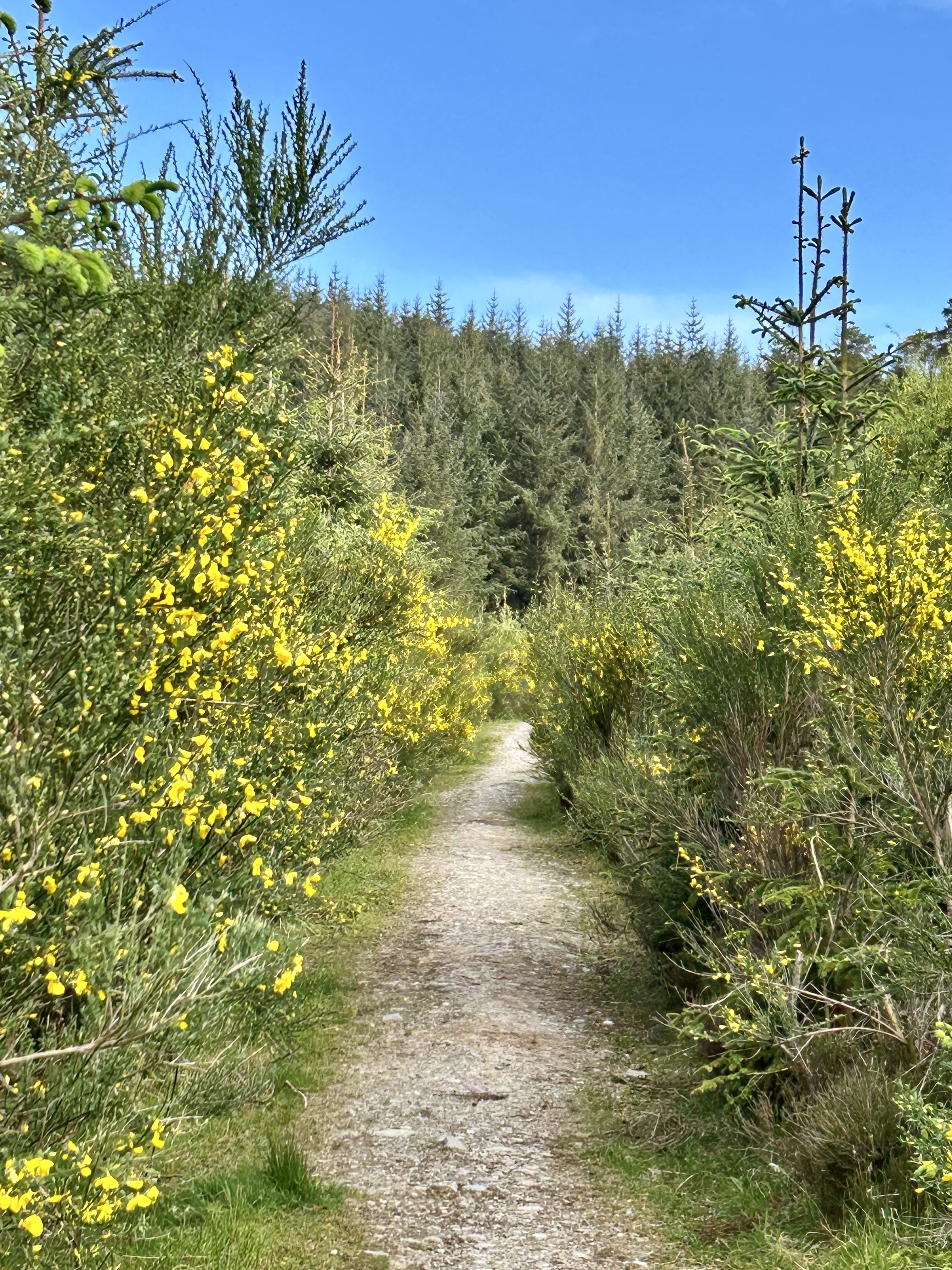
Today was different; I had decided to forget about the time and just enjoy the remarkable Spring scenery. Bluebells, gorse and broom were in flower, the birds provided the chorus, and the skies were a kaleidoscope of images. I took photos of the route as a perpetual memory of the backdrop of the run/walk that I have done the most times in my life's journey. Lime Craig was where I went to exercise, to reflect, to write talks, to release my endorphins and where I went to find solace on the day that Aileen died. 

Despite the perfect morning, there was no one else on the hill today. I reached the top in 39 minutes; it was a breeze, and time no longer mattered. This was the day I accepted that 199 was just another number and there was no need to add any more.

The photos below are in order of ascent and descent.

Start of the steep path from Braeval

K corner

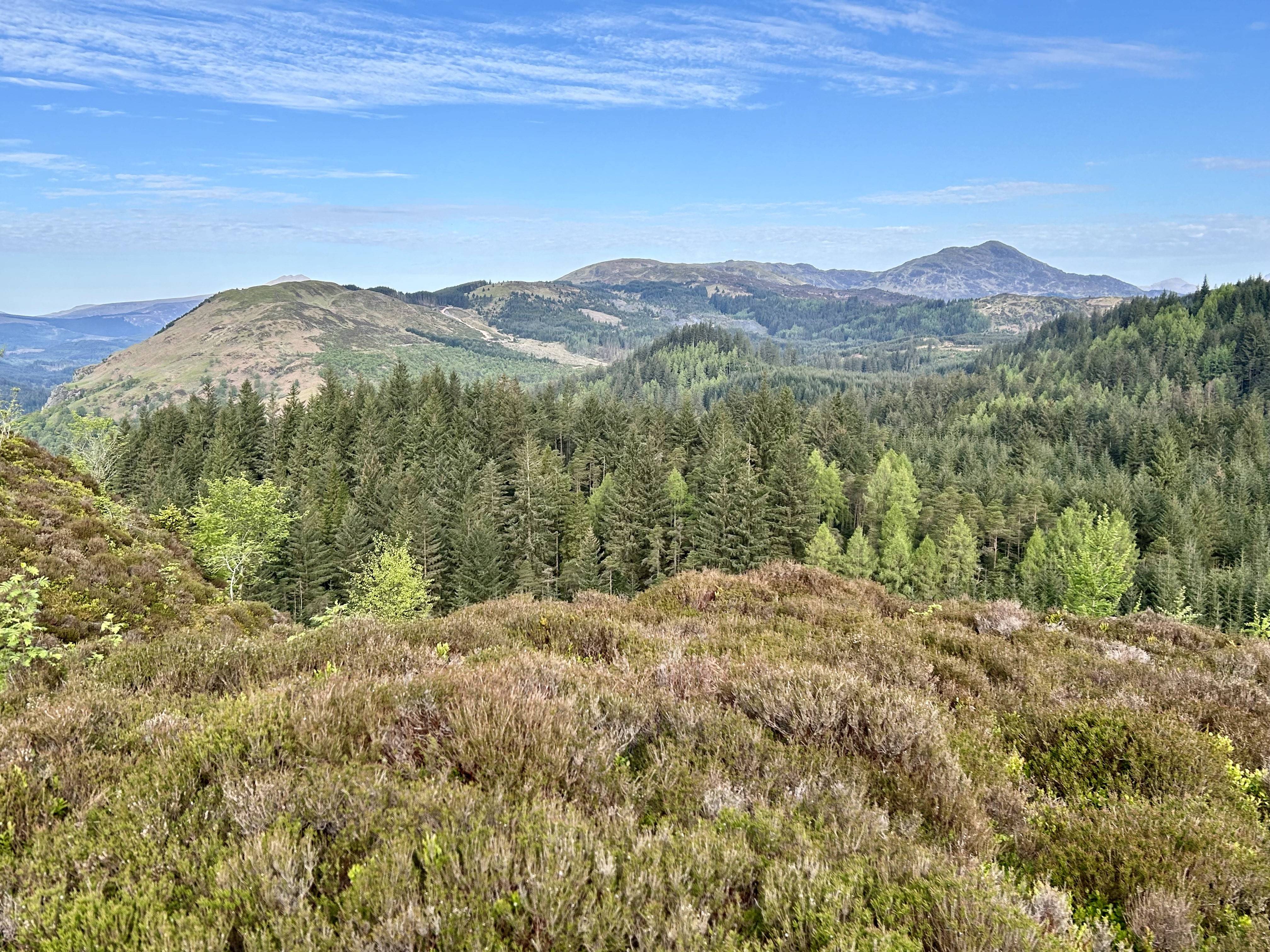
Recent tree felling has opened the views

Craigmore ahead and turn right

Keep going, the halfway mark

Broom and Gorse Glade

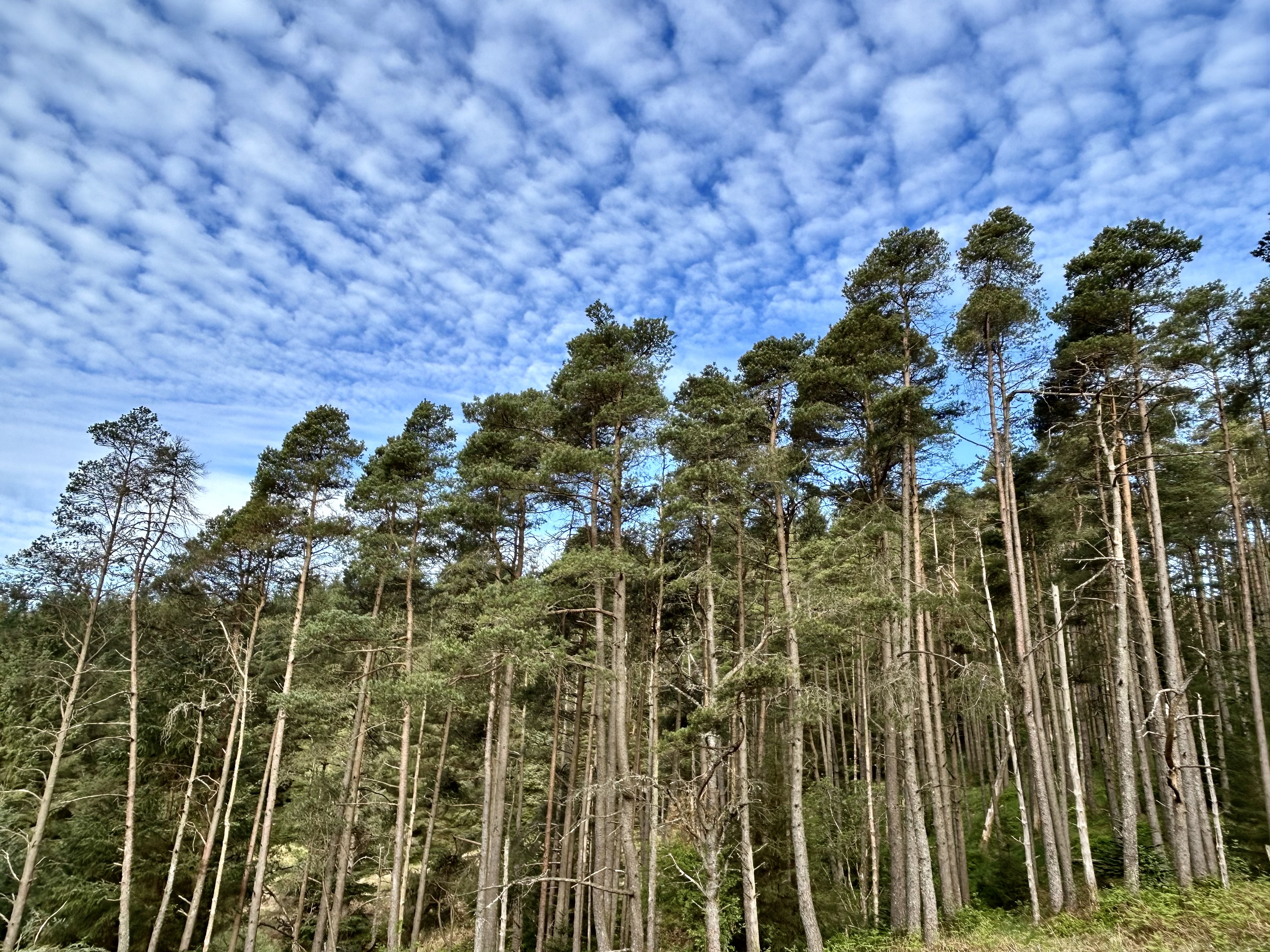
Pine skyline

Looking south to the Campsie and Whangie

Patterned Skies

Final section

Path to the summit looking down

Summit 

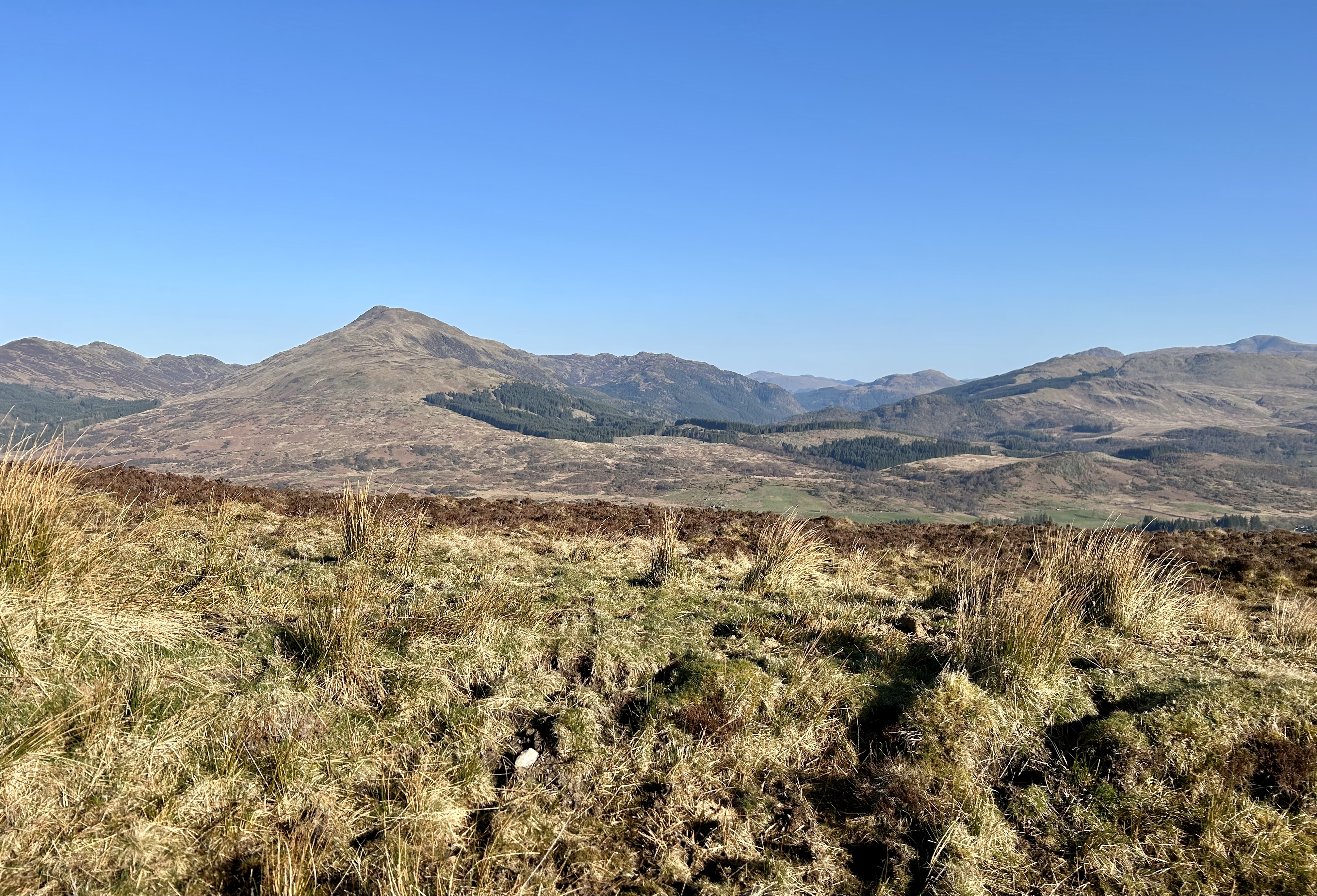
Summit Bench and Ben Venue

Craigmore to Ben Venue

Ben Ledi


Ben Lomond and Craigmore on descent


Wednesday, 7 May 2025

A Really Useful Idiot


"Give me your tired, your poor and huddled masses, and find a haven, banishing all fear.
"
Trumpism started with the Tea Party.

American hegemony had gone too far. They had been the de facto winners of the Second World War. Roosevelt had provided the supplies and equipment, the Doughboys came to the rescue of a fractious Europe and Marshall Aid was supplied for its rebuilding. The USA halted the spread of communism beyond East Germany and in Asia and the Americas, with some notable exceptions. They became the home base of global institutions, including the United Nations, NATO, the World Bank, and the IMF. They consolidated and celebrated their influence with nuclear weapons, movies, advertisements, fins on their automobiles, skyscrapers, junk food and damaging chemicals. They were doused in dollars, oil and bumper crops. The wealthy became wealthier, and ambitious migrants from Europe, Asia and the Americas boosted their talent pool. 

The rest of the world lapped up the fairy story. It allowed the USA to exploit the natural resources of other nations and take over their companies. American products, from planes and weapons to fast food, fizzy drinks and domestic appliances, were foisted on the world along with a glamorous narrative of a nation too good to be true. The United States were not colonialist in pursuit of an empire; that was old hat, they were buying their way into exploiting the resources and the economic growth of what they regarded as their domain, the free world.

They had their comeuppance in Korea, Vietnam, and parts of Central and South America, and this created a scintilla of doubt amongst the radicalised young in the 1960s and 1970s. But the USA was high on self-belief and had charismatic political and business leaders who assumed global leadership, never more so than when Gorbachov ceded the freedom of the Soviet republics and the creation of democracies in new nations that were former republics.

Things turned sticky in the Middle East as oil-rich autocratic nations began to exercise their wealth, and George Bush, father and son, took military action in Iraq and Afghanistan. It didn't end well, and they had harangued other Western countries to reluctantly support the invasions. The patina of American power began to lose its sheen, but the USA still retained its reputation as the alpha country in the free world. Trump 1.0 muddled through with the MAGA base kept in check by the grown-ups in the administration. However, the rehearsal had convinced Trump that he did not need advisers or seasoned politicians; what he needed were amateurs and fellow travellers to parody a government while he played out his fantasies and took corruption to the next level. The fact that 75 million voters had endorsed his second term gave him the power to follow his fundamental instincts.

His second coming started with a momentum that was meant to shock and awe the rest of the world. Previous policies and agreements were shredded, diplomacy was derided, felons were released from jail, and tariffs were hiked to levels that left the rest of the world wincing and pleading for clemency. He acted as if he was all-powerful, and world leaders responded accordingly. But some leaders baulked at the idiocy of Trump's gameplay, which had gone too far. Canada and Mexico challenged him. They were supported by their angry citizens and businesses, who boycotted American goods. This mood was echoed and copied around the world as Trump threatened to take over Greenland and Panama, make Canada the 51st state, rename the Gulf of Mexico, suggest the USA should take over Gaza for real estate development, humiliate President Zelensky, give license to Vice President Vance to insult Europe and the Pope on his death bed, withdraw from the Climate Change agreement and no longer provide refuge for immigrants who now fear being banished to distant lands. The United States has forsaken the Statue of Liberty's Call as "a place of hope, beyond compare."  

The worm had turned. Canada's Prime Ministers Trudeau and then Mark Carney both called him out. China did not flinch and retaliated with equally severe tariffs on American goods. The American Finance sector was faithful to Mammon, and the Bond market collapsed. Harvard University sued Trump over his withdrawal of research funding. Elon Musk, Trump's Tonto, had had enough; his businesses were in freefall, and he had become a derided figure of fun as he closed down government departments and agencies with the deftness of a SpaceX rocket exploding on takeoff. Trump had taken the red pill and was still in Wonderland."All persons more than a mile high to leave the court" seemed a suitable epitaph for Musk's time in government.

The shackles that had bound Western nations to the USA in its pomp were broken. Elections in Canada and Australia returned anti-Trump candidates, who months earlier had been facing defeat. China took a long-term view and began trade negotiations with other countries that had been hammered by Trump's Tariff proposals. The European Union was united in its opposition to Trump, who, never one to admit mistakes, was beginning to row back on his proposals, claiming they were part of his deal-making strategy. 

The disruption that Trump had inflicted on the world had backfired; the umbilical cord to the USA had been severed. We are moving to a New World Order. Trump has been a Really Useful Idiot.

Chevrolet Impala with Fins - functionally useless

Musk and Tesla - vanquished tropes

Tuesday, 15 April 2025

Blue Origin

Blue Origin's Magnificent Seven Up

As if 2025 hadn't caused enough damage to the global commonweal, we have witnessed another utterly bizarre world event. Seven starry-eyed celebrities popped up into the higher layers of the atmosphere in a Jeff Bezos Blue Origin capsule fired from his Texas launchpad to claim that they were astronauts. It was like watching a social media revamp of Monsieur Hulot's Holiday. Unfortuanately, the dialogue of the hapless seven lacked either the intelligence or self awareness to make it a parody. M. Hulot created chaos by opening the hotel door to let in a stiff breeze, it was pity that the Jeff''s Angels didn't open the capsule door to get a better view of the moon and become the first space asylum seekers.

Blue Origin is an Amazon funded space tourism project that costs at least £150,000 for the ten-minute ride to 100km above the Earth and back. About the same time as you get on the Star Wars Hyperspace ride at Eurodisney, but without the queue. The impact of Blue Origin flights on the ozone layer by the creation of Nitrous Oxide in the atmosphere and the release of water vapour in the upper atmosphere is hugely damaging to mother Earth. But Bezos is a rocket billionaire, a philistine philanthropist who is fulfilling the destructive powers of Amazon.

The Bonzo Dog Doo-dah Band sent up the space race so much better and cheaper in 1968 with their only hit single, "I'm the Urban Spaceman," on the Liberty label. They saw it as a Dadaist prank, a reference to the Apollo rocket launches. They even claimed the hit record was produced by Apollo C. Vermouth although it was produced by Paul McCartney. It was a spoof on the vacuous consumerism and space obsession in the summer of love. Even the lyrics say that the urban spaceman doesn't exist in real life. Unlike the urban spaceman, these celebrity wannabees exist, and with an elevated sense of entitlement. Letting them spaff their wealth and accelerate climate change on a glorified fairground ride is an Amazon Crime, yet another reason I am glad to have junked Amazon Prime.


Sunday, 13 April 2025

Bye bye Mr Blue Sky


Morning is breaking 7 a.m.

After us two weeks of perpetual blue skies and excellent visibility, I awoke this morning to the same. I headed for an early walk on a local hill for only the third time in the last two months. It is only a 5-mile drive away, but the clouds were grumbling in from the northwest. The warm morning rays of the sun had been replaced by a nippy wind, and I was in shorts and a T-shirt. My normal 30-minute ascent took 12 minutes longer but that was 6 minutes faster than earlier in the week. On the descent, a brief hail shower passed through and prompted me to start running again.

I had not stopped on either the ascent or descent and I was feeling slightly better than I had for 7 weeks. Maybe the antibiotics prescribed by the GP for a viral infection and the steroids prescribed by the respiratory consultant after a CT scan, and various blood tests are beginning to work. Pity I have missed the good weather, including a much cherished trip to Fisherfield with John last week. 

Weather is breaking 8:30 a.m.


Thursday, 10 April 2025

The National Portrait Gallery

Processional frieze in the Great Hall

After a long morning at Edinburgh University providing background material for a book on local government, and a Tapas lunch with Bill, I had the afternoon free. I took myself to the National Portrait Gallery, somewhere I had not visited since retirement and was keen to see the new exhibits. It was a revelation, defying its Victorian origins, housed in its sombre Corsehill red sandstone neo-Gothic building on Queen Street. The Gallery had been wonderfully renovated in 2011. The ambience on arrival, the welcome from the curators and the magical Great Hall were totally embracing. There were many visitors from around the world; it was not even Easter, but Edinburgh was already buzzing as the Athens of the North.

My quest to see the new exhibits was delayed by the time required to admire the processional frieze and the colourful murals painted on the upper balcony of the Great Hall by William Hole. Such was the influence of the Scotsman Newspaper at the time the building was completed in 1889 that its proprietor, John Ritchie Findlay, was able to commission this work as well as the purpose-designed Gallery to display Scottish heroes. I also spent even more time exploring the old portraits of Scottish Kings in the Reformation and Revolution Gallery and figures from the Scottish Enlightenment in the Globalisation galleries. 

Finally, I made it to the modern collection. Familiar figures came to life in paintings and photographs. A friend is writing a book on 100 Radical Scots, and I have made a dozen or so suggestions to him for inclusion in the book, including Sir Patrick Geddes and Tilda Swinton. They were both in the Gallery, a bust of Geddes and a frolicking painting of Swinton. I sent photos of them both to my friend, and he confirmed that he had completed his biography of the radical Geddes. 

Other post-war legends, poets, musicians, sportspeople and artists were splayed across a gallery as diverse as its portraits. Amongst them, a photograph of Wai-Yin Hatton, who had been the Chief Executive of Ayrshire Health Board, stared out at me. She had asked to work shadow me about twenty years ago, and this was reciprocated as we spent several days in each other's domains. It gave me an insight into the management culture in the Health Boards. The hospital consultants were ferocious in their bids for money, and they treated primary care with a studied disdain. Wai-Yin was a formidable character and was greatly frustrated by this but the silos in the NHS were well entrenched and not easily controlled.

Mural of the Battle of Bannockburn

Poets' Pub


Sir Patrick Geddes


Tilda Swinton

Wai-Yin Hatton


Monday, 7 April 2025

The Devil's Apprentice


Cockwomble

Well, not content with providing the protection and weapons to allow Netanyahu to continue the killings in Gaza to exceed 50,000 and allowing Putin to continue the ruthless bombardment of Ukraine, Trump has now unilaterally inflicted the most crass (but beautiful) tariff policies on the world. In any edition of The Apprentice, he would have been evicted for any of these three monumental failures. It would be far better to fire him. Ideally, into a perpetual orbit of the Earth in one of Musk's SpaceX tin cans. 

What is particularly irksome is Trump's persistent claim that America has been "raped and pillaged" by the EU and other countries. The converse is nearer the truth. It was an American journalist, Ludwell Denny, who spoke the truth in 1930 when he said that the USA is "Too wise to govern the world, we shall merely own it." That is what they have done; American companies have built factories and employed cheap labour across the world. There are 280 American companies with factories in China alone and substantial numbers in Vietnam, Taiwan, Cambodia and the other countries that have been landed with the highest tariffs by Trump's government.  

The UK has become a Vassal State whereby America has bought out Britain.  Private equity companies have plundered the UK to take ownership of companies. In 2020, they took a revenue of $707bn from the UK, an average profit of £2500 from every UK household. HMRC have estimated that American companies underpaid tax by £5.6bn. It is time for the UK government to take back control, to weaponise our tax system and to regulate takeovers. The US government has seen the special relationship with the UK as a game of dancing with donkeys. America has become the dominant owner of almost half the FTSE shares, not to mention the ownership of the majority of Premier League football clubs and many health and care providers. Trump has targeted the UK's very modest 2% Digital Services Tax on the big American tech companies to be eliminated as part of his game plan to reduce the 'rape and pillaging’ of the USA.

What Trump has done is give the UK and Europe a legitimate excuse to put an end to the plundering of their businesses. It means working more closely with Europe, which has been far more savvy in developing regulatory control of big tech and AI. It is essential to stop America from ‘merely owning the world.’ Hopefully, as the Trump game is played out, the rest of the world will be too wise to let this continue. Untrammelled private equity ownership and unregulated big tech, aided and abetted by successive American governments, have had the upper hand for too long. Trump has unwittingly paved the way to consigning his tariff policies to the dustbin of economic illiteracy. But that requires collaboration between Europe, the UK and other partners who are willing to confront the Devil's Apprentice.

Space X Control to Major Trump
Sitting in a tin can
Take your protein pills and put your helmet on
Planet Earth is Blue
And there's nothing you can do
 

Missing the Hills

Ben Ledi and the Blue Forgotten Hills

For the first time since early February, I started the day by climbing a local hill this morning. A viral infection, when walking in the Lakes in February, had given me chest pains and slowed me down. This was followed by feeling listless during a week in London. I decided to go to Istanbul to get some sunshine and explore the Bosphorus megacity. Again, I was feeling tired, and my limbs were aching, so I drained what was left of my stamina to haul myself around Istanbul. I returned to some glorious weather in Scotland. Normally, I would be up and out by 7:30am to climb my local micro hills on good days such as these. I could not summon up the energy and had to limit myself to the odd hour in the garden. Moreover, I was missing a few days in Fisherfield with Keith and John. Fisherfield has always been one of my favourite locations and, at this time of the year, in these conditions. Wow.

This morning, the viral infection seemed to be on the wane, so I was out early on the perfect morning to climb Ben Gullipen. It is usually a sub-30-minute brisk walk once the snow and ice have departed, but today, I had already stopped five times before I was three-quarters of the way up. The man coming down was an acquaintance from Aberfoyle whom I had first met on Lime Craig on the day that Aileen had died, when I was seeking solace. He had recently retired to the area, and we bumped into each other on several subsequent occasions on Lime Craig when I recommended other local walks/runs to him, including Ben Gullipen. Billy was as friendly as ever, and we blethered for half an hour on a quite sublime April morning. We talked about running, hills, and Pete Cartwright, now a world over 70 1500 metre champion, who had worked with Billy and whom I had often run with on the local trails around Aberfoyle and where we had both won the annual 10k trail race. Today, I was only able to recommend 'This City is Ours', the Liverpool drug crime drama on the BBC, to Billy. It was the only memorable event that I had enjoyed in the last few weeks as I moped about, wondering why my energy had gone AWOL.

It had taken an hour to get to the summit, but the hills to the north were enticing in the blue morning light. Ben Ledi was a mere stone's throw away, and Ben Vorlich and Stuc a' Chroin were beckoning. This was my playground, my backyard that had nurtured my determination to seek the more distant adventures in all of Scotland's mountains. I watched the young lambs prancing around the summit and resolved to phone the hospital when I got home to see if I could get an earlier appointment to sort out my problem. I was able to run some of the way down, and I was pleased that my legs were still in reasonable shape. The news on the way home was of the collapse of the financial markets worldwide. Trump, what a Cockwomble.

Stuc a' Chroin and Ben Vorlich

Spring

Loch Venachar

A distant Ben Lomond

Ben Gullipen


Tuesday, 1 April 2025

Today Refreshed

Anna Foster - Today Programme

I have been a less regular listener to the Today Programme since the start of the year. It seemed to have lost its vitality and focus since the loss of Mishal Husain. Her professionalism and sharp focus had kept other presenters on the ball. Her temporary replacements, Jonny Dymond, Simon Jack and Katya Adler, had kept things ticking over, but Emma Barnett did not seem to be a team player. She is a loose cannon, unaware of her brutal style that irks interviewees, her fellow interviewers and this listener. 

Nick Robinson and Amol Rajan are spending too much time on other projects. Amol seems to have first dibs on any new BBC programme, and he and Nick have a weekly Today Podcast, which is usually good, but won't last; they are both too fond of their own voices. It does not please Justin Webb. He seems aggrieved that it trespasses on his Americast podcast with Sarah Smith. This is hardly surprising given that world news rotates around Planet Trump.

Then, the new presenter, Anna Foster, arrived on air.  She was in Thailand on her first day, covering the Myanmar earthquake. Her easy style brought out the best in the people she interviewed; she made a seamless connection with Nick Robinson in London, and they were immediately a working team. The Today Programme was back on track. Amol had already interviewed her on the Today podcast, and they had vowed to look forward to working together. Anna will no doubt rescue Justin from his grumpiness and cope with Emma, just as she does with everyone else in her fresh and positive manner. I wouldn't bet on Emma surviving the year, though.