Wednesday, 3 August 2016

Meall na h-Eilde and Geal Charn

Moody mountains from Meall na h- Eilde to Meall na Teanga

Some hills are better to look from than to look at. That was the case with these two corbetts that sit above Loch Arkaig. I walked up Glen Cia-aig from the car park at the end of the dark mile. Like many glens in the highlands there has been a hugely intrusive access road built up to the intake point for a new hydro scheme. It is the impact of the roads and the buried pipelines that has despoiled the glens not the intakes, which are usually modest structures. The day was mainly one of grey skies with a couple of light showers. The climb up from the intake to Meallna h-Eilde had all the ingredients that make you think twice about hill walking. A steep unrelenting slope through deep grass and heather, the only consolation was the abundance of blaeberries providing some super food snacking.

The new road up Glen with Meall na h-Eilde on the left
Water intake on Glen Cia-aig
View from Meallna h-Eilde down Glen  with Ben Nevis prominent
Geal Charn and Knoydart beyond from Meall na h-Eilde
Ghlas Bheinn with Aonachs and Ben Nevis in distance
Summit of Geal Charn, wind farm beyond Loch Lochy
Over Loch Arkaig to the Glenfinnan munros
Loch Arkaig
Loch Arkaig thistles
Monday, 1 August 2016
Ascent:       1011 metres 
Distance:     19 kilometres
Time:          5 hours 14 minutes

Meall na h-Eilde    838m       2hrs 19mins 
Geal Charn             801m      3hrs  20mins

I had driven up in the morning, a 3 hour drive with a stop for some supplies at Fort William, so it was 11:30am before I began the walk. It is over twenty year since I walked up Glen Cia-aig on the way to the two munros west of Loch Lochy. It was a pleasant footpath then but is now the sort of highway you expect to see in the rocky mountains. A road with switchbacks has been constructed to access the hydro scheme and the glen looks devastated. Higher up the glen a footpath/cycle path has been roughly dropped into the churned ground but it still needs a top surface, unlike the road, which is wide, flat and smooth. It is a long 5 kilometres up to the start of the climb and then 500 metres of ascent up rough deep vegetation. I crossed the burn and headed directly for the summit instead of climbing to Bealach an Easain. As an exercise in masochism it has few peers.

As the summit approached and the gradient eased, a large herd of deer scarpered off to the north west.  The summit was a loose collection of rocks and a couple of iron fence posts. The views were good to the east where Sron a' Choire Ghairbh and Meall na Teanga were moody looking munros etched against the grey skies. To the south the glen was a green haven with the conifers hiding the roads and in the distance Ben Nevis stood guard. I ate some food and began the next leg.

There is an easy descent to the next bealach below the unpronounceable Meall Coire nan Saobhaidh. The deer were watching me from the summit so I decided to cut under this hill and contoured round to Bealach Carn na h Urchairs. It was quite easy going and the 160 metre climb to the rounded summit of Geal Charn had a faint path to help progress. Geal Charn may be an unassuming hill but what a wonderful vantage point. Knoydart, the Loch Quoich hills, the massive wind farm above Loch Garry, the moody couple to the east, Ben Nevis and the Grey Corries were all visible. I lingered at the trig point absorbing one of the very best 360° horizons.

The descent was relatively easy a steady slope to the south east until I reached the old stalker's path. I heard the yelps of some birds above and was surprised to watch a couple of eagles as they climbed majestically upwards and then began a glide south towards Loch Arkaig at a speed that was astonishing. The views from here over Loch Arkaig were also splendid with the range of mountains north of Glenfinnan providing a blue serated edge against the dark skies. Eventually the path reached another hydro scheme and the last couple of kilometres were down yet another newly built road. I used to baulk at roads into the hills built to gain access to shooting butts with European money. They were mere B roads compared to the hydro roads. At least the latter are supporting sustainable energy supplies, although they do seem to be excessively engineered. Hopefully the vegetation will return in a few years and hide the impact of the construction work that has included a lot of blasting and extraction of sand and gravel.

The path and road follow the Allt Dubh, which flows into Loch Arkaig and there is then a 3 kilometre walk back to the dark mile alongside the loch. It was a tranquil afternoon with not a whisper of wind. The fish were rising and the waters were shimmering as the sun made its first appearance of the day. The drive back from the dark mile through Achnacarry and along the shores of Loch Lochy passes some very expensive new house building. It is a quiet location with wonderful views of the loch but lacking the evening sun, I dread to think what the midge count must be. I headed for Spean Bridge for an early tea before heading to the foot of the grey corries where I would walk into the Lairig Leacach bothy and camp for the night.

Friday, 22 July 2016

Ardeche in July

Sampling the meadows

Almond trees

Chez nous
Orgnac-l'Aven whilst on a cycle ride

Mt. Ventoux from Agueze

Vienne War Memorial

Rhone at Vienne

St-Maurice Cathedral, Vienne

Ardeche Gorge

Returning to our regular haunt in the Ardeche after the splendours of the Alps was swapping the mountains for a limestone plateau, two of my favourite landscapes. The journey across from the Alps passed through Gap and then the lower Alps before the final leg over the River Rhone and onto the limestone plateau. We were met by Evelyne and shown to our suite of rooms. Our favourite bedroom with a balcony facing south, a large bathroom and a sitting room. We decided to eat in, having spent the last five nights dining on 4-course meals with wine and liqueurs at the chambres d'hotes in the Parc des Ecrins.

The next day brought the mistral and heavy rain, so we spent time in Barjac and then explored some of the villages in the Ceze valley to the south. The area was busier than usual with a high percentage of Belgian tourists escaping the shenanigans in Brussels. We had three Belgian couples staying at Le Garn, and we obtained their take on the future of Europe. Needless to say, they were not very enamoured with the efforts of David Cameron in calling and then losing a referendum.

Some American guests thought that Europe had it easy compared to the USA who had to contemplate Donald Trump. On hearing that Scotland had flown Mexican flags on his Scottish golf courses during his recent visit, they wondered whether we would be prepared to accept a contract for his non-return, maybe he could sort out the UK immigration problems, they opined.

I spent two days watching the Tour de France, and we visited the Luberon to see Ian and Beatrix, one of my oldest friends, in their new house, where they had six grandchildren, all girls, staying with them and playing in the pool. On other days, we visited other parts of the Ardeche and most days walked in the local area through the peach, apricot, fig, cherry and almond orchards and lavender fields. I went swimming every day in the perfect pool, running most days, and I even managed a couple of bike rides on the owner's mountain bike. In short, we enjoyed the total peace and wonderful landscapes of our remote escape in rural France.

On the way back to Lyon, we visited Tournon-sur-Rhone, where Aileen had spent a summer working in a hospital whilst a student. We stopped in Vienne, where several friends that I had met whilst walking in Corsica lived, and we enjoyed a fine lunch and this splendid Roman town on the banks of the Rhone. The final short journey to Lyon and the flight home were relaxed. Holidays like this are always a dive into bliss.

Saturday, 16 July 2016

Tour de France 2016

The Peleton with Sky Team leading pass through Redessan on Stage 12
After watching the Tour de France grand depart in Yorkshire in 2014, I had wanted to see the race on French soil and this year it was passing close to where we were staying in the Ardeche. The stage from Montpellier to Mont Ventoux had me thinking we should make our way to Mont Ventoux and watch the agony and ecstasy of the climb to the summit. The mistral was blowing and the route was truncated to save the riders battling with 100kph winds in addition to the over excitable crowds. We decided to watch it cross the Bouches du Rhone at Remussen instead.

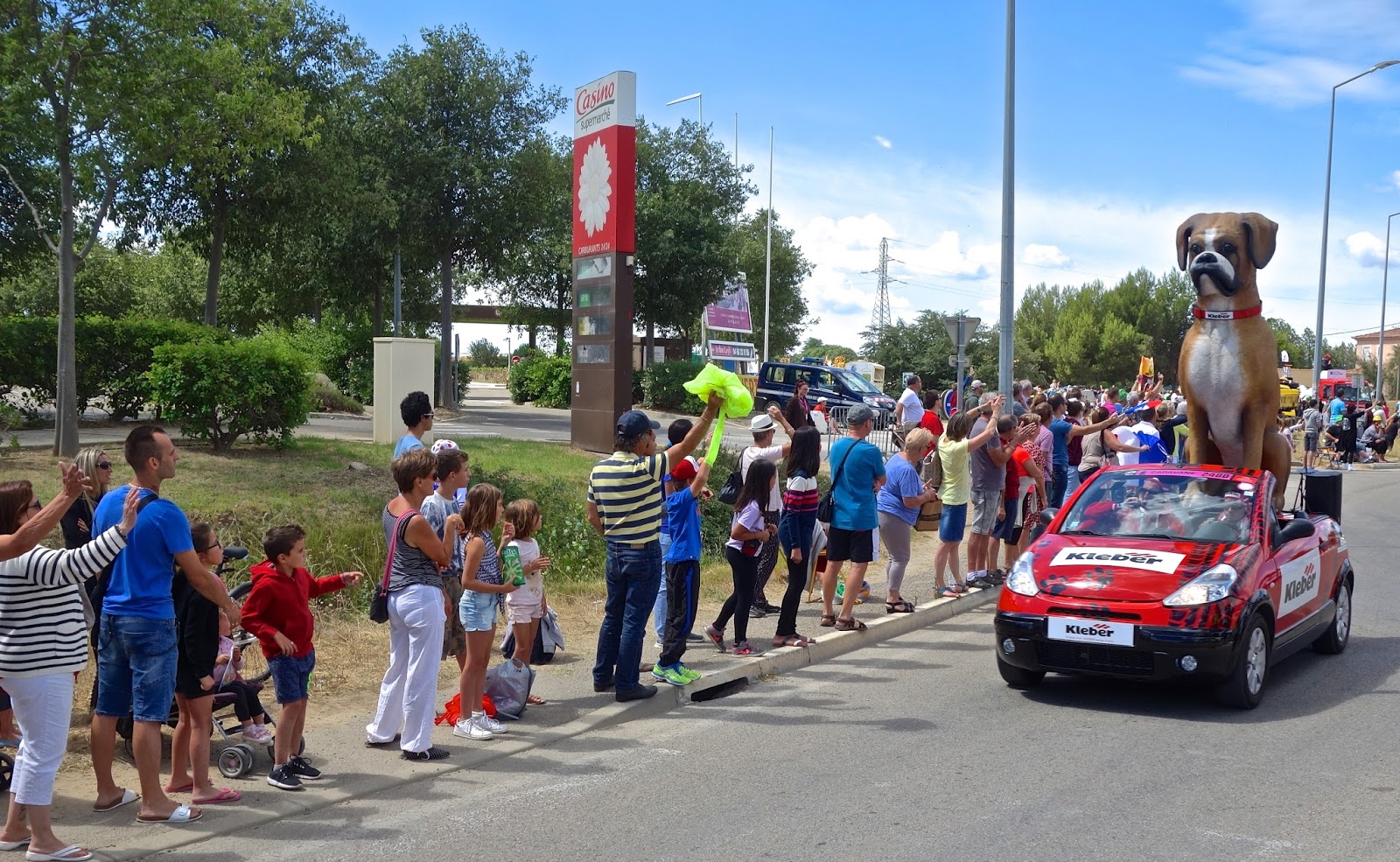
It was a good decision we managed to park 400 metres away from the route. There was a supermarket handy to buy some lunch after the caravan had passed through dispensing gifts from the sponsors. It takes the caravan a good 25 minutes to pass and provides a level of silliness that is almost British. The crowds had made a day of it with bands, fancy dress, picnics and noisy instruments. A party atmosphere built up as the anticipation of the cyclists arriving although it was not as infectious as it had been in Yorkshire but the weather was better.

The caravan consists of over a hundred vehicles blaring out music and travelling at a fair dash. They are accompanied by motor cycle outriders and gendarmes but the mood is one of friendship and theatre. There is about an hour and a half to wait before the riders arrive. In this case a leading group of a dozen or so riders were followed ten minutes later by the peleton that was being led by the Sky team with Chris Froome to the fore. There were numerous motor bikes and support vehicles as well as 6 helicopters filming the race.  The peleton of 150 riders flew past in less than 30 seconds and was followed by a procession of team cars loaded with spare bikes, mechanics, team managers, medical staff and a final sweep of gendarmes. For a supposedly green sport the carbon footprint of the tour is massive, it must consume a large proportion of the Qatari oil production.

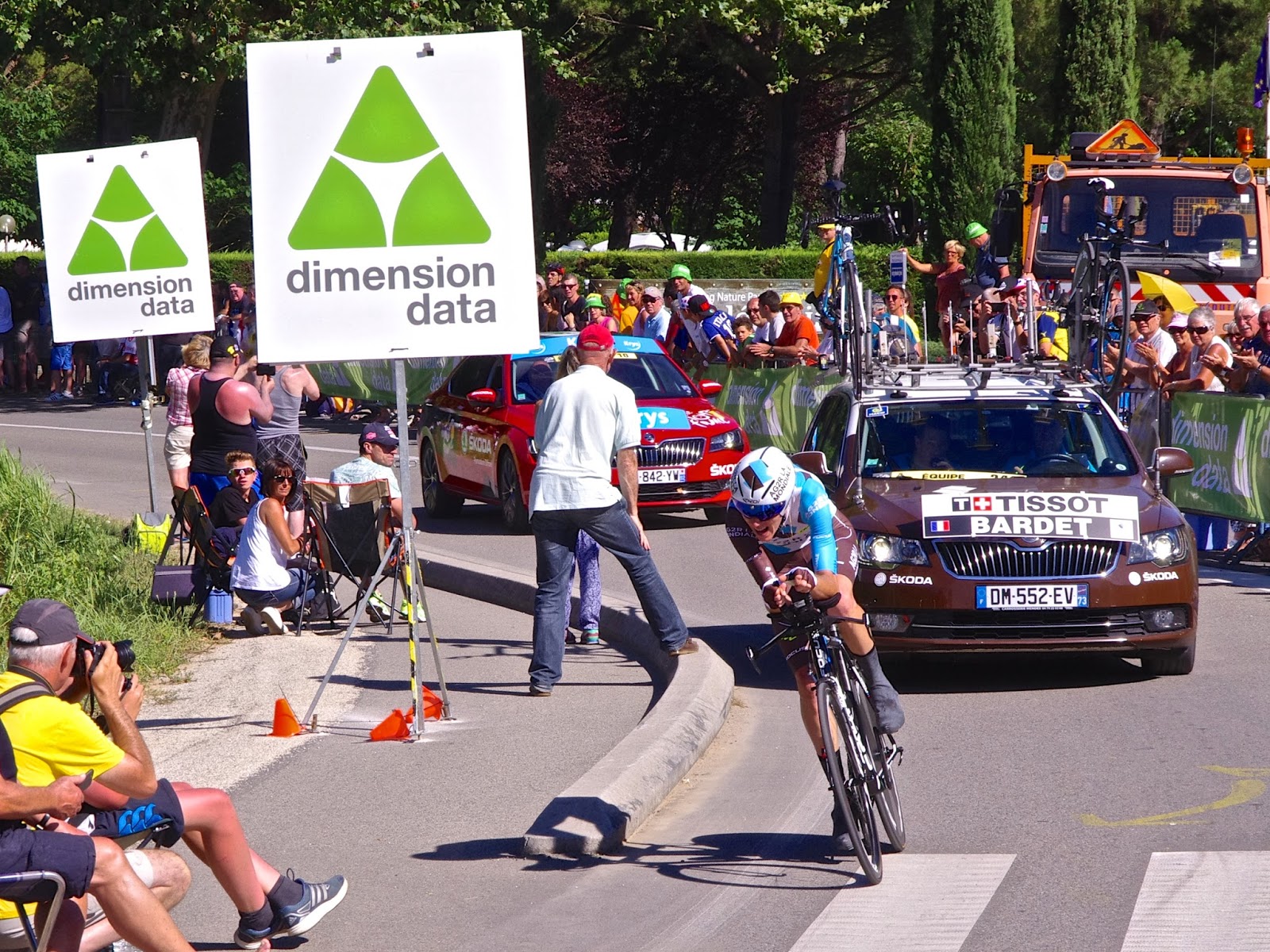
The next day was the time trial running the length of the Ardeche gorge and finishing by the recently opened Chauvet Cave. The stage had almost been cancelled following the atrocities in Nice the night before and there was a subdued atmosphere compared to the previous day. President Hollande had promised a heavier police presence although the gendarmerie seemed fairly relaxed about the security and spectators were able to funnel the riders as they began the final 6 kilometres of climbing to the finish. I spent a couple of hours watching the lead riders come through and observing the vicarious activities of the spectators. I met a Danish girl who told me that her father and boyfriend had walked a return trip of 25 kilometres the previous day from their parking spot to reach the route up Mont Ventoux and had not returned until well after midnight. It made me feel a bit happier about opting out of doing the same.

Once again I was staggered by the support for each of the 180 or so riders. Each one proceeded by a motorbike and followed by a car and then a motley assembly of race officials, cameramen and gendarmes going through on motor bikes. There was the usual circus of hawkers and fast food outlets along the route as well as families with camping chairs and sizeable picnics. Chris Froome set the second fastest time and was clocked doing 110kph as he descended to the Ardeche gorge from the plateau. I have long believed that this form of cycling must be the toughest of all sports, particularly as the vast majority of riders are domestiques for their team leaders and have little hope of glory. The Sky team are not very popular in France owing to their tendency to control the race by their disciplined professionalism in following team orders. If only other British sports had managers as capable as Dave Brailsford.


Taking it easy before the climbs at the end of the day
And then the train of support vehicles
The caravan of silly things comes first
And spectators join in the fun
It was too hot for the penguins
Ardeche, Stage 13 time trial with a heavy police presence
Local hero watches from an adjacent field
Geraint Thomas on a charge
Fabio Aru beginning the climb at Vallon Pont d'Arc
Top French rider, Romain Bardet


Monday, 11 July 2016

Petite Autane

Petite Autane from Chabottes
Sunday, 10 July 2016
Ascent:    1300 metres
Distance: 10 kilometres
Tim          4 hours 5 minutes


Petite Autane    2516m     2hrs 15mins

From our chambres d'hôtes nestled above the Champsaur Valley in the Parc des Ecrins we had a magnificent view of Petite Autane, a 2500-metre peak above the ski resort of St-Leger. I immediately logged it as an objective and thought that it could be climbed in 4 hours or so. That was before I realised that it is a 1300-metre climb including a scramble up a steep rocky ridge to the summit. After the first three days of superb walking and climbing in the Alps at the head of the Drac Valley, our last day in the Champsaur provided a chance to climb Petite Autane in the early part of the day before the threatened thunderstorms moved in.

Jean, the owner of La Grange, had been a hill runner but seemed to me to be spending too much time running his new business and I asked if he would like to join me. He declined, it was Sunday and he had to clean the rooms, but suggested that one of his sons might want to make the climb. Adrian was 17, multi-lingual, tres sportive and had quite a lot of experience walking in the Alps. We made the 15-minute drive to St-Leger and began the walk from a meadow at the foot of the ski area, ascending by a series of tracks and then using the pistes through the forested lower slopes. There were herds of cattle grazing and a group of teenagers roared past us on their motor scrambling bikes just before we reached the start of the limestone ridge.

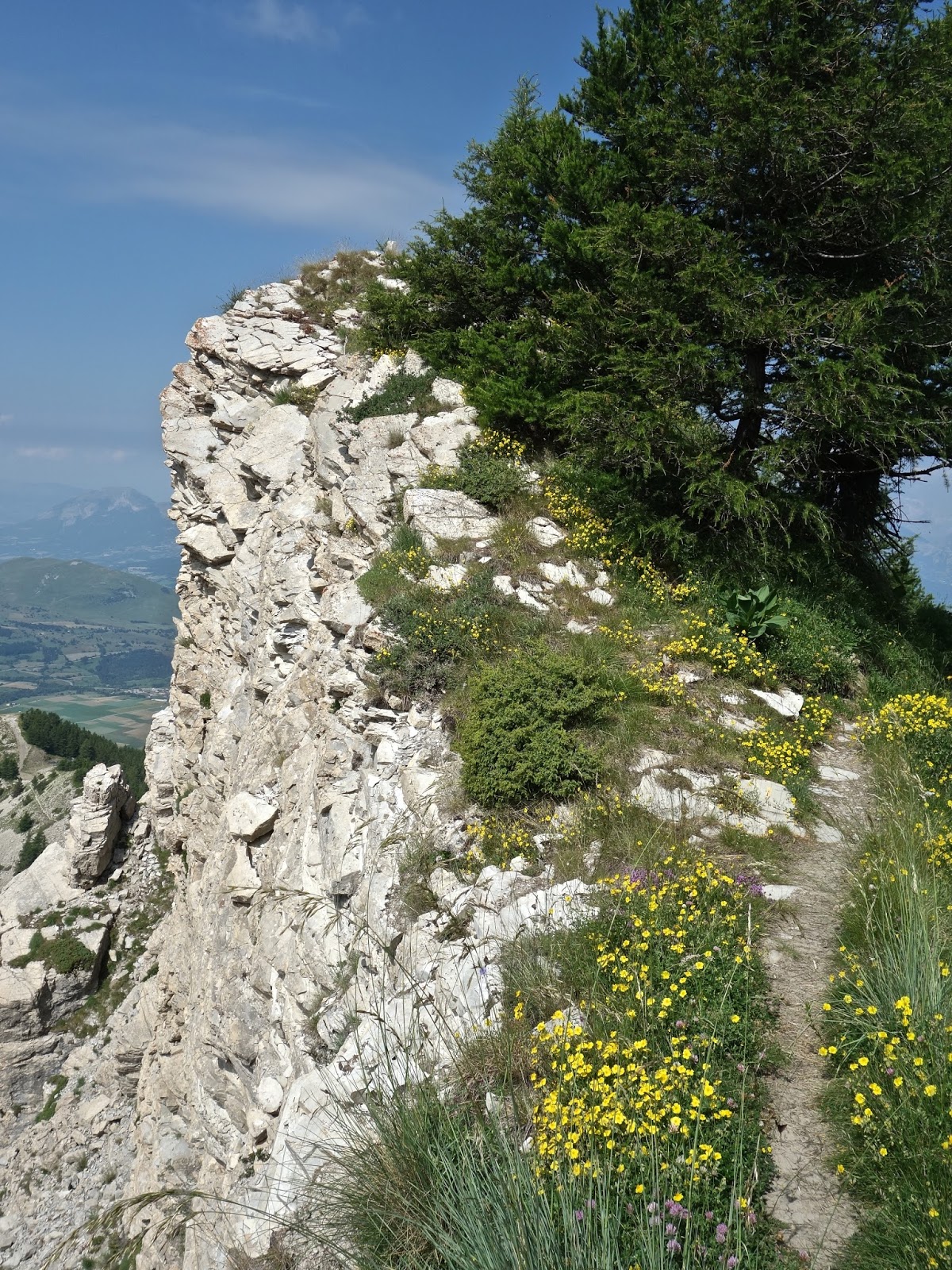
Adrian had climbed the mountain a couple of months earlier but had been unable to make the second and higher peak which was still covered in ice and snow and he had not taken crampons. I estimated that we should make the summit by noon, we had started walking at 9:45am. Adrian was less optimistic. Initially, the ridge was gentle with a narrow path wriggling its way along the narrow ridge festooned with alpine flowers. At 2100 metres the steep climb began, it was a loose rock with sections of scrambling, exposed but nothing too difficult. We paused once to watch 6 eagles as they skimmed along the ridge and then circled above us in the thermals. We had a discussion about what type of eagles and Adrian thought that they were 'aigles' or golden eagles in English but I was less sure, their wings were lightly coloured compared to those in Scotland, but Adrian was right when we checked later. A mountain runner passed us on his descent and another couple were resting near the summit. Despite the heat, the lack of humidity meant that walking was easy in just trainers, shorts and a T-shirt and there was no need for more than a wind shirt, water and a bit of fruit in the rucksack.

We made it by noon and gave ourselves 10 minutes to take in the views. The higher peaks to the north and east were already covered in clouds and there was a distant crack of thunder. A parapenter glided above the ridge and waved before looping around and being sucked upwards by the thermals. We descended by the same route, making reasonable time down the loose rock along the ridge and then descending down the pistes and summer meadows to the car.

By 2:30pm I was sitting with a 75cl bottle of local beer after a swim in the pool. I could easily get used to summers in the Alps. Climbing 1300 metres in perfect visibility and low humidity and getting back to base by 2pm is an awful lot easier on the eye and the body than an 8 or 9-hour slog around a couple of Scottish hills with a high likelihood of rain, wind, poor visibility before a 2-hour drive home. But I did miss the midges.

The path up the ridge

Alpine flowers, are a fine substitute for boggy ground

At the summit

Company at the summit

Show off

Alpine garden of flowers

Petite Autane from Ancelle

Ready to go with Adrian

Saturday, 9 July 2016

Parc National des Ecrins

Peaks of Parc des Ecrins
At last a summer in the Alps. Why they have eluded me for so long is a bit of a mystery. I have visited them a dozen or so times in winter but never managed a summer in the Alps. Before the family arrived, it was too expensive and the Greek islands were too beguiling. Holidays with children were usually on Scottish islands with the occasional visit to Brittany. And having shed the children, we have usually travelled outside the summer months to avoid the crowds and the commensurate prices.

We had decided to visit our usual retreat in the Ardèche in July this year rather than in June or September, so we could watch the Tour de France pass through. We usually combine this visit with a tour around another part of France, secure in the knowledge that we have a perfect place to relax after the travelling through other departments. I researched where in the Alps might be the most interesting location for a week of walking and climbing away from the maddening crowds. French friends from Vienne had always spoken positively about the Parc National des Ecrins. It is endowed with spectacular scenery but without the concentration of ski resorts and blighted slopes found in the Savoie Alps.

I found accommodation in the Drac Valley to the south-west of the Parc d'Ecrins and less than a 3-hour drive from Lyon, including a chance to see Grenoble. Our chambres d'hôtes, La Grange des Ecrins, lived up to its excellent reviews. Run by someone who had abandoned corporate life in China for the peace and tranquillity of the Ecrins, where his ancestors had lived. At the head of the valley, the ski resort of Orcieres Merlette gave chairlift access to the higher Alps, but there were dozens of other tracks along glorious valleys into the Alps. There are over 100 peaks of over 3000 metres and 700 kilometres of marked trails in the Ecrins. There are packs of wolves and large Pyrenean mountain dogs that protect the sheep that graze in the higher Alps. Summer was running late, and it meant that we were fortunate to see the quite staggering display of alpine flowers in the meadows and among the screes and rock bands. They were displaying their brightest hues after recent rains.

On our first day, we were recommended to take a minor road around the foot of the Alps. We found recently cut meadows where groups of children were playing with a gusto and freedom that was reminiscent of childhood in our time, and numerous paragliders were swooping beneath the blue skies against the backdrop of exquisite-looking peaks. We parked at the ancient mountain village of Papric and walked through the enchanting assemblage of wooden houses as the church bells rang out for midday. We walked through the flower-abundant meadows and up the valley to the chapel and waterfall before stopping for a lunch of cheese, fruit and water. I continued to climb a nearby peak, passing a shepherdess who was looking after a large herd of sheep assisted by four large mountain dogs. There had been warnings that they were fiercely protective of the sheep, but on a hot afternoon, they gave me no trouble. She lived in a mountain hut that I passed as I continued the climb, and another large dog came to check me out. I must have passed the test, and on my return half an hour later the dog didn't even get to his feet as I passed the front of the house.

I finally caught up with Aileen in the village; she had meandered down after lunch, captivated by the flowers and scenery. Twenty minutes later we were back at La Grange for a swim and a beer. There was a British family there, and in a fairly typical fashion, we soon discovered that the mother was Angela Mudge's sister. Angela lived near us, and I went running with a running group that she had set up. The rest of the guests were French who were content with less active pursuits. We had the sense that the owner wanted to attract a more diverse clientele than had been the mainstay of La Grange before he took it over last year. The four-course evening meal was a fusion of French and Chinese cuisine prepared by his Chinese wife and served with local wines, a liqueur (Genopi) and local cheeses.

We found a similar walk on the next day, and then on day three took a chairlift from Orciere to a group of lakes at 2400 metres. After walking up to the highest lake and having some lunch, I left Aileen and climbed up a rough path still holding patches of snow to a col with stupendous views over vertical inclined rock faces and then negotiated loose rock dotted with alpine flowers to reach a peak of 3100 metres. It was a perfect afternoon, and the vast panorama of peaks in the Ecrins was lined up for inspection; they could keep me happy for years. I was down at the cafe at the top of the ski lift by 3:30pm, inhaling the clean dry air, shifting a beer, admiring the mountains all around and asking myself why I had waited so long before spending summertime in the Alps.

La Grange des Ecrins

Our first foray into the Alps -
Source of the Drac river above Prapic

Grazing sheep at 2100 metres

Shepherdess and dog

The Alps above Prapic

L'Aiguille de la Dibona

Gentian by Grand Lac des Estaris

Grand Lac des Estaris


Crête du Martinette from Col de Freissinières

Le Sirac and Pointe de Chabourneou

Pointe Des Estaris