Thursday, 31 August 2023

Chasing best times

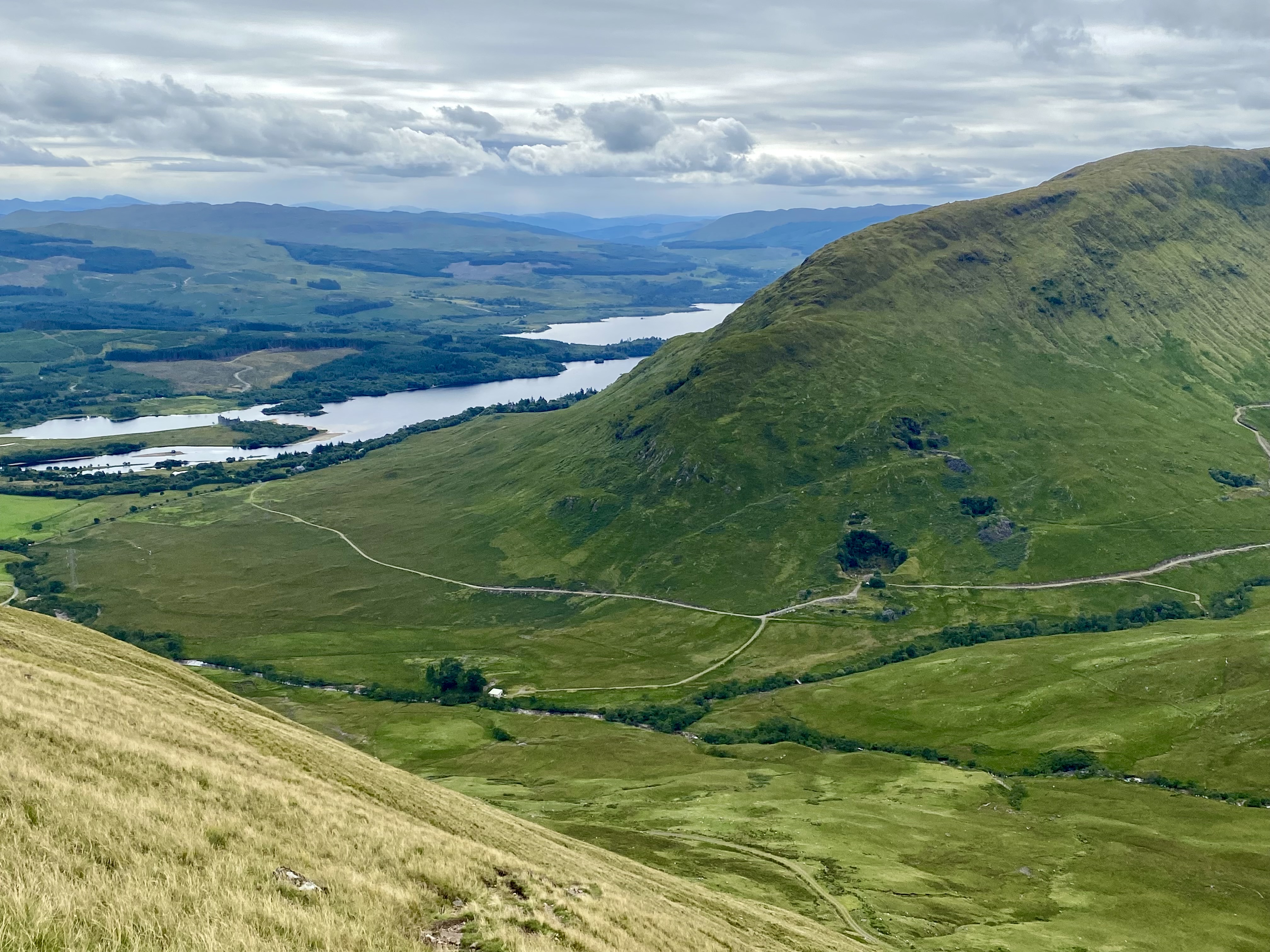
Loch Venachar, Stuc a' Chroin and Ben Vorlich from Ben Gullipen

Over the summer I have made Ben Gullipen my regular morning exercise, the views from the summit are terrific on clear mornings. I pace walk up the 254-metre climb, running the less steep sections, admire the view and catch my breath before running down the steep and twisty track. It has been a few years since I have been chasing personal best (PB) times but old habits die hard. 

Today, I managed a new PB on the 2.5-kilometre ascent, 26:25, beating three previous PBS achieved in August. Unless I can force myself to run the whole route, which would be difficult with several sections of gradient of more than 20%, I am not sure that this will be possible. It was more surprising because I had carried my phone that was bouncing about in the pocket of my flimsy wind top to take photos on the first clear morning for a long time. I had broken my descent time earlier in the week, 12:34, but could not match it today.

Loch Venachar and Ben Ledi

Looking north with Ben Ledi and Beinn Each

Menteith Hills, Lochan Balloch and Ben Lomond

The Campsies and Lake of Menteith 


Saturday, 26 August 2023

Busy August

Loch Lomond and Luss Hills
It's been a busy two weeks with family and friends visiting for the Union Cycliste Internationale (UCI) Cycling World Championships and the Edinburgh Festival. I've provided 17 bed nights for family and spent 9 days out and about with visitors over the past fortnight. It was good to have company and to be involved in jaunts to different places, although I had to forego my morning exercise most days. The summer weather has not been kind but there have been only a few times that I have been caught out in the frequent August showers. I cannot recollect a full-on sunny day since June and this was the very conversation raised by my friend whom I met on the summit of Lime Craig yesterday morning. 

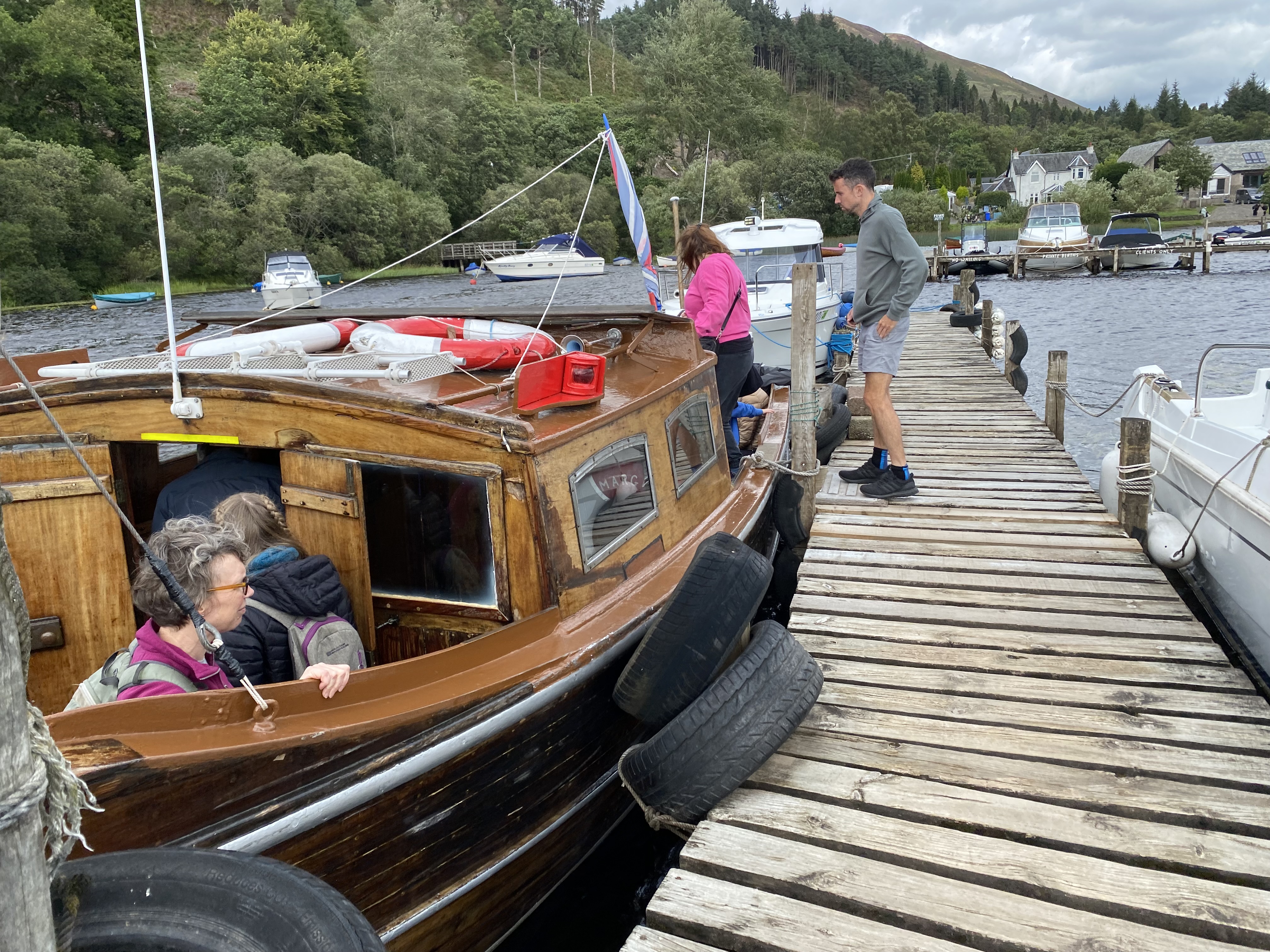
After the cycling events, it was an opportunity to explore some local attractions with family and grandchildren. Although I have lived in the area for 35 years and visited most places on numerous occasions, I had never been to the Loch Lomond island of Inchcailloch which is a mere 4 minutes by ferry from Balmaha. Balmaha is always buzzing with the West Highland Way walkers and the Oak Tree Inn adjacent to the public car park has become a busy and well-run restaurant that has introduced all the latest technology as it feeds the multitudes who are passing through. After lunch, we sauntered along to the nearby jetty and caught the oldfangled wooden boat to the nearby Inchcailloch island, one of Loch Lomond's 22 islands. It was the usual mixture of Europeans, British Asians and British retired couples. The Scottish children were already back at school and families from other parts of the UK seem to have forsaken staycationing this year. We walked across the island to the beach, climbed the hill and visited the graveyard on a windy afternoon before returning to Gregor's new house for an evening meal.

The next day the family left and I had a long-standing lunch with old work colleagues in Glasgow and then returned home and put my feet up as I watched the World Athletic Championships from Budapest. It felt like a transition point. I needed to be more focused on making a new life for myself. My initial efforts over three days have been varied; three early morning runs, making another batch of blackcurrant jam, buying grout to repair the rear patio, writing emails to old colleagues and friends and beginning to write up the story of Aileen's illness that started exactly a year ago today when I called for an ambulance. I have not so far had the mental fortitude to start making sense of what has been the most traumatic period of my life. Let's see how this goes.

Inchcailloch ferry, Loch Lomond

Inchcailloch - Port Bawn beach

Inchcailloch summit - 85 metres

Inchcailloch

Conic Hill from Inchcailloch

Feet up time


Wednesday, 16 August 2023

World Cycling Championships

Women's Elite Last Lap, Park Circus
The World Cycling Championships were in Scotland. All types of cycling were on display, from Road Racing to BMX freestyle to Mountain Biking and incorporating Para-Cycling on both the track and road. The events were spread out from Fort William to Peebles to Dumfries with the Time Trails in Stirling, Road Races across Central Scotland. Track Cycling at the Sir Chris Hoy Velodrome and BMX events in Glasgow. It was a chance to sample how cycling has escalated from a humble mode of transport in towns and cities to a staple ingredient of sport, leisure activities and healthy lifestyles. It was the first time all the disciplines had come together with 200 world champion Rainbow Jerseys to be won. The success was measured by over half a million people turning out to watch the events and by the excellent comprehensive coverage by the BBC.

First up was the velodrome and the chance to catch up with an old school friend I used to ride to school with on his Dad's tandem. Para-Cycling had been integrated into the World Championships and there were several tandem events with the para-cyclists piloted by experienced ex-professional cyclists who were usually more powerful than the lighter competitor seated behind. The speed of the tandems on the track was very impressive and, surprisingly, we saw no accidents. The velodrome was full and apart from the lengthy queue to enter the velodrome and the noisy diesel generators in the team trucks parked alongside, the whole event was superbly managed with events taking place with a minimum of delay despite the need for setting the bikes onto timing devices at the start.

I watched the Women's Time Trial in Stirling where the ascent of the cobbled streets to the Castle was the straw that broke the majority of cyclists. I watched the American rider, Chloe Dygert, ride so much more smoothly than the other riders in the early starts and she held on to win against the most of the favourites who were scheduled to start at the end of the field. The number of vehicles and motorbikes following each rider made a mockery of the notion that cycling is a sustainable sport. The Police must have had over 50 motorcyclists and each rider had a support car, usually a SUV and another motorcyclist accompanying them. 

Crowds were not allowed onto the Castle esplanade to watch the medal ceremony despite the PA announcer urging us to go along. Hundreds of supporters had attended from most European countries and they were disappointed that the UCI had restricted access to stewards and cyclists. It was a bad mistake, the last time we had an event like this was the first stage of the Prutour of Britain in 1998 won by Chris Boardman when the large esplanade was open to the public. We complained and the head steward seemed to agree with the sentiment of the irate crowd. 

My old school friend, together with his son who is an ex-professional cyclist, who runs a cycling business in France, and his two sons visited for the Men's Time Trial that passed through the village. There had been lots of locals moaning about the road closures and the fact that the roads had been resurfaced for the cyclists but there was a good turnout of several hundred. Watching Geraint Thomas, Tadej Pogacar, Filippo Ganna, Remco Evenepoel and Wout Van Aert hurtle through the village at twice the speed limit was spectacular. Van Aert had spent a few days in the area and shattered most of the Strava segments and will have put crowns out of reach for local cyclists for all time.

The road races passed through the Stirling area so there were good opportunities to watch the men's elite, the men's under 23 and women's elite races. I set off on my road bike to watch the first of these but had to return home with a puncture and thought I had insufficient time to get back to see the race near Fintry. I could have made it as the Stop Oil demonstrators had stopped the race for an hour by glueing themselves to the freshly resurfaced narrow road. On consecutive days I watched the Men's Under 23 and Women's Elite Race pass through Balfron on the country section of these races which finished after crossing the Campsiers with a criterium of 7 laps in Glasgow.  

We drove from Balfron to Glasgow to watch the elite women make 7 terrifying 14-kilometre laps of Glasgow's hills and potholes with 48 sharp bends and no respite. We enjoyed some wonderful viewing points in and around the West End and visited the University Quadrangle and Cloisters whilst dodging between Gibson Street, Kelvin Way, Great George Street, University Avenue and Park Circus to see the leading group. I took myself to stand opposite Aileen's old flat on Great George Street where we had spent time when we first met. We saw crashes on the Kelvin Way, speeds of 60kph on the descent to Gibson Street and hairpin pinch points on the ascent to Park Circus which explained why there were so few finishers from over 200 starters. Lotte Kopecky of Belgium won the race after breaking free on the last lap and leaving some stellar names in her slipstream. 

The caravan of backup vehicles and motorcycles was even more disturbing than during the time trials. They were bunched together and flying around bends and down hills at speeds that defied any definition of safe driving. We saw Anna Henderson crash at the bend on Kelvin Way when she was a contender in the leading group. We were standing next to the crash and watched the delays in getting her a new wheel and then a new bike with a mechanic running back and forth to the team car which was 8 or 9 vehicles behind. It convinced me that the caravan of chasing vehicles simply delays recovery from punctures or crashes and severely hinders the unfortunate riders. We had a jam of twenty or thirty support cars for the wealthier teams that were a barrier to the second group of cyclists. Anna Henderson lost at least three minutes and had no chance to rejoin the leading group.  Cyclists from less developed nations have no team cars and have to rely on a motorbike that carries 4 or 5 spare wheels. This causes little disturbance to the race if there is an accident in a criterium race. In this respect cycling is like rowing, sailing, and equestrian events, it discriminates against competitors from less developed nations who do not have the resources to have the same level of technical or individual support.

By Sunday evening we were all pedalled out and watched the edited highlights of the race. There had been some great filming of locations. The countryside of Stirling looked good and the Glasgow 14-kilometre circuit gave a flattering vision of Glasgow's scenic buildings and parks. More important were the crowds who were noisily appreciative. As a spectacle, it had worked well for the UCI and Scotland. 

Scratch Race in Velodrome

Para-cycling Tandem Pursuit race

Start of Scratch Race

Top 4 riders joust for position in the Men's Elite Race

Wout van Aert - Men's Time Trial, Thornhill

Tadej Pogacar- Men's Time Trial, Thornhill

Men's U23 Road Race, Balfron

Women's Elite Road Race, Balfron

Glasgow University

George Street Climb and Aileen's Flat

Women's Elite Road Race - the descent of Gibson Street

Wednesday, 9 August 2023

Beinn a' Chochuill and Beinn Eunaich

Beinn a' Chochuill and Beinn Eunaich
Wednesday, 9 August 2023

Ascent:         1203 metres
Distance:      16 kilometres
Time:            4 hours 20 minutes

Beinn a' Chochuill     980m.  1hr  58mins
Beinn Eunaich           989m.  2hrs 59mins 

After a wet July, an early August frequented by showers and a couple of trips away from home I needed some Mountain respite. Wednesday seemed the best option but the earlier promise of sunshine has been downgraded by the Met Office to a dry cloudy day. I switched my plan to climb the 4 Munros in the Ben Lui group to a shorter day on Beinn a' Chochuill and Beinn Eunaich, two hidden Munros east of Ben Cruachan. 

I was away by 7:30am and held in a convoy of vehicles on the A84 beyond Callander by a large articulated lorry that was fully loaded. I hustled my way past during the ascent of Glen Ogle and drove on to Dalmally after a fuel stop at Tyndrum and parked by Castles Farm on the B8077. There was one other car there, a couple from Munich climbing the Munros. I explained the route and suggested that they climb Beinn a' Chochuill first as the initial climb from the track to Beinn Eunaich is tortuous. They set off a few minutes after me as I began the 3-kilometre climb up a good track that eventually crosses a burn that descends from the bealach between the two hills. The track doubles back and a small cairn marks the start of a steep path that follows the apex of the south-east ridge of Beinn a' Chochuill. It was muddy in parts but a good direct route which was relentless. I made reasonable time to the ridge and there is then another mile with 180 metres of ascent over a pleasant ridge. I just managed to break the 2 hours that I had set as a schedule.

The weather had held with patchy cloud cover on Ben Cruachan. Some shepherds with a posse of sheepdogs and lots of shouting and whistling were collecting sheep further along the ridge. I had a short break and some food before returning eastwards along the ridge. The couple from Munich had stopped for a rest at the top of the steep path, they waved but were probably cursing me for suggesting the route. I decided not to drop down to speak to them and charged on, it is a 250-metre descent to the bealach. The consequence is a 250-metre climb up a shorter but steeper slope to the summit of Beinn Eunaich. I recalled meeting Gerry McPartlin here in 2010. This prompted me to think about the previous six ascents of these hills, something I often try to recall as I make what will probably be my last ascent of these hills. I have climbed them three times in each direction. The highlights were breaking 2 hours for the round in 1991 (1hr 55mins) on a training run with Keith Adams, my hill running partner. On another occasion, John, Mark and I did the two hills in 2005 along with the two Ben Cruachan Munros after bivvying above the dam the night before. We started very early the next morning and made it home for lunch

Wispy clouds had gathered on Beinn Eunaich where I finished any food in the rucksack before taking a leak and saying farewell to the hill. I then remembered I had said goodbye in the very same place on my last visit in 2018. I was with Alex and John and we had climbed the hills in the opposite direction on a late winter's day when there was still snow on the hills. I don't anticipate any further farewells, 7 visits to these hills seem more than enough.

The descent of Beinn Eunaich is an easy walk down grassy slopes for the first couple of kilometres before a steep twisting muddy path back to the track. This was why I told the couple from Munich to go the other way. It was probably worse descending than climbing this part of the path. I felt justified in my advice and hoped the couple felt the same. My feet had not enjoyed this part of the descent but reaching the track meant a couple of kilometres of easy walking back to the car. I was home by 3:30pm and out of curiosity checked my previous times. Almost exactly the same (4hrs 21mins) in 2010 when the conditions were similar and 5 hours 49 minutes in 2018 in wintry conditions. Perhaps I should be less pessimistic about the prospect of more years of hill walking than I have been contemplating recently.

The track towards Beinn a' Chochuill

Ben Cruachan from the slopes of Beinn a' Chochuill

Beinn Eunaich from the Beinn a' Chochuill ridge

Beinn a' Chochuill summit

The route up Beinn Eunaich

Beinn Eunaich summit cairn

Loch Awe from Beinn Eunaich descent

Route from Drishaig


Sunday, 6 August 2023

The Descent of the UK

It has been a hard 15 years for the UK since the banking collapse of 2008 but the past five years have been the most disruptive. Brexit, Covid and Climate Change have been yoked with a government at war with itself as well as Europe, Russia, China, immigrants, its own citizens and UK businesses. The United States no longer regards the UK as its trusted supporter, nor does the United Nations or developing countries that have watched the UK slash its aid programmes and retreat into a state of selfish obfuscation.

We have been blessed by the guiding hand of three Prime Ministers who, with diverse personalities, have all managed to accelerate the decline without any remorse. Boris Johnson was so disengaged from the job that his knowledge of his government's actions and policies were unknown unknowns. Liz Truss was so unaware of her limitations that her unknown knowns led to a rapid dismissal. In both cases, these frailties in leadership were self-evident to most electors and well evidenced by journalists, civil servants, and academics. Sadly, the Tory party members and MPs, who were the electors in this dumbed-down democracy that we are so proud of, had no such acuity. 

Rishi Sunak is allegedly smarter and harder working than his predecessors as well as claiming integrity, professionalism and accountability as his leadership credentials. In which case his lack of concern about known known issues such as the cost of living, social injustice, climate change, air quality, the environment, tax havens, industrial relations and international aid tells us he will never sing along with common people. He is damaging the country and its reputation just as much as his shamed predecessors.

Thursday, 3 August 2023

Barbie Unleashed


I had made a fleeting visit to London to do some childminding and to see my granddaughter perform in a theatre production of The Railway Children. The final Test match at the Oval was taking place, it was only 2 miles away and the scoreboard was fizzing along. Alas, my daughter had arranged tickets for the Ritzy cinema in Brixton. I was pleased to see that Oppenheimer was on but our tickets were for Barbie. Her sweet revenge, we had not let our daughters have Barbie dolls. What was wrong with proper dolls or teddies, climbing trees, card games, bikes, books, swimming, children's TV, walks and films? 

Barbie was promoted as the fount of happiness for girls when it was a marketing tool for fast fashion and encouraged sedentary activities. I had not registered what a success it had been in this respect. Perhaps Barbie is responsible for the exponential growth of beauty treatments, makeup, glossy magazines, TV reality programmes and fast-changing fashion trends during my lifetime. 

What I had not understood is that it was all the fault of men like Ken who obsessed over their Barbie look-alikes. I have always preferred natural, sparky, healthy-looking women without all the glitz and glam. Although I slept through parts of the film, I did enjoy some of the film makers self-mockery of the Barbie cult such as when the old-fashioned dolls were trashed. When Barbie states that “I’m not pretty anymore. I’m not ‘stereotypical Barbie’ pretty,” the narrator, Helen Mirren, observes “Note to the filmmakers: Margot Robbie is the wrong person to cast if you want to make this point.” I thought that Margot Robbie was natural, sparky and healthy looking. It was just all the Kens I couldn't stomach.

Not Ken

Thursday, 27 July 2023

A Manifesto for a Revitalised UK

Westminster: the heart of the problem
This post was drafted last summer, following the resignation of Boris Johnson as Prime Minister, as we witnessed the small caucus of Conservative Party members selecting his successor. I never posted it because my life was put on hold for many months, but on rereading it today, I thought it had as much, if not more, relevance than it did last year.

The last few weeks (August 2022) have merely confirmed all that has been going wrong in the UK since the 2008 banking crisis. Successive regressive governments under Cameron, May, and Johnson have allowed or shown a dependency on a self-serving financial sector, a disregard for public services, a London-centric approach to resource allocation, a dismissal of localism, a perpetual austerity, too much dependency on the United States, a disdain for Europe, and an unrepentant disregard for the widening gap between rich and poor.

Westminster government needs to become more in touch with the realities of the world and the growing inequalities and poverty in the UK. Brexit and COVID-19 have amplified all the other reasons for the decline of the UK outlined above. The government has trashed the UK's reputation on the world stage by retreating from collaboration and ceding the soft power that stemmed from Commonwealth connections, our membership and influence in the EU, International Aid, and the respect for trusted institutions like the BBC as well as our scientific and cultural organisations. We are in dire straits and the current Tory leadership elections have confirmed that neither of the final two candidates to be PM have the ability to lead us out of the doldrums at any time soon.

Watching or listening to Liz Truss and Rishi Sunak is an exercise in despair as they refuse to say much other than to 'tax less' as they seek to fill Boris Johnson's boots and boasts. He will no doubt be enjoying the sunlit uplands of Tuscany, or wherever he can cadge a residence from one of his cabal of donors, whilst penning articles that celebrate his achievements and undermine his successor. No doubt he will break the rules on taking on other jobs so soon after being usurped by his party and he will return to writing pulp fiction for one of the right-wing newspapers

What is needed are not more soundbite policies with no chance of ever being delivered but some clear principles and long-term policies that are not an attempt to hoodwink the electorate and safeguard a few red-wall seats. Here is a starter list of what I would welcome and vote for. I doubt that any of them are in the mindset of our next PM, whoever he/she is and the question for the opposition parties is how committed are they to fundamentally modernising the broken machinery of government and democratic deficit that we have allowed to permeate a crumbling Westminster. 
  • Rejoin the EU, if they would allow us. Failing that I would certainly expect any government to seek to rejoin the EU Trade Agreement and customs union. Like the majority of the current electorate, I regret the decision and the conflicts that have been caused by leaving the EU. According to the Office for Budget Responsibility, Brexit has resulted in a 4% reduction in the UK's GDP, with Covid causing a further 2% reduction. The consequences are the loss of over a million people from the workforce, delays in the production and delivery of products, shortages and inflation of goods, as well as the loss of environmental regulations that cleaned our beaches and improved air quality. 
  • Restore the Erasmus and Horizon programmes with other European countries. Travel has been stymied by the loss of the Euro Health Insurance card, as well as documentation overload and complex customs arrangements. The sense of belonging to a wider community of interest (the EU) with a collective set of standards from human rights to environmental, financial and manufactured product regulations never figured in the simplistic arguments foisted on the electorate by the Brexiteers. Despite all the suggestions from politicians that we should accept that we have left and move on, this would merely embed the mess that Brexit has created. It would be an act of political cowardice that glorifies the myths already dismissed by the majority of the electorate as well as most economists and academic studies.
  • Establish a written constitution for a Federal UK. The next most important commitment must be consolidating and enhancing the powers of the four nations in the UK and embedding English Regions and Councils with devolved powers. This should involve a large-scale devolution away from Westminster but extend to the most local level of democratic control possible. Some powers should return to the EU to ensure compatibility with our neighbouring countries to ensure the consistency and safeguarding of environmental and fiscal regulations.
  • Introduce a proportional voting system that reflects the voting intentions of its citizens. A government that has an 80-seat majority when only 29% of the electorate voted for it is neither democratic nor sustainable. Having no single party in power will lead to more time debating and refining legislation but it would prevent doctrinaire top-of-the-head policies such as deporting refugees to Rwanda or delaying legislation on building standards for tower blocks that resulted in the Grenfell Tower disaster. Collaboration among politicians with different perspectives is a more robust way of securing effective scrutiny. The present models that hive off scrutiny to non-executive bodies or bicameral bodies mean that effective scrutiny can often be ignored by the government or lost in action.
  • Following these devolved changes, there should be opportunities (referendums) for the people of Scotland, Wales, and Northern Ireland to determine whether they wished to remain part of a more devolved and less centralised United Kingdom that is embedded in a written constitution or become independent countries. It is clear in Scotland at least that Westminster in its present guise has lost most of its credibility. Conversely, the SNP is faced with the Scottish GDP and its spending widening considerably since the last referendum in 2014 owing to the loss of North Sea Oil revenues. The choice should be between a revised and explicit written constitution for the UK and properly specified independence proposals. 
  • Legislate to remove the tax havens in UK overseas territories and crown dependencies The three most significant tax havens are the British Virgin Islands, the Cayman Islands, and Bermuda with Jersey and the former colony of Hong Kong also in the top ten. Along with Guernsey and the Isle of Man, they account for 29% of corporate tax abuse. They are used by global companies to reduce their taxable profits as well as hedge funds. The EU tax good governance is an international initiative to strengthen fair taxation and global tax transparency to tackle tax fraud, evasion, and avoidance. It was one of the less publicised arguments for Brexit. but there is an essential moral responsibility to significantly reduce tax evasion by global companies, criminal organisations, and extremely wealthy individuals.
  • Support the proposals being made by the EU to ensure that tax from global companies is paid in the country where the business is conducted, not the low-tax countries that have manipulated their tax rates to acquire additional tax streams.
  • Restrict foreign ownership of UK-based companies. By 2019, 66% of UK-listed shares were owned by foreign investors. The US owns a bigger share of UK companies than the UK whilst  China, India, and Middle Eastern countries are increasingly dominant in the investment and ownership of UK businesses.
  • A more progressive taxation system must be introduced. This could be achieved by not uprating the tax thresholds at the higher bands. A supplementary tax could also be paid by companies on all earnings that exceed the minimum wage paid by the company by a factor of 10. In practice, this would be a company tax on anyone earning more than £150k per annum. Companies and their boards would have to decide whether these larger remunerations were really necessary. Comparison with other nations suggests that the UK pays far higher salaries to top earners than other European countries. It may have attracted senior managers to be based in the UK but this in turn has been instrumental in busting the South East housing market and made the quest for levelling up another malfeasance.
  • Tax rates and benefits for the self-employed should be standardised with Pay As You Earn rates. This has become more important as companies' sub-contract work and flexible working become ever more significant
  • International Aid should be reinstated at 0.7% and the UK should focus its Foreign Policy on the use of its soft power through International Aid, a more active role in the UN and its various agencies, the BBC World Service, its charitable organisations, and the use of the English Language.
  • Climate Change targets should be enforced along with a comprehensive funding package to insulate the housing stock, encourage community-owned solar farms and onshore wind turbines Investment in tidal power, hydrogen fuel for heavy vehicles, plant and equipment, and for the installation of district heating schemes, air source and ground source heat pumps. 
  • Air travel within the UK should be restricted to island flights and longer-distance routes. Commercial flights for distances of less than 250 miles should be eliminated.
  • Taxation on aviation and marine fuel should be introduced and the duty on fuel duty for agricultural and construction vehicles should be phased in to encourage the transfer to alternate carbon-free fuels.
  • Legislate for new housing to be net zero with a mechanism to enforce this for both social and private housing
  • A cap on private house rents should be established and enforced whilst there would be an encouragement of locally run social housing developments including the repurchase of vacant private rental properties.
  • State ownership of railways and water companies should be legislated for in the first year of a new government. The poor performance of these essential functions since complex privatisation and franchising were introduced has been inflationary and is deeply damaging to customers, and the environment. The regulators have been dilatory in their fight against profiteering and dubious practices.
  • Community Care Plans should be produced by all Councils with a commitment by the government to provide additional funding. The NHS should not take responsibility for community care. It would be a low priority in competition with powerful professional groupings within the health sector.
  • Regions and Councils should have the power to establish community land banks managed locally for the benefit of communities
I could go on but the most important requirement is that there is a recognition of the need for radical reshaping of our democratic institutions and engagement with citizens. Collaboration between parties is essential, but equally important is the imperative of involvement of the devolved governments, councils, and communities.


Friday, 14 July 2023

So that was Langdale

Little Langdale Cathedral

The 40th year at the Langdale timeshare was a curious mix of sadness, nostalgia, and elation. Arriving on Saturday evening after a 4-hour hill walk from  Caldbeck, I collected the keycard from reception and let myself into the lodge. There were no apparent changes to the lodge this year, but the heating was on full and some windows had been left open. I trudged upstairs with the bags of food and deposited my bag and rucksack in the downstairs bedroom. Aileen was not around to sort the food and create a sense of home. It was too late for a swim so I made some pasta and watched the first stage of the Tour de France in the Basque country. My namesake won and his twin brother was second, a good omen for the week. 

Gregor phoned and said he had decided to come down from Glasgow on a morning train the next day. I had already invited my sister so I would not be able to meet him without changing their plans, so I arranged for him to travel to Oxenholme where she could pick him up. I didn't sleep well, the vacant space in the bed held too many memories of happy family holidays and, in more recent times, the contentment of ageing together.

The next morning I went into Ambleside early to purchase the incidental foodstuffs like salt, olive oil, and juice that Aileen would have packed but I had forgotten to bring. I browsed the outdoor shops but they have lost their appeal as prices have spiralled by about 50% and I am conscious of all the outdoor stuff that is still functional in drawers and cupboards at home. Ambleside has become incredibly expensive following the COVID years when it became a magnet for wealthier people who couldn't travel abroad. I suspect there may be a kickback as they return to more distant vacations and families seek out sunnier climes and less expensive accommodations than the Lake District. This was confirmed as the week progressed and there was evidence of near-empty shops and eating places. 

 My sister and husband were held up on the M6 and were late to collect Gregor from Oxenholme. We spent a rainy afternoon in the lodge before a walk when the rain relented. Gregor went on a long run in the evening whilst we had an evening meal in Ambleside. The next day we went to Oxenholme to collect my daughter and visited the Waterside vegetarian cafe in Kendal, a place that was a regular haunt when the children were young. Whether it led to them all becoming vegetarians in later life, I am not sure, but they always requested a visit. They also have a taste for Indian food that probably stems from weekly visits to Glasgow Indian restaurants when their taste buds were being groomed.

I caught up with some friends who also had been coming to their lodge since 1984. They had 4 children who were ages with ours and together they terrorised the swimming pool for other swimmers. All 4 of them were also here this year with 8 grandchildren. I attended the owner's weekly meeting and surprisingly still felt like one of the youngest in the room as the questions were largely about activities of a sedentary variety. My question about when was the Lake District going to ban visitors by car got a muted response from my fellow owners who are welded to their cars but the speaker was quite enthusiastic and talked about proposed parking locations at the entrance to the National Park and the great success of recently improved bus services with lower fares. 

I suspect the commercial interest of the hotels, visitor attractions and Airbnb will do everything in their power to prevent this happening. Driving a car in the Lakes has become tortuous as cars that are too large clog the narrow roads and finding parking spaces in towns and for walks is like a game of musical chairs. The very essence of the Lakes is the scenic road and path network that is in harmony with the landscape. The last thing that is required is any attempt to make them into highways. I am sure that an electric car pool such as zipcars could be made to work well in the Lakes by utilising the parking places and eliminating the need for all the cars that stand idle for 90% of the time. It could reduce the number of visitor vehicles by over 50% whilst maintaining the flexibility required by visitors.

Our next four days were spent walking. First, on a cold windy and rain-splattered day, a local walk to one of Aileen's favourite places, Little Langdale, where we visited Slater's Bridge and the Cathedral a vast cavern that had been created by the slate quarries. We continued to Skelwith Bridge for a late lunch at Chesters, Aileen's favourite lunch spot. We then had three days on the fells despite the showery and windy weather. The three of us climbed the Whinlatter Fells on Wednesday. the Fairfield horseshoe along with Emily who had driven down and my walking partner, Mark on Thursday. 

On Friday we headed to Buttermere so that Gregor could complete the 214 Wainwright hills on the Lorton Fells: Low Fell and Fellbarrow, and then the final glorious and easy saunter up Rannerdale Knotts. He had started in 1984 when as a two-month-old, strapped onto Aileen who carried him up Castle Crag. As a two-year-old he had charged up Helm Crag and a frustrated teacher had told his pupils to keep going like that toddler.  We celebrated with some Wainwright beers in Wainwright's Hotel in Langdale before a meal at Fellinis in Ambleside. The next morning we left just after 9am, Gregor and Emily returning direct to Glasgow whilst I dropped my daughter at Penrith station for her train to London and picked up some provisions from Booths.

As a week it had worked better than I expected despite some pretty poor weather. Gregor and my daughter had been to Langdale to keep me company on the first year without Aileen. We had more scope for hill walking but that was no compensation for missing the other activities that Aileen enjoyed like visits to houses and gardens, gentler walks and good food. 

We had bought the Timeshare in 1984 when Gregor was just 2 months old, it was an instinctive decision after several holidays in cottages that were in good locations but usually lacked household comforts. Langdale in contrast was very modern, well specified with top-of-the-range furniture and equipment and an excellent leisure centre. We were mesmerised during the first five years by the luxury and the joy of spending time with the young family. It was then a godsend as mortgages increased to 15% and it was the only holiday we could afford as the Thatcher years took their toll. It was also a chance to spend time with my parents and brother and sister who would come and visit for a day during the week. It continued to be idyllic for a few more years with the children soaking up the attractions and exercise until we had teenagers eager to travel. Aileen felt Langdale restricted our opportunity to take holidays in Europe with the children before we became empty nesters., although we did manage trips to France, Greek islands, Corsica and Minorca before they became independent. 

There were then some less memorable years as we had the place to ourselves. Since her retirement in 2010, Aileen had grown fonder of Langdale and always looked forward to the week as a relaxing filler. It did not prevent other holidays, to France in June or longer holidays in the autumn. Langdale was a familiar place that holds many memories of watching a family grow and fledge. This familiarity has also been instilled in the children and in almost every year since 2008 we have been joined by one or more of the children. Whether I will keep it is another matter, sometimes things have served their purpose and become an encumbrance. As I watched other older owners at the lodge owners meeting attempting to recalibrate the facilities to respond to their less active demands I thought that I would not want to visit if I was unable to enjoy the freedom of the fells and the walks in Lakeland. Memories have to be created not just remembered.

Quarry above the Cathedral

Little Langdale and the Cathedral entrance


Monday, 10 July 2023

Wainwright Finish

Rannerdale Knotts

Friday, 7 July 2023

Walk 1
Ascent:         441 metre
Distance:      7.5 metres
Time:            1 hour 43 minutes

Low Fell                   415m       46mins      
Fellbarrow                415m     1hr 11mins  1hr 43mins

Rannerdale Knotts    354m        29mins     48 mins  

Wainwright identified 214 fells in the Lake District that have become known as the Wainwrights and the nearest thing that England has to compete with Scotland's Munros, Corbetts, and Grahams although they are generally easier to climb with good or well-worn paths that are never that far from the road network. Nevertheless, the Wainwrights are a good if idiosyncratic challenge. Gregor completed them today during our annual week in Langdale. He had started at the age of three by walking up Helm Crag and embarrassing a reluctant school party whose teacher reprimanded his charges by saying that if that small boy could do it so could they.

Today was our easiest walk of the week We did not start until 2pm and tackled the two fells: Low Fell and Fellbarrow which are accessed via the remote and beautiful Lorton Vale from Thackthwaite. The tracks are over grassy slopes. After the last couple of days, when the wind and cool weather had been autumnal, we were subject to strong southerly winds from the Sahara. We found a parking place just shy of Thackthwaite and took a path from the hamlet through a wood to some open fields that were alive with birds including some wheatears. 

It was the easiest walk of the week with no need for rucksacks or anything other than a mobile phone for the map (OS Maps online) and photos. The RAF were getting in some low-flying practice over Crummock Water and Buttermere. It was a leisurely stroll with good views from both hills with the Cumbrian coast, the Isle of Man, and Dumfries and Galloway visible. We made good time and drove the 6 miles to Buttermere and parked at the National Trust car park. We crossed the road and hacked our way on a path through the giant bracken. The grassy path climbs steeply at first and then follows the ridge to Rannerdale Knotts. Gregor was moving with the same determination as the three-year-old going up Helm Crag. 

I guess he had no option for the first hundred or so fells, they were part of the families' annual ritual of hill walks when staying at Langdale. But for the last few years, he has been more focused and the Lakeland fells are a bit of a treat compared to the long hard days on remote Scottish Munros. It was about 5pm and although we had thought about taking some bubbly, we decided to return to Langdale and go to Wainwright's pub and have a pint of Wainwrights Ale. We sat outside in the best weather of the week admiring the perfect evening light on Red Bank and Silver Howe, both cradling fond memories of many happy days in the Lakes over the past 60 years. As always at this pub, I reflected on whether this is where my life began. The Langdale Hotel as it was then was the place my parents had their honeymoon just over 9 months before I was born.

Path to Low Fell

Heading to Low Fell & Crummock Water

Grisedale and Grasmoor from Low Fell

Fellbarrow

Buttermere and Crummock Water from Rannerdale Knotts

Wainwright Hotel

View from Wainwrights Hotel, Langdale


Sunday, 9 July 2023

Fairfield Horseshoe

Keep Walking - Keith & Mark
Thursday, 6 July 2023

Ascent:       1132 metres
Distance:     21 kilometres
Time:           4 hours 30 minutes

Nab Scar        442m
Heron Pike     611m
Grear Rigg      766m
Fairfield           873m
Hart Crag         822m     
Dove Crag        793m
High Pike          657m
Low Pike          505m

I usually meet up with Mark who was my regular walking companion during my fourth round of Munros during our week in the Lakes. He moved to Ambleside 8 years ago after retiring and has lost none of his obsession with hill walking, having now completed 20 rounds of the Wainwrights. He finally completed a Munro round this year by climbing the two hills that required some rock climbing. the Inaccessible Pinnacle and Am Baister on Skye. An experienced mountaineer from his Kendal walking club had more or less forced him to face the challenge. Mark has climbed over 3500 Munros, which for most people would equate to about 12 rounds of Munros which would put him in the top ten of Munroists in the all-time list. 

With people visiting or arriving in Langdale on different days at the start of the week and then focusing on some of Gregor's remaining Wainwright hills, it was Thursday before we managed to arrange an outing. I suggested the Fairfield Horseshoe as it could be done from Ambleside and it would be good for the guests to tackle this classic Lake District fell walk. I had probably walked the horseshoe a dozen times but not since 2010. I recalled that Aileen and I had walked it on a fine day in 1997 when our three children missed the Langdale week for the first time when they were on a school trip to Canada. 

We started from Mark's house at 10:45am having been told it was one of the few places to park in the town.  We walked through Ambleside before beginning the climb from the narrow roads leading north from the square that was the bus station, past the Unicorn, my father's regular pub when he was a keen cyclist in the pre-war years. We passed the old Charlotte Mason College which was the girl's PE teacher training college, a source of talent in the days when we were young and camping, hostelling, or staying at a friend's flat in the Lakes. The college is now absorbed into the University of Cumbria. We walked to Nook End Farm and then through Rydal Park along the track to Rydal Hall. Surprisingly we had never visited here during our many years of holidaying in the Lakes. 

Mark and I were in deep conversation and the others shot off up the steep ascent of Nab Scar, they continued apace but Amy waited for us on Heron Pike. Thereafter we had a relaxed chance to catch up as we fell into a comfortable pace around the horseshoe. When we reached Fairfield Emily and Gregor had already battered on. We stopped for some food near the cairn where several other parties were also taking a break. There was a strong cold wind for mid-summer that prompted us to move on. The descent along the long ridge to Hart Crag, Dove Crag, High Pike, and Low Pike was mainly over grassy paths with some rocky sections and fairly minimal ascents to each hill. Wainwright was never one to require measurement to make it into his tabulation of peaks, it was more about where he could do a sketch. The rain had held off and visibility was good.

We dropped into Ambleside to meet Gregor and Emily who had had coffee and some chips at a local cafe. Emily had managed to achieve a Strava crown on her charge-up Nab Scar to add to the one on the ascent of Scafell Pike a couple of years ago. We had added 8 Wainwrights for those collecting them, Gregor had already done these hills a couple of times. In Mark's case, it was his 120th visit to what is his local walk. We walked back through the town to collect the car and bade our farewells. We were already thinking ahead to the next day when Gregor would complete the Wainwrights.

Heading up Nab Scar from Rydal Hall

On Dove Crag

Looking back to Fairfield