Showing posts with label Brexit. Show all posts

Wednesday, 15 January 2020

Good Reads 2019 (not really)

Add caption

Despite having moved to a new house that was for the most part a success, 2019 was one of the most disappointing years in my lifetime. The time I wasted watching the spectacle of Brexit unfold was a curse in so many ways and the election of a populist far right government was the final straw.

After 37 years of regular running, I struggled to find the drive or local routes to keep going and recorded my lowest annual mileage since 1982, when running was just a 2 or 3 mile activity once a week to keep fit for football. Similarly my 14 days on the hills was the lowest since 1988, although the dreadful weather during the summer months did not help. My exercise was largely confined to gardening and I gave up counting after I had shifted 500 barrowloads of topsoil from adjacent fields into the garden to lay lawns, create flower beds and fill raised beds. It was also the first time in my life that I did not visit my home town to visit relatives and friends. All of this should have meant more time for reading but I also read fewer books, and there were few of particular note.

I was persuaded by book reviews to read Sally Rooney's two books, Conversations with Friends failed to ignite any great enthusiasm. I did enjoy Normal People, it awakened fading memories of youth and was more of a page-turner. To overcome what had become a reader's block, I indulged myself with 3 or 4 of Lee Child's books, it is amazing how a bloke from Coventry can reach and re-interpret the American Dream as the behaviour of its many alienated citizens deepens the mire of Trumpian fake optimism.

I found my old Left Book Club edition of Road to Wigan Pier in a box of books when unpacking at the new house and decided to reread it. I found the meticulous presentation of 1930's life in the industrial north of England, which according to George Orwell begins in the Potteries,  fascinating but deeply disturbing. Orwell explains how a third of the population are living on Unemployment Assistance for six months and thereafter are dependent on local Public Assistance Committees  (PACs). This is the factual reporting but what follows is a shot across the bows of the governing classes. "First you condemn a family to live on thirty shillings a week, and then you have the damned impertinence to tell them how they are to spend their money". PACs seemed almost as disrespectful of their clients as Universal Credit manages today but without the preening justification of Ian Duncan-Smith.

I was also taken by Orwell's take on Sheffield, a place I know well and regard as one of the UK's better cities. "But even Wigan is beautiful compared with Sheffield. Sheffield, I suppose, could justly be called the ugliest town in the Old World. And the stench! If at rare moments you stop smelling sulphur it is because you have begun smelling gas. Even the shallow river (Don) is usually bright yellow with some chemical or other." Sheffield has been transformed since the 1930's into a modern city but I remember having to get a typhoid jag in 1967 after punting down the river Don during Rag week.

I read a couple of books about the history of Puglia in southern Italy whilst on holiday. They depicted the familiar story of wealthy landowners exploiting workers whist the owners moved their wealth to the more civilised cities of the north. Nowadays the affluent lawyers and bankers from the northern cities are acquiring and renovating the worker's cottages as holiday homes.

I would only recommend two books that I read. Jonathan Coe's book, Middle England, that parodies the descent into Brexit from 2010 with a cast of whimsical characters living in the West Midlands. There are many memorable references to the populist and bizarre political shenanigans during the period. This was only topped by Fintan O'Toole's insightful examination of Brexit through Irish eyes. Heroic Failure: Brexit and the Politics of Pain cross references British history as it dissembles the justification for Brexit as a form of retro imperialism by the English establishment. It has never ceased to amaze me how articulate and well informed the senior Irish politicians and commentators have been during the Brexit debate. Unlike the UK ministers who seldom have a rational argument or a clue as to what happens next, they seem to understand the wider cultural and historical context that has led to Brexit. They also show a strong desire to reach agreements that will minimise the damage to citizens and businesses.

Tuesday, 21 May 2019

Is Brexit Null and Void?

Wishful thinking
It beggars belief that almost two months into the six-month extension to find a deal for Brexit, there has been no new thinking by the government. They are trying to transfer the blame onto the opposition following the breakdown of talks between the two largest parties. Labour has been complicit in these talks because they wanted to be seen to respect the result of the 2016 referendum. They did not have the gumption to indicate that they thought the only way forward would be a confirmatory vote. As a result, they are reaping the anger of many of their voters who are transferring their allegiance to parties that are less guileful and more forthright about Brexit.

The talks were never likely to result in any accommodation. Mrs May has never understood the concept of negotiation, nor have most of her ministers. No stereoscope could ever make the red lines of Labour and Conservative produce a 3D version of Brexit. Mrs May has shown no inclination to shift her red lines, even when she is told in no uncertain manner by both parliament and the EU that the answer is no. The government team then try again with the aid of a thesaurus to find some new phrases for existing red lines and an inbred arrogance that totally irritates the EU leaders and negotiators. Time is running out to organise a confirmatory vote before the end of October, so parliament may have to choose between revoking Article 50 or a no-deal Brexit. In which case, the past three years will have been wasted when so many issues of the economy and inequalities should have been addressed. The Tory Party should be embarrassed and humiliated by their machinations but they persist with the illusion that they are the victims of continental peevishness.

So there is to be a vote in two weeks on a 'bold new deal' that has already been rejected three times, although it will be spun to sound like a more substantial package. It is unlikely to be supported by Parliament, although Mrs May will probably attempt to have a confirmatory people's vote rejected at the same time. Mrs May will then resign, and we will be able to watch the Tory party elect a new leader and wannabe prime minister. The field does not look to have any pedigree of statesmanship, and the ageing right-wing members of the party will probably select someone like Boris Johnson, who will want to start negotiations again or artlessly attempt to manoeuvre us towards a no-deal Brexit. This will be justified on the back of a stellar performance by the Brexit Party at the European elections next week.

What a tragic mess we are in, and we will not be going anywhere soon with Boris Johnson at the wheel and Jeremy Corbyn dropping the anchor. The metaphor of the UK coming last in the European song contest and British Steel about to go bust because of Brexit is a timely reminder that both the service and manufacturing sectors are going down the tubes. Still, the usual suspects in the media will tell us that there are 4 English football teams in the two European Finals, so that should show the pesky Europeans that we are winners.

Saturday, 4 May 2019

Local Elections in England 2019

The two major parties received their second-lowest share of the national equivalent vote since records began

The Local Election Results in England were a pretty devastating critique of the performance of local councils, or as the media would have it, the woeful performance of the two main parties in the search for Brexit. It is useful to look at the real outcomes, that is, the number of councillors of the various political parties and how this has changed since 2015, when the elections took place on the same day as the General Election, when David Cameron squeezed a narrow victory.

This is summarised by examining the number of councillors currently in office, the losses or gains since the last equivalent elections in 2015, and the corresponding percentage change. These are shown in the table below. The Greens and the Lib Dems (the pro-remain parties) saw their numbers soar whilst the Conservatives and UKIP (the pro-Brexit parties) witnessed all-time record losses. The party that sat on the fence (Labour) lost out, whilst the independents, who tend to focus on local issues, made massive gains at the expense of the two main parties, who controlled the majority of councils. However, this analysis takes a view through the prism of Brexit, and that is far from the whole story.

Green                265       +194   +273%
Independent     1178      +662   +128%
Lib Dem           1351       +703   +109%
Labour             2021         -82        -4%
Conservative    3564      -1334      -27%
UKIP                   31        -145      -82%

Listening, watching and reading the local election results made me realise how out of touch with local democracy the fourth estate has become. They have a collective amnesia about local issues; the days of gimlet-eyed reporting have been a victim of the banality served by social media. Almost all reporters and commentators reasoned that the election results were a pronouncement on Brexit and the failure of the two main parties to deliver a solution. There was little attempt to understand the impact of ten years of austerity and how it had devastated the range and quality of local services. This is more the fault of the Westminster government than the elected councillors of any party. The government has reduced its funding of local government in England by 50% over the past decade without understanding the consequences. The government has simply heaped the opprobrium onto the said councils.

Bus services have been withdrawn; libraries, sports centres, swimming pools and community facilities have closed; roads and schools are not being repaired; community care is failing to meet needs, far too few houses have been built, and there has been no concerted attempt to improve their energy efficiency. Community leadership has been undermined by taking away youth leaders, community safety officers, grants to community groups, closing local offices and making telephone contact virtually impossible as everything goes online. It is no wonder that the citizenry is fed up and disinclined to vote for the existing administrations in local councils, which are mainly either Conservative or Labour. Local politicians have been bracketed with the MPs who have displayed their incompetence with impunity over recent years.

As a returning officer for 14 years, I was able to observe at close quarters how local voting outcomes varied from UK elections. Yes, there was a general tendency for the vote of the party in power at the UK level to suffer. However, good councillors and there were many in all political parties as well as some independents, performed better than the benchmark for their party. They were the ones who held local surgeries, turned up at community meetings, and supported their schools and community activities and events. They acted for the people they represented when there was an injustice or failure to provide them with a suitable service. You could also predict the councillors who would do less well because they were failing to represent their electorate or espousing causes that did not resonate well in the community.

It became a bit more difficult after the move to multi-member wards in Scotland in 2007. This requires councillors from different parties to find ways to work together, as there were 3 or 4 councillors elected by a form of proportional representation to cover a far bigger ward. This also had a downside as the councillors tended to be approached by those who supported their party and had less exposure to the wider views of the electorate. If anything, it intensified the tribalism.

How the Prime Minister, Theresa May, has responded to the dire election results is to claim that the collapse in the Conservative vote, leading to 28% fewer conservative councillors and the 4% fall in Labour councillors, is a demand to get on and deliver Brexit. If she believes that Brexit was the main influence on the local elections, then surely the 109% increase in the number of Lib Dem councillors and the 213% increase in Green councillors should be telling her that perhaps Brexit is the problem, not the answer.

In which case, it becomes increasingly inevitable that the only plausible solution to the impasse is either a confirmatory vote on the options available: her deal, an alternative deal or remain. The chances of the Conservatives and Jeremy Corbyn stitching together a feasible Brexit are just another fiction of her imagination. He is studiously non-committal on a confirmatory vote and is no advocate for remaining in the EU. So we will have to watch the further episodes of the Conservative Party's own Game of Thrones for a few more weeks until the Tory MPs realise that the game's a bogey and ditch Theresa May, or go for a confirmatory vote before the EU calls that time is up and throws the UK out for obfuscation and incompetence. Things will not get better any time soon.

Tuesday, 2 April 2019

Venice: escaping Brexit

Doges Palace
Grand Canal from San Maria Della Salute
Doges Palace, evening crowds
Parade of Army and Navy in San Marko
From the Campanile at San Giorgio Maggiore
Grand Canal From Accademia Bridge
Academia Bridge

Aileen's favourite place
What can you say about Venice that has not been said already? It was my fourth visit, the first one a day trip from the Dolomites in the 1970s when the snow conditions had made skiing impossible. The next two trips were to celebrate special occasions with Aileen in the 1990s so we knew the lie of the land. This short break worked out perfectly including the flights and timing. We had four days of bright March sunshine with temperatures cool enough for walking but warm enough for ice cream. Aileen was in her favourite city and that gave us the license to celebrate everything about being European.

There were queues for St Mark's Basilica but the rest of Venice's crowds were comparatively modest, which meant quiet museums, tables at cafes and space on the vaporetto. Our hotel was well located between the Rialto and San Marco, it was a modern refit of an old palace, providing comfortable rooms, good breakfasts and excellent service. We were even given a room upgrade. I had booked with less than a week to go to escape the agonies of the planned Brexit day of 29 March. Never had a short holiday been so perfectly pitched, we both wanted to be in Europe not the broken UK that the government had carelessly curated.

We did not wish to be in the UK on such a day, although as the time approached, Mrs May had managed to delay the event by three months to give her a last chance to negotiate a deal that could get through parliament. As we ambled along the sun-soaked canals of Venice, I reflected "through the window of my eyes, to gaze on the rain-drenched streets of .. England" where life as we have known it is in grave peril. Many other disgruntled Brits had the same idea. We are Europeans at heart, it's all about geography (and history) really, something that PM May would understand if her geography degree had been at a less cerebral university than Oxford. Voters have been distracted and diffused by the appalling mess that the government has made by calling a referendum and not having a Scooby about what to do next.

Apart from the usual jaunts around St Mark's several times a day and two hours in the Doges Palace, one of my favourite buildings, we explored the quieter locations. We escaped the crowds by taking a short trip on the vaporetto past the aircraft carrier moored opposite the Doges Palace to San Giorgio Maggiore. It provided the best viewpoint in Venice by taking the lift up the Campanile. We lingered in the piazza, walked around the yacht moorings, and the Qwalala glass sculpture and visited the Borges gardens.

We spent two afternoons walking through the Dorsoduro District, the location of the second-best viewpoint at Santa Maria Della Salute. The largest art collection at the Gallerie Dell' Accademia disappointed us, with a major refurbishment taking place. However, the nearby museum at Ca' Rezzonico was a revelation for its exhibits of baroque paintings, carved ebony furniture, chandeliers and magnificent rooms adjacent to the Grand Canal. I extolled the virtues of Giandomenico Tiepolo's anti-portrait painting, New World, to another UK visitor. Aileen was greatly amused and told me later that my listener was Harriet Walter, the Shakespearian actor who recently played Clementine Churchhill in The Crown. I am immune to the offerings of Netflix and seldom manage to go to the theatre so my ignorance was genuine.

The best of Venice is the absence of traffic. The haphazard streets are dissected with canals, and crossed by elegant bridges, the buildings are decorated with sublime features, and the urban fabric oozes diverse charm. The Austrian urban theorist, Camillo Sitte, has always fired my imagination with his advocacy of piazzas enclosed by buildings on all sides and the art of urban design on a human scale. Attributes that are sadly missing in most of the UK's towns and cities.

In Venice, there are examples of what he meant around every turn as you meander through the city. Glorious piazzas appear as unexpected treats with statues, carvings, and materials in subtle colours. They take precedence over the usual urban hotch-potch of advertisements, signage and standardised street furniture. The piazzas have an abundance of inviting tables, ice cream parlours, benches, fountains and small shops with wonderful window displays. The sounds of the city are not vehicles but the contented voices of residents and visitors from all parts of the world. Exploring the live history of Venice is a vibrant and inspiring experience. It is perplexing why we have forsaken this aspect of life on a human scale to accommodate the intrusion of the car into the hallowed centres of our built environment.

St Mark's Basilica 

Gondolas at San Marco

Inside the Doges Palace

San Marco from San Giorgo Maggiore

 Qwalala Glass Sculptures

Tiepolo's New World at Ca' Rezzonico

Rialto Bridge

Relaxing in the Dorsoduro District


Sunday, 24 March 2019

Brexit: Some inconsistent truths

 Advice from the 4 pot plants as PM May waits for EU decision on delaying Brexit

As we trundle ever further into the mire of Brexitgate, I remain exasperated at the way the media conspires to breathe oxygen into the 'No Deal' or 'May Deal' activities despite their tangible lack of support. Even before the past week of parliamentary chaos, the latest YouGov survey of 19 March showed that 60% of those expressing a preference would vote to stay in the EU rather than accept PM May's deal and that 56% would support a People's Vote on the future relationship with the EU.

These figures are even higher than would be expected from some interesting research from the eminent psephologist, Peter Kelner. His calculations predicted that a majority of voters would be in favour of Remain at the start of 2019. This research assumed that there has been no change in the voting intentions of the electorate despite the government's disastrous handling of negotiations. However, in the three years since the 2016 referendum, 600,000 older people have died each year and 700,000 young people per annum have been enrolled on the electoral register. According to YouGov, 67% of older people voted for Brexit and 87% of young voters are in favour of remaining in the EU. Even allowing for the greater likelihood of older people turning out to vote, it still tips the balance in favour of remaining.

The naysayers of another referendum claim that opinion polls are not a true reflection of true voting. They also argue that a second vote with the real facts of a Brexit deal would be disrespectful to the voting public who have given their decision when true facts were hard to come by. Prime Minister May claims that a Peoples Vote on her deal against staying in the EU would be anti-democratic because they already have had their vote. Yet she is seeking a third vote for her deal because she badly lost the first two.

As I write this the UK Petition Parliament site had just over 5.1million signatures for 'Revoke Article 50 and Remain in the EU.' This has been the largest-ever e-petition to the UK Parliament. In contrast, the 'Leave the EU without a deal in March 2019' had just reached 10% of this total with 519,000 signatures.

Yesterday's demonstration for a 'Peoples Vote' attracted over a million demonstrators, the biggest demonstration since the Stop the Iraq War demonstration in 2003. PM Blair ignored this protest, which severely damaged his reputation and ultimately pushed him to resign. Meanwhile, the 'UKIP March to Leave the EU' from Sunderland to London has attracted less than a couple of hundred people and has all the appearance of a Ramblers outing. It is supposedly led by Nigel Farage, who is not marching but collecting his salary as a mainly absent member of the European Parliament. Yet both the People's Vote demonstration and the UKIP walk feature as the main items on news bulletins as if they were similar outpourings of democracy. That's typical of the 'politically balanced' reporting that we are constantly fed by the BBC. I would prefer our media to take a leaf from Jacinda Ardern's book and never utter the name of discredited purveyors of fake news. Farage would be there along with Johnson, Gove

The fundamental problem we have is that democracy is assumed by our elected representatives to be entirely a function of elections or referendums. The reality is that these are influenced by other factors such as personalities, events at the time, media coverage and assumptions rather than hard facts. The result of the Brexit referendum was heavily influenced by the lack of trust in PM Cameron, a belief that NHS spending may increase, the immigration crisis at Calais, anti-EU sentiment by the majority of newspapers, the view by the Labour leadership that the EU is a capitalist conspiracy and the BBC's determination to give equal weight to both sides in the debate. These factors all conspired to deliver Brexit.

The narrow 52% - 48% vote to leave the EU in the 2016 referendum is still being spouted by government spokespeople as the only democratic truth. Democracy is a far more subtle expression of the mood of its citizens that requires more positive and ongoing engagement with its citizens than the government and MPs from all parties have been prepared to facilitate. It is time to bring on a People's Vote as the only way that we can bring to an end this inglorious episode of political chicanery.

Wednesday, 13 February 2019

Why I trust the EU more than the UK government

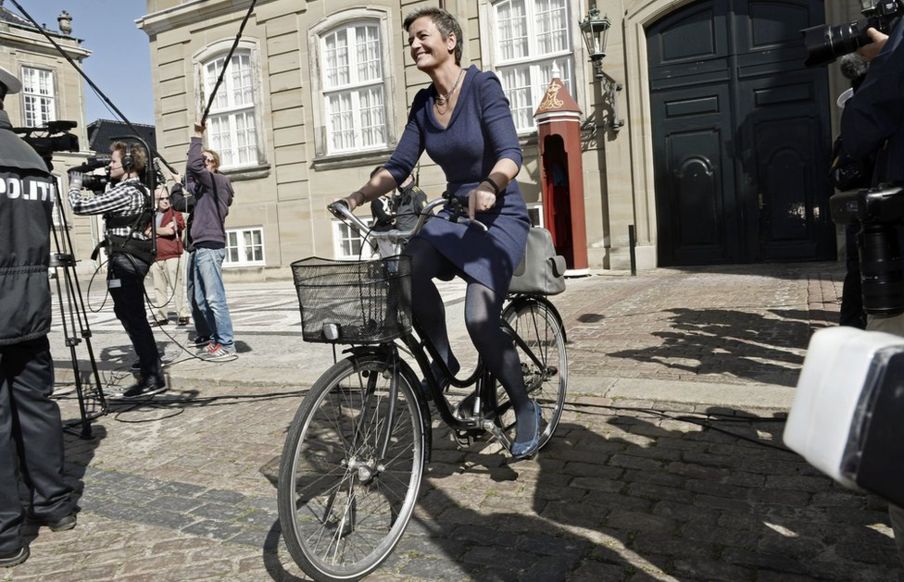
EU competition commissioner, Margrethe Vestager, scourge of Google, Amazon,  Gazprom and Trump
Trade Minister Liam Fox, no trade deals but get ready for chlorinated chicken
Like almost everyone else in this sceptre'd isle, I am thoroughly unhappy about the disastrous Brexit negotiations. I had voted remain but had some sympathy with those wanting to leave. I thought the EU had been too hard on countries like Greece and Portugal following the banking crisis and had done too little to develop a coherent policy on immigration and asylum seekers. But now I have no hesitation in wanting to remain part of the European community. I trust the EU with all its checks and balances much more than I trust the UK government with its obsessive determination to bat for little England. That becomes more evident every day as the PM and her ministers attempt to justify their haphazard negotiations with a sang froid that makes me doubt their sanity.

I have tried to rationalise why my views have become so hard and fast. Obviously, they have been partially shaped by the abysmal failure of Mrs May's government to establish a coherent plan in collaboration with all political parties, business and other parts of civil society. This should have been established before asking to leave through invoking article 50. It has not helped that she chose a ragtag and bobtail of her ministers to lead the negotiations. What Davies, Fox and Johnson lacked in objectivity, emotional intelligence and negotiation skills were replaced by their violative characteristics of narcissistic egos, preening self-indulgence and narrow-minded instincts. But there are several other reasons:

  • Whatever its faults the EU has become a political entity with an assurance of peace in the world's most bellicose continent. 
  • EU policymaking is more rigorous and is shaped by best practice amongst its 28 members.
  • The EU understands and encourages subsidiarity to regions and cities.
  • UK policies are far too centralised, there is a reluctance to embed powers in local or regional government. 
  • The UK government does not take heed of what John Steinbeck recognised, that "small diagnostic truths which are the foundations of the larger truth". This hinders the scope for innovation and government imposes centrally derived policies that are often at variance with local needs.
  • Almost all countries in the EU have more progressive tax regimes than the UK and its tax havens.
  • The EU is far more likely to exercise control over global tech companies for tax purposes and for data protection.
  • The EU has trade deals with 70 countries, Liam Fox, the Brexit braggart, who claimed he would have replicated 40 of these by March 2019, has so far managed just 7.
  • Who do you trust? Margrethe Vestager, the Danish EU Competition Commissioner, who has successfully taxed and challenged the global tech giants or Liam Fox!
  • The damaging effect of Brexit on ease of movement, whether by air, road or sea & mobile roaming charges threatens to restrict opportunities for trade, job opportunities, travel and friendship ties. 
  • The likelihood of concerted action to slow down climate change is far more effective across 28 countries. The UK government actions on wind turbines, fracking, gas power stations and nuclear are hardly indicative of any serious commitment. 
  • The EU has an impressive record on environmental standards for air quality, wastewater, bathing beaches, toxic chemicals and much more. 
  • Similarly, the EU has introduced standards for manufactured goods, certification of products, health and safety standards and these are being regularly updated and applied after detailed consultation with member countries.
  • The European Convention on Human Rights.
  • The European Health Insurance Card.
  • The UK constitution - outdated, outmoded and out of order.
  • EU Research funding that has hugely benefited the UK and the 135,000 EU students who study in the UK.
  • And just in case this isn't enough reason, Donald Trump has said the EU is "almost as bad as China, just smaller."
It is an endless list once you start and, although there is the charge that the EU is less democratic and run by bureaucrats, I beg to differ. Most EU civil servants that I have dealt with were experienced in managing public services in their own countries and well disposed towards subsidiarity. The same cannot be said for many UK civil servants who have been cocooned in central government departments with little practical experience of the real world.

And that brings me to the supposedly democratic UK government elected by just 29.1% of the electorate through a discredited first past the post vote that creates a two-party monopoly. Both Conservative and Labour MPs are disciplined by whipping systems based upon either a public school mentality or a rigid collective discipline. The resultant absence of transparency or collaborative discussion has been fatally exposed during the Brexit debacle. Not forgetting the unelected upper house that is brim full of place men and women. Despite this, on Brexit and many other matters in recent years, the House of Lords has been more focused and knowledgeable than the febrile House of Commons.

If we had any sense it is Westminster that we should be abandoning. Let the regions and nations of the UK work directly with the EU. We would be free from the claustrophobic elite cluster of politicians and civil servants from Eton and Oxbridge dominating the governance of the UK. Westminster ensures that London dominates investment, decision making, culture and the economy to the detriment of all regions outside the south-east of England. The May government has proved beyond any reasonable doubt that they are unfit to govern and a Corbyn led opposition has failed miserably to call time on this charade of charlatans. 


Monday, 21 January 2019

Blue Monday DisMay

Blood Moon rising on Blue Monday, a wrecking ball for democracy

The blood moon had fired up the night sky but the day dawned grey and damp. It was Blue Monday, supposedly the most depressing day of the year but I still felt optimistic despite a dental appointment to extract a tooth following a ten-month wait for root canal treatment. By the time the dental hospital got round to giving me an appointment, it was too late to save the tooth. The dental hospital had still not yet sent a letter to my dental practice to explain the diagnosis so the dentist suggested holding off for a couple of months until she had the letter. So another morning wasted and the pain postponed.

On getting home 200 hedging plants had been delivered but they were four days late, the last three days had been perfect for planting but the ground was now frozen and would be until the weekend. So my frustration was ratcheted up another notch as any Blue Monday afternoon activity was postponed.

I decided to watch the prime minister make her statement on Plan B for Brexit, which turned out to be Plan A again. It was an irrefragable confirmation of Blue Monday. Mrs May utterly fails to get it and the MPs of all parties must have felt like lemmings at a cliff edge as their requests to make progress or consider alternatives were summarily dismissed by the PM in her inimitable style of reciting a clutch of oft-repeated meaningless phrases. As always, John Crace got it right in his parliamentary sketch.

"Which bit of the EU saying it would not renegotiate the backstop hadn’t she understood over the past 18 months? The time had come for her to drop her red lines and adopt proposals that could command the support of the majority of MPs.

"La, la, la,” May snapped, sticking her fingers in her ears. She had her plan. And just because it had failed once there was no reason why it should fail a second time. Hadn’t she always said that a bad deal was better than a no-deal?

Thereafter a succession of MPs from both sides of the house became increasingly exasperated as they tried and failed to talk her out of her madness. The more rational they became about the need to consider a customs union, extending Article 50 and a second referendum, the more adamant the prime minister became that the road to glory was paved with failure. 

Labour’s Barry Sheerman tried to instil a note of optimism. Today was Blue Monday. Officially the most depressing day of the year. So could they take a rain check and come back tomorrow when they all might be feeling slightly less bleak. May declined. The very idea was an affront. She hadn’t got where she was today by doing anything to give people cause for optimism. There was no situation she could not make worse. And she’d started so she would finish."

I now believe in Blue Monday.

Thursday, 10 January 2019

Is Parliament now taking control?

The antics of the government in Parliament over the past few days has been an abject lesson in vindictiveness and callous irony. They have frittered away 30 months in negotiations with the EU and have used every parliamentary procedure to deflect debate and refused on numerous occasions to share information with parliament. This culminated in a deferral of a vote on Mrs May's deal at the end of a so-called meaningful debate in December.

Because of the lack of progress, transparency, lethargy by Brexit ministers and internecine warfare amongst the Tory party, the government have been made to look unprepared and wooden by the EU negotiator, Michel Barnier, who exudes a calm and courteous manner in the face the UK's shambolic manoeuvrings.

Having finally reached a deal that has had no input from Parliament and with no time left for a proper meaningful debate; the government heavies, backed by the usual pro-Brexit press, are now calling out the speaker for allowing Dominic Grieve's amendment to speed up the process. The former Solicitor General, who considered that the UK was marching into a disaster, managed to secure the votes that prevented Mrs May and the leader of the House, Andrea Leadsom, from repeating yet another of their delaying tactics.

Parliament is now attempting to take control of the process and sidelining the febrile Brexiteers who have stoked the myths and provoked the animosity that has swept through the country since dodgy Dave Cameron called the referendum and failed in his attempt to get the changes from the EU that he had promised when he called the referendum.

What happens next is anyone's guess, although it is likely that the Teflon coated, inflexible Mrs May will continue to resist any alternative to her deal no matter what the outcome of the vote. It is encouraging that following the lamentable leadership of the process by Mrs May and in the absence of any alternative strategy from Jeremy Corbyn that a formidable posse of women MPs from across the parties that are leading the parliamentary rescue attempt. Caroline Lucas, Nicki Morgan, Yvette Cooper, Anna Soubry, Sarah Woolaston and Stella Creasy have all made significant contributions that may just stop Brexit becoming the disaster that the panglossian Brexiteers and Mrs May would unflinchingly impose on the UK. We have been reminded by the more astute commentators that it was Keynes who pointed out that if facts change then you can change your mind. Democracy is a fluid process, not the means of enshrining decisions at a point in time.

What No Deal may look like

Thursday, 22 November 2018

Little England or Big Britain


As we drift into the debacle of Brexit decisions and frenzy of confusion that has been the soundtrack of the past 30 months, I am struck by the contrast between the cool countenance of the EU negotiators and leaders and the panic and confusion of the UK government and its negotiators. This is echoed in the reporting by the BBC. Katya Adler, the European editor, provides concise summaries of the position of the EU that invariably turn out to be accurate. Laura Kuensberg, the political editor, resorts to rambling speculation depending on who she has just spoken to and her comments are seldom worth a hill of beans.

I was a lukewarm remain supporter at the referendum and had voted against joining in 1975 because I thought the UK should redeem the Commonwealth countries after centuries of exploitation. However, in the 1980s the EU was the salvation of many declining communities that benefited from its investment in development areas and skill training. Since then the EU has pioneered important environmental legislation and employment rights during periods when the UK government was laggardly or obstructive. Most recently its ability to stand up for taxation of the global tech and social media behemoths has been exemplary compared to the frigid and yet to be implemented promises of the UK government. There are still many aspects of EU policy and the stance of some of the leaders of the 27 other members that concern me, but then the UK government has the monopoly when it comes to regressive policies and an unctuous self-righteousness

What is becoming very clear is that both the prime minister and the leader of the opposition are intransigent dinosaurs lacking both emotional and political intelligence. They appear to have no sense of the destruction caused by their inflexibility or recognition of the economic and social havoc that is being caused by Brexit. Their unwillingness to accept that democracy operates in real time is equally a measure of their unsuitability as leaders.

It is the non-parliamentarians: the political leaders in Scotland, Wales, the Republic of Ireland and the Mayors of the Metropolitan areas who are far more attuned to the economic and social issues and far more cogent in articulating the real world truths. They speak not just for their bailiwicks but for Britain as a whole in a way that escapes May and Corbyn. Could it be that their experience of executive responsibility for public services gives them an insight that seems impossible for MPs to have in the vortex of legislative indecision that masquerades as parliament? Mrs May and far too many of her MPs behave and act as Little Englanders. When she declares that her Brexit deal will safeguard the union, she really has lost all credibility.

Wednesday, 18 July 2018

Boris Johnson RIP

On your bike mate

John Crace has absolutely nailed the posh establishment ex-Mayor of London, Brexit champion and ex-Foreign Secretary in tomorrow's newspaper. (see below) Let's hope there are no further resurrections from this vainglorious hypocrite. The acclamation of President Trump should help clinch that outcome but the  Tory party works in mysterious ways and its members seem fond of goons.

Sunday, 27 May 2018

The Joy of the General Data Protection Regulation (GDPR)


Many thanks to the EU for introducing the General Data Protection Regulation. In recent weeks I have received dozens of emails from companies pleading with me to continue as their valued customer. Most of them I know very little about but they appear to have my details. I may have bought a bike tyre, a vacuum spare part, some printer inks or a Christmas present from them several years ago. Just as likely is that one of these companies has sold my email address to other online retailers or services. Try stopping Virgin Trains from harassing you to download their app and book tickets at prices that are as bizarre as their excuses for trains not running. Even the Economist magazine makes it almost impossible to delete their weekly invitation to subscribe.

Like millions of others, I have been inundated with a tide of promotions every day by rapacious companies who are destroying the internet with their unsolicited offers. It has been almost impossible to stop the flow of puerile marketing. And now Halleluya, every day in recent weeks as the deadline for GDPR approaches, I have delighted in unsubscribing from almost all of them as they seek my permission to continue to harangue me with what they think is clever marketing because I once bought something that I probably would never buy again, like a Virgin train ticket.

I now have an almost empty inbox, it has made life so much freer and healthier, it is a 'timesend'. No longer the pinging of unsolicited emails in the early hours or the end of month avalanche of payday promotions. Thank you to the EU for this fine piece of legislation, which has been adopted by the UK government so that in the unwelcome event that Brexit ever takes place GDPR will be retained. It may yet protect us from the marketing of chlorine-washed chicken and other environmentally unsound trash from the USA.

I now have free time to use the internet to search for things that I need and to find information. The things we always hoped that the internet would deliver with reliable efficiency and but it was a naive trust. According to the advertising agencies, the era of push marketing was supposed to be finished and the internet would allow customers to select products and services. The global digital corporations have scuppered this hope by exploiting their vast list of users to sell online adverts that intrude into every online search. GDPR has not stopped the adverts but it has eliminated a lot of the dross that threatened to strangle the internet.


I wish

Sunday, 31 December 2017

End of a Dystopian Year

The future is here

The last journey of 2017 on mid afternoon, 31 December, perfectly summed up a tragic year. The no. 2 bus was crossing the Vauxhall Bridge between the MI6 building and a platoon of multi-storey flats that looked bereft of inhabitants. The harsh urban landscape was vacant of people and traffic and dulled to death beneath the grey cumulus clouds. It conjured an image of the distempered politics and society that the first viral flush of Brexit has produced in 2017.

It echoed with the views of a senior civil servant that I spoke to yesterday and what the papers have reported today. Few civil servants believe that Brexit will work but nevertheless all other activities by departments have been sacrificed by ministers on the altar of a trivial pursuit for a false sovereignty.
R.I.P 2017

Saturday, 9 December 2017

Polyshambles, the Brexit negotiations


Unwitting Saviours of the Customs Union?
Brexit, don't you just hate it and all the confusion it causes as well as the all-encompassing damage it is imposing on so many aspects of life from inflation, failure to tackle real issues, political hatred, and the mood of despair. This week has been both the worst of worst weeks and, just possibly, the best of worst weeks.

One of the frequent phrases thrown about by Mrs May during her ill thought out General Election campaign was that "we have a plan for Brexit", unlike the Labour Party who were dismissed as being all over the place. Six months on, she is still claiming she has a plan. No one has seen it and, sadly for her sake, it is not shared by many of her cabinet, or the age advantaged ranks of the Tory party, or the DUP, or the civil service.

This week started with yet another collapse of negotiations as the DUP called foul on Mrs May in her attempt to obfuscate the proposals to have no border between the Republic of Ireland and Northern Ireland and to remain outside the customs union. The chief negotiator, David Davis, made another bored cheery chappie appearance at the 'Exiting the European Union Parliamentary Committee' and showed no remorse for having misled the Committee into believing he had impact assessments for 58 industrial sectors. Nor did he have a contingency plan if there was no deal or know what day of the week it was tomorrow. Four days later Mrs May returned to Brussels in a pre-dawn sortie armed with words trawled from a thesaurus by her team of advisers that were designed to confuse the DUP, amuse the EU and create a temporary truce in the cabinet, who then hailed her as the new Boadicea.

I have really struggled to understand the implications of the agreement after watching several news programmes and reading numerous articles. Then a friend sent me an article from the Irish Times, Ireland has just saved the UK from the madness of a hard brexit, by the excellent Fintan O' Toole. It seemed to shed some light and also gave some sense of hope that the hard brexiteers may have been wrong-footed. This was confirmed when the serial duplicitous brexiteer, Michael Gove, claimed that we could change the proposals agreed by voting to change them at the next general election.


Wednesday, 8 November 2017

The Rapscallion cabinet: two down, eight to go

Inner Cabinet pose for a Brexit face-off

I was asked by a friend who shares my despair with the present government which of the present cabinet would I like to see go. I got to ten without pausing for breath. I added Ian Duncan Smith as my bonus ball even though he was no longer in the cabinet after he had screwed up the introduction of Universal Credit and bailed out to avoid the blame.

I excluded Mrs May but the fact that she had appointed the worst cabinet in my lifetime merely confirmed her as unsuitable for office. This together with her inability to answer any questions ever put to her in PM questions or by journalists. Her constant tendency is to repeat a few well-rehearsed but meaningless phrases such as "to ensure that the UK" or "let me make it absolutely clear". This almost always results in making things more opaque as she trundles out her vacuous repetitive riddles.

Back to her cabinet, the common characteristics amongst the ten true blue rapscallions are a mixture of arrogance, pompous manner, inability to analyse facts, doctrinaire views and incompetence. Their lack of ability or inclination to deliver fairness, sustainable or coherent policies, or empathy for the "just about managing", together with their involvement with dubious corporate interests, the mega-rich and alt-right luminaries from the United States makes them a dangerous as well as a deranged bunch.

They are in roughly descending order, beginning with the worst:

Boris Johnson
Michael Gove
Liam Fox
Priti Patel
David Davis
Andrea Leadsom
Michael Fallon
Chris Grayling
Liz Truss
Gavin Williamson

with Duncan Smith as a bonus ball

I was pleased to see that two of them, Michael Fallon and Priti Patel have been vanquished this week, not for their inept performance as ministers, but for inappropriate behaviour. Both of them have already made lamentable excuses for their eviction, which merely confirms their unsuitability for any public office.

As the Brexit debacle continues to rumble on, backwards ever backwards, the NHS continues to crumble and parliament is denied access to information by the leader of the House, Andrea Leadsom, the chances are that there will be more departures in the months ahead. With the exception of David Gauke, Julian Smith, Justine Greening and possibly, Amber Rudd, the cabinet is devoid of voices who recognise the imperative of social justice. Sadly, the other forces of common sense on the government benches like Sarah Woollaston, Heidi Allan, Dominic Grieve, Caroline Noakes and the indefatigable Anna Soubrey have been exiled by the whips and castigated by the pro-Brexit media and are unlikely to hold office under this putrid government. What happens next is anyone's guess but given the make-up of the cabinet, Mrs May is far from secure, there will be no taking prisoners by this mob of charlatans.


Saturday, 10 June 2017

The 2017 May/Corbyn Election

Loser
Winner
The Michael Portillo moment in this week's general election was not in the early hours of the morning but at 10pm as Big Ben chimed in and David Dimbleby announced the BBC/ITV/Sky exit poll results presented by the irrepressible Professor John Curtice. It predicted no overall control and as the evening progressed its accuracy was remarkable. A 20% lead for Mrs May and her merry men had been reduced to 2% and her assumed landslide had become a dependency on the Democratic (Ulster) Unionist Party. Peter Kellner, the ex-YouGov boss, spent the next hour debunking the exit poll, but John Curtice prevailed as he always does, he is the doyen of psephologists.

The commentariat has spent the two days since trying to explain their abject failure to understand the mood of the country and why their predictions were trashed by the electorate. Some journalists have even apologised to Jeremy Corbyn for dismissing him as a stop-gap leader, as have some Labour politicians such as Jack Straw. Other Labour politicians, notably Chris Leslie, find it hard to take; they were plotting the next leadership challenge. Meanwhile, the 'strong and stable' Mrs May has been written off by her party and by much of the media. Chief Corbyn hater, Laura Kuenssberg, now tells us that one of her many senior Tory chums has told her that number 10 is in chaos and Mrs May's days are numbered. How she can continue as the BBC chief political correspondent is beyond comprehension. Her days should be just as numbered as those of Mrs May as Prime Minister

In the maelstrom of uncertainty following the election, we must give some credit to Lord Ashcroft, the Tory Party funder and tax exile, for sharing the detailed results of his private exit poll that provides detailed demographic information for the Conservatives. His opinion polls before election day consistently pointed to a substantial Tory majority. His final poll taken on the day before polling predicted a 76-seat majority for the Tories but then almost all the pollsters were predicting a comfortable Tory majority. But Ashcroft's exit poll gave similar accurate results to the BBC/ITV/Sky exit poll. The results from his exit poll of 14,000 voters confirm that it was the young that made the result so different than expected. It will be interesting to observe how Brexit proceeds now, given that the younger electorate rejects it as much as they have disdain for Mrs May and her cohorts.

Exit Poll of 14,000 voters by Lord Ashcroft

The young not only turned out but they voted Labour. Jeremy Corbyn became the British Bernie Saunders, a cult figure who may have lost but looks as if he has won. He has won respect as an authentic, principled politician who sticks to his beliefs. He lost the election well with a 9% swing to Labour from 2015. He has secured his position as leader, which is probably unfortunate because he lacks the qualities of a leader and will now expect to lead the Labour Party into the next election, which could be a big mistake. Theresa May won badly and has only a tenuous grip on being the leader of the Conservatives. The Conservative party do fratricide routinely and the only question seems to be who can they find to be the next victim after Mrs May, and when will it happen.

Given the demographics of the Tory core voters, they may need to call an early election before their core vote snuffs it, and they probably will after ditching Mrs May. Lord Ashcroft's polling includes me in the cohort that votes Tory - an over-65 male, AB, living in Scotland. I am certain that my vote will continue to screw up his polling predictions based on my demographic profile.


Wednesday, 7 June 2017

Reasons to diss Mrs May

Many Theresas have been born who found for themselves no epic life wherein there was a constant unfolding of far-resonant action; perhaps only a life of mistakes, the offspring of a certain spiritual grandeur ill-matched with the meanness of opportunity; perhaps a tragic failure which found no sacred poet and sank unwept into oblivion.”

Excerpt From: George Eliot. “Middlemarch.”

The election campaign has been a bit of a surprise. Mrs May has lost her lustre of Boedicia and become either Margot from The Good Life or an icy psychopath like Claire Underwood. Her ratings have plummeted faster than an Alton Towers ride. Meanwhile, Jeremy Corbyn has performed better than anyone expected in what has become a Presidential-style election that has also seen UKIP and the Lib Dems slip backwards and return to two-party politics, apart from Scotland, where the SNP have passed their zenith. Ruth Davidson and Nicola Sturgeon are losing respect as they squabble like participants in the Game of Thrones.

Mrs May and Jeremy Corbyn have become the story. Whilst the shenanigans in the Labour Party over the past decade have seriously dented its electability, the manifesto at least offers some hope and is far less damaging than another period of austerity and the inept negotiation over Brexit by Mrs May. The Tory antipathy towards social justice, public investment, ethical foreign policies and environmental protection has also activated the ire of large sections of the electorate. Mrs May has chosen and then led the most incompetent conservative cabinet of my lifetime. Here are just some of the reasons why Mrs May does not deserve to be given an extended innings in number 10. It will take doubts about Jeremy Corbyn's leadership, or lack of it, for her to survive. 
  • She obfuscates on almost all issues, refusing to answer detailed questions while claiming to be strong. She cannot be trusted to act in a principled way and seems to relish criticising others or releasing her attack dogs, Michael Fallon and Amber Rudd, on opponents.
  • Her Brexit team is seriously flawed, focused on generalities and making naive assumptions, with no one apparently concerned about the details. She has a track record of eschewing collaboration and giving in to pressure from external interests such as business and the President of the US. Conversely, Keir Starmer is more of an anorak about detail and has a distinguished career in negotiations.
  • Benefit caps, disability benefit reductions, and her proposals for social care show she neither understands nor cares about the living conditions of millions who are not even managing.
  • Press regulation: The Tories will drop part 2 of the Leveson report into the culture and ethics of the press. The press has set up its own press complaints watchdog, IPSO, that is chaired by Paul Dacre, the Mail editor. It is as useless as a chocolate fireguard, as we saw in yesterday's papers. (see below for example) 

  • In all likelihood, Rupert Murdoch would be allowed to buy Sky despite a parliamentary committee stating that the Murdochs were not 'fit and proper' to take over Sky after their phone hacking exploits.
  • Her decisions to invest the vast majority of railway funding on HS2 radiating from London and to proceed with Hinckley Point nuclear power station, built by a French/ Chinese partnership that is far more costly than sustainable energy alternatives, are just two examples of flawed decision-making when she was put under pressure by business interests.
  • Giving the go-ahead to a third runway at Heathrow, resulting in air and noise pollution levels in London exceeding any reasonable standards, is another example of caving in to pressure.
  • The NHS reorganisation under Cameron's government was neither a manifesto commitment nor a success. Then allowing the baleful Jeremy Hunt to continue as Health Secretary and privatise or outsource health services whilst underfunding the core services has been a palpable act of vandalism on the health of the nation.
  • Her failure to support environmental action on air pollution or support sustainable energy, such as solar, tidal and wind, whilst encouraging fracking is a measure of her discernible lack of concern for the environment.
  • Schools: her focus on grammar schools and academies at the same time as taking funding away and raising class sizes in state schools, many of which are grossly overcrowded, does not smack of any real commitment to those families just about managing.
  • Her record on housing is no better than her predecessor's, with the resulting drop in new housebuilding, homelessness soaring and hopelessness amongst many younger potential buyers who have been squeezed out by the buy-to-let market.
  • Her relationship with President Trump is an embarrassment to the UK, Europe and those who cherish global action on climate change, fair trade and support for global institutions such as the UN.
  • She was the Home Secretary who abandoned identity cards, cut prison funding, created a hostile environment for immigrants and reduced funding for local community policing. She has overseen a demoralisation of public services in services for which she was the responsible minister.
  • Evasiveness: She speaks in a series of crafted soundbites that are designed to disguise the hard realities of policy, and then uses the verb 'to enable' to give her the freedom to act as she pleases.
  • etc., etc.
In her own favourite words, she will 'ensure' that hard times are gonna fall.

Wednesday, 22 June 2016

In or Out: The fantasy of Brexit

Oh! What a tangled web we weave, when first we practice to deceive"

The nearer the referendum comes, the more it seems like a gigantic diversion from getting things done. Since 2014, the UK government, with and without the Lib Dems, has been treading water. Austerity isn't working, so we'll continue it until 2020. The NHS reforms haven't worked, so we'll run up more deficits. Companies that run school academies are failing, so we'll tender, renewable energy is making a difference, so we'll stop funding it and subsidise nuclear power instead. Too many global companies are evading tax, so we'll kick that one into touch and say it's a European Union issue. Economic migration is spiralling upwards as a result of all the low-paid, temporary and insecure jobs, so we'll stop taking refugees.

The Tory party is in internal strife over Europe. They have chosen to allow the electorate to decide about continued membership of the European Union and call it democracy. It is snakes and ladders leadership with a loaded dice. And then in true British style, we'll let the press tell us what to do and salivate at the opinions of celebrities. This morning we had a full-page advert from those icons of self-publicity Richard Branson and David Beckham, who remind us that he had been paid handsomely to play in Manchester, Madrid, Milan and Paris. They are both remain advocates, unlike Katie Hopkins and Joan Collins, who are in the leave camp - if only they would. James Dyson, who makes big profits from manufacturing vacuums in Malaysia and Lord Bamford of JCB, who has a record of using tax havens, are also in the leave camp and constantly quoted by Johnson and Gove to imply that business believes we should leave. Meanwhile, over a thousand business leaders write to the Times to support remaining.

The economy is supposed to be the vital argument, but this does not include the economy in the truth. The lies, innuendos, scares and corruption of statistics have plumbed new depths. What our politicians, economists, journalists, celebrities, bankers, business leaders and bureaucrats have in common is that no one trusts them. The tit-for-tat of fact and fiction has continued throughout the campaign and the electorate is possibly more confused about an issue that is, according to many academics, too complex and uncertain to call. A neighbour was on the side of Brexit until the Jo Cox killing and, as an ex-mental health nurse, she blames the failure of community mental health services for the killing. But like many others, see Jo Cox as the patron saint of Remain and are therefore inclined to vote for Remain.

The BBC have been so obsessed with balance that they have inoculated its journalists against having opinions. This has served to confuse and is just as unhelpful as the press overegging their owner's prejudices. Together with the remain and leave camps, the media and press contributions have not been worth a hill of beans. Oh, what a tangled web they weave!

Conversely, I have seen two clips, one serious and one silly, that have captured the imagination. For those with a phobia of Twitter Professor Michael Dougan provides a clear analysis of the UK's relationship with the EU. For those who like cold humour John Oliver on Last Week Tonight provides a harsh but funny critique of Brexit. Together, they provide a menu that is much more useful than the trivial mutterings from a collective of celebrities and tax-evading business leaders.